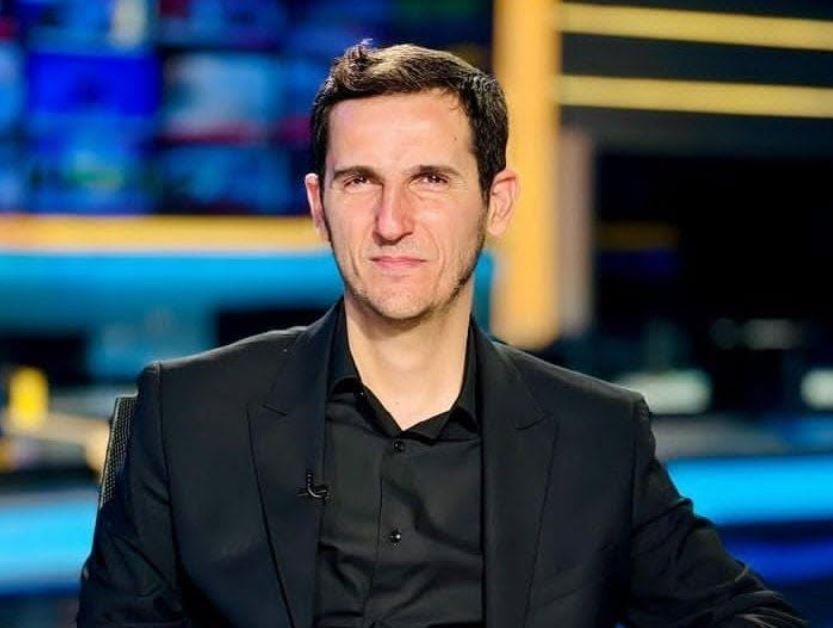
Lebanese writer and political analyst Bilal Lakkis told Al-Shorouk:
The Israeli occupation continues to violate the ceasefire agreement with Lebanon, at a time when the American administration remains far from exerting any actual pressure to stop these violations, while the Lebanese resistance maintains a level of restraint and readiness awaiting the outcome of regional developments and the Israeli elections. Between the ongoing violations and intelligence movements that include various Lebanese regions, the stage seems governed by a delicate balance that prevents going to an open confrontation, without ending the causes of escalation.
In this interview with Al-Shorouk, Lebanese writer and political analyst Bilal Lakkis reads the backgrounds of Israeli behavior and the reasons for continuing violations despite the ceasefire agreement, and the position of the American administration regarding the developments. It also stops at Hezbollah’s calculations and the limits of its commitment to the agreement, the differences between the Lebanese and Gazan scenes, and the nature of the transformations imposed by the balance of power in the region.
Despite the ceasefire agreement between Lebanon and the occupation, the latter continues to violate it. Why?
Israel does not understand the language of agreements, pledges, or laws, and does not believe in that at all, and all of history is sufficient to confirm that, despite everything that the Arabs have conceded to it, and now its commitment is much worse than before due to the shift of its society to the right, extremism, and the increase in criminality and aggression towards everything. In addition, America today is adopting expansion, not only to protect its existence, but also to secure its expansion. Trump said that Israel is a small country and needs to expand, and so far he has strongly, openly, and without ceilings supported Israel’s expansion steps in Gaza and in Syria, which did not resist at all, and perhaps was satisfied with discussing the Golan issue and provided everything necessary on its part, as Syrian President Ahmed Al-Sharaa mentioned in his recent conversations.
This Zionist logic applies to Lebanon, with additions. It believes that it is still separated by physical barriers and a very large distance from its goal of eliminating the resistance, and that its expectations from parties to help it do so are dissipating for various reasons (the authority in Lebanon was unable to do so, and Syria has not followed through on this request until now for known reasons). It remained between its ambition for expansion and its ambition to eliminate Hezbollah and the resistance and Netanyahu’s desire for an electoral achievement that would raise it above his rival, and between the hammer of expanding strongly and the possibility of the region’s explosion after exceeding the ceilings that resulted from the Iranian-American war in Lebanon. Therefore, Netanyahu’s government chooses a psychological method based on demolition and gradual gnawing rather than on achieving significant achievements on the ground, as this involves simulating its elections inside Israel, and perhaps attempts to evade the ceilings of regional balances from On the one hand, we do not deny that it fears that pushing things forward with a different military performance will lead to threatening the residents of the north, Netanyahu’s electoral base, all the way to Haifa and perhaps beyond, from the resistance, which is what it warns of, especially in the current electoral circumstances. In general, it is restricted and is trying to get out of the restriction, even by certain margins, and at the same time it is cautious.
Where is the American administration considering it is the mediator?
The American administration is not ashamed to declare its absolute bias towards Israel, and has not exerted even a slight pressure on it, even regarding the path of the Authority, which handed over everything to Israel and walked between the resistance and Israel, and considered them two parties to a conflict and took unprecedented decisions against the Resistance. The framework agreement went beyond the contents of the May 17, 1983 agreement. Despite all the concessions made by the Authority, there is no longer anything to offer. America did not “grant” to Israel, even the implementation of what it sponsored in a small village in the south.
Where are things headed as a result of continued Israeli violations?
The violations are still restricted to the general balance of the region, and the Israelis are working to create a wider margin for themselves in implicit agreement with the Americans and perhaps with the Lebanese authority (the foreign press spoke about a secret security annex to the framework agreement, and the Lebanese authority did not deny this and did not explain it despite all the demands). More important than the violations in the south, gathering information can be considered the most important issue for the Israelis today, in preparation for an appropriate moment, and therefore its planes and drones do not leave the skies of Lebanon from one end to the other, especially in the south and Beirut. And the Bekaa.
How long will Hezbollah continue to comply?
On the resistance side, I think it will exercise restraint until the electoral deadline in Israel expires, unless the current balance and its rules are exceeded… Therefore, anticipation, caution, readiness, preparation, and capacity building are the masters of the situation now.
Is what the occupation is doing in Gaza similar to what it is doing in Lebanon, and why?
Same mentality, same desire, but much different circumstances. The resistance in Lebanon is still capable of harming and causing pain to the enemy, and it operates with a cold mentality on the one hand. It has also become a burden on the balance of power and the complex and intertwined regional-international antagonism. Not to mention that the resistance in Lebanon possesses a wide area of influence and political action capacity as the most capable and legitimate party in Lebanon compared to all others. It still poses a dilemma and intractability for Israel and the first player in Lebanon, with all considerations. As for its relationship with the new Syria, which some viewed as one of the most dangerous threats to The Resistance. Things did not go this way despite the American attempts up to this point (and the attempts are still continuing). It maintained a unitary discourse that took into account Syria’s interests, unity, and stability.