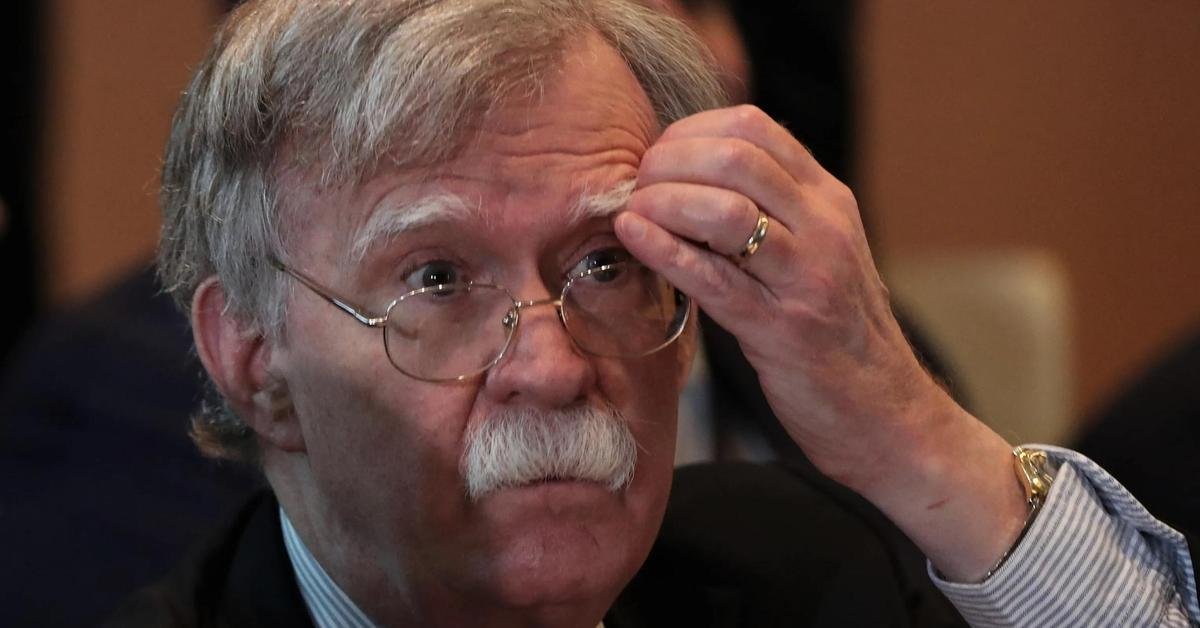
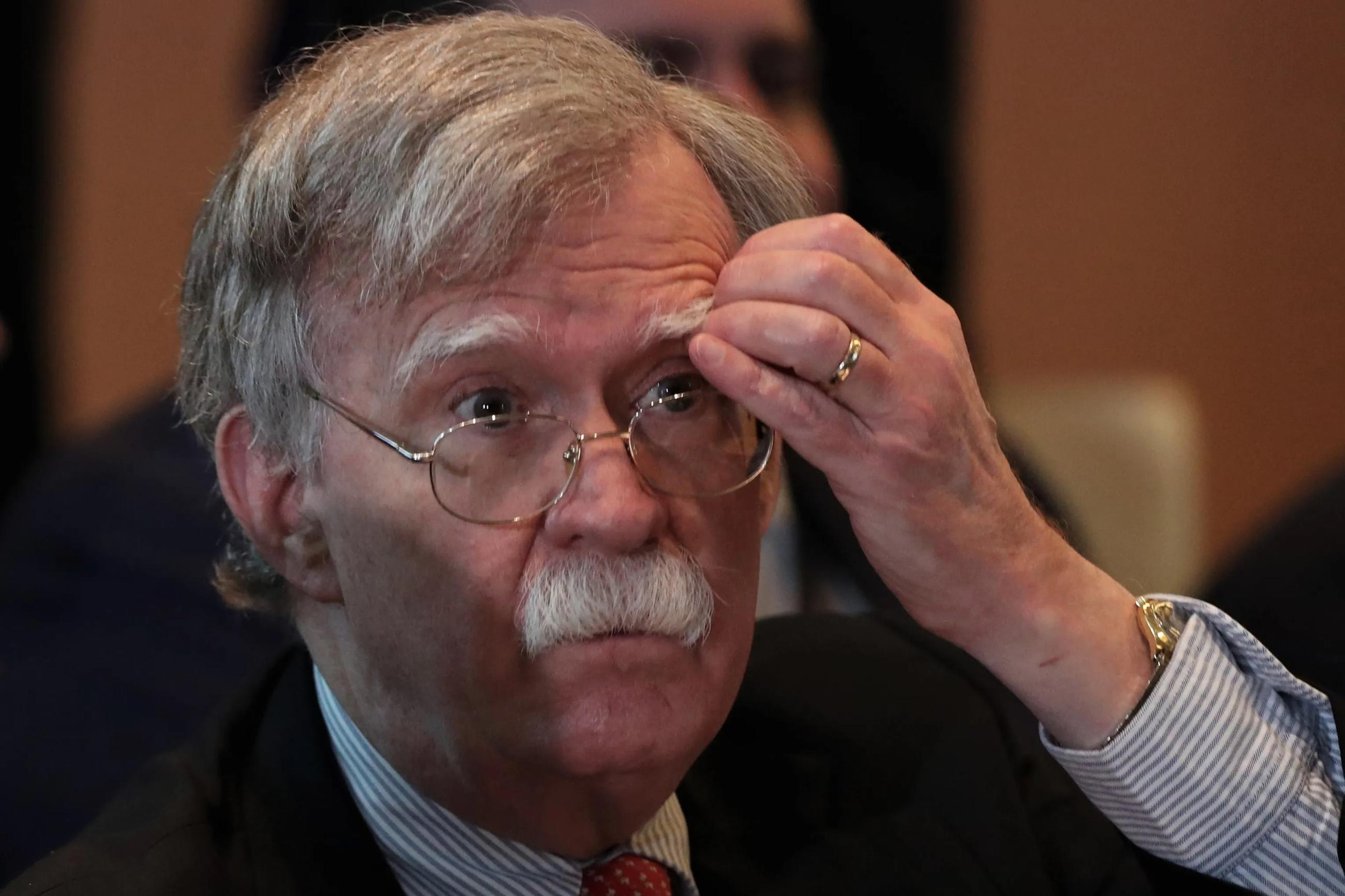
Havana/Donald Trump’s former National Security Advisor, John Bolton, believes that the United States and Canada did not sufficiently investigate the possibility that Russia was behind the mysterious symptoms of the “Havana syndrome” that sickened diplomats from both countries in Cuba between 2016 and 2018.
In statements offered this Friday to the Canadian media The Globe and MailBolton said he suspected Russian involvement ever since he learned of the first cases during Trump’s first term. In his opinion, Moscow could have taken advantage of the fact that Cuba was a favorable terrain to test this type of sonic weapons.
“The reason Havana may have been the first place to test it is that it was a place other than Moscow where the Russians could operate with complete freedom of action. But they did it in other places too,” he said. “That tells me they were experimenting.”
“The reason Havana may have been the first place to test it is that it was a place other than Moscow where the Russians could operate with complete freedom of action.”
Globe revealed last week that the Canadian diplomats stationed in Cuba who suffered from the set of unexplained symptoms – nausea, nosebleeds, migraines, among others – shared information with US intelligence agencies.
Trump’s former advisor commented on these revelations: “It could be that they were involved in espionage and that made them particularly interesting to the Russians and also to the Cubans.” He added that since Canada is part of the Five Eyes intelligence alliance along with the US, UK, Australia and New Zealand, “people would be surprised if that hadn’t happened.”
Canadian Prime Minister Mark Carney said this week that he expects to receive a detailed report before deciding how to respond to the revelations of The Globe and Mail. “There is new information,” he said. “We have a responsibility, and we fulfill a duty of care towards Canadian diplomats.”
Former Canadian spies and retired senior security officials have called for an independent parliamentary examination into whether Russia targeted diplomats for allegedly helping US intelligence agencies.
Last Monday, Foreign Minister Anita Anand said the diplomats’ ailments were a concern for her department, but sidestepped calls for a parliamentary inquiry into whether they were harmed by alleged sonic attacks linked to Russia.
The Canadian government has denied that its diplomats participated in espionage activities in Cuba. Canada’s Foreign Affairs Ministry maintains that the affected officials were working within their diplomatic powers and that the Global Security Reporting Program, to which one of them belonged, is not an intelligence gathering program. But a 2023 Canadian parliamentary report described that program as situated in a “distinctly gray area” and noted contacts by some of its officials with foreign intelligence agencies.
Within the department there was a conviction that Russia was behind the attacks, but Ottawa could not accuse Moscow because it did not have sufficient evidence.
A former senior Foreign Ministry official involved in security and intelligence operations told The Globe and Mail that within the department there was a conviction that Russia was behind the attacks, but Ottawa could not publicly accuse Moscow because it did not have sufficient evidence.
According to that source, some Canadian officials considered that Moscow might have an interest in hindering the rapprochement between Washington and Havana, which had begun in 2015 with then-president Barak Obama, in which Canada had played a relevant role.
Last year, the Justice Department activated a rare national security provision to keep secret new details of a multimillion-dollar lawsuit filed by affected Canadian diplomats. The lawsuit, now under court seal and subject to a publication ban, was amended in summer 2024 after joint investigation of 60 Minutes from CBS and Germany’s Der Spiegel, which reported that the illnesses could have been linked to Russian military intelligence using sonic weaponry.
The possibility that Moscow used some type of directed energy weapon in Havana has been the subject of various theories in recent years, but no definitive conclusions have ever been reached. Scientists have offered conflicting explanations for what could have caused the cluster of symptoms that were later coined in the US as “abnormal health incidents.” Researchers at the University of Pennsylvania examined 21 of the American diplomats and concluded that their injuries were similar to a concussion.
Last July, the US Department of Defense officially changed the name of its team dedicated to so-called “anomalous health incidents” to the Directed Energy Bio-Effects Cross-Functional Team. The change leaves behind a neutral name and involves a more explicit recognition of directed energy as a possible origin of ailments.
John Bolton also questioned this Friday that Washington had ruled out the possibility that Russia decided to test directed energy weapons against US officials. “To say it’s unlikely is not a sufficient answer,” he said, referring to a U.S. intelligence community assessment published in 2023 that concluded it was “very unlikely” that a foreign adversary had caused the incidents.
Contrary to what has been said to try to distort the accusations against Moscow, these types of weapons already exist. Even Donald Trump himself said that the United States had used a “discombulator” to neutralize the security of Nicolás Maduro at the time of his capture, on January 3.
In June of this yearthe then Director of US National Intelligence, Tulsi Gabbard, withdrew this and another report written during the Biden Administration. Gabbard’s office stated that the evaluations had selectively excluded relevant information and suppressed alternative analyses.