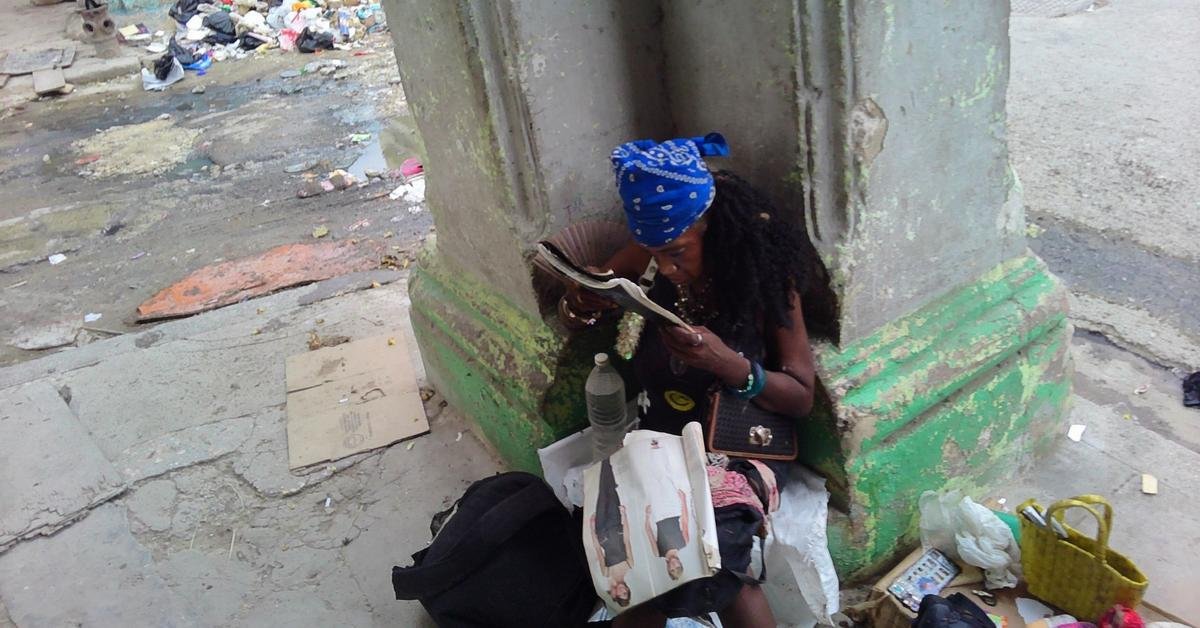
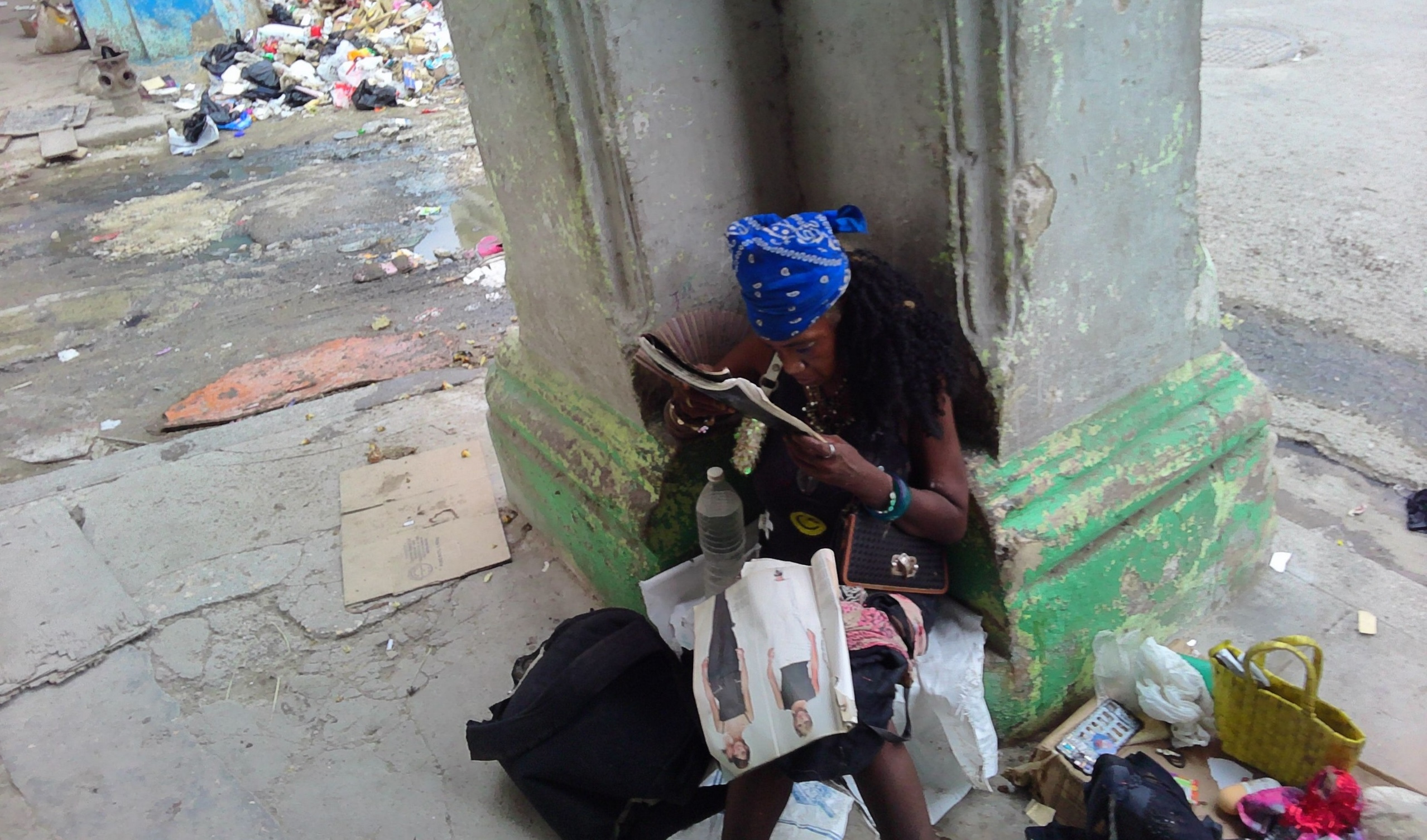
Havana/The magazine’s model is wearing an outfit that should have once been announced as a must-have for the season. Perhaps it was photographed in Madrid, Paris or Miami, under carefully placed lights and after several hours of makeup. Now his destiny is much less glamorous: he lies on the legs of a woman sitting in a doorway on Reina Street, in Centro Habana, a few meters from a garbage dump that has swallowed the sidewalk and is also beginning to take over part of the road.
This Saturday, the saleswoman carefully leafs through several fashion magazines rescued from the trash. From the haircuts and designs, they look like they are from the 90s or the beginning of this century. Anywhere else they would be old paper; here they can still have a second, third or fourth life.
The rest of the business is exposed around it. Some old black high-heeled shoes rest on a box; There are intensely colored garments, scraps, some accessories, a purse and a small yellow basket. Everything seems to have passed through other hands before and, most likely, through one of the piles of waste that grow in the area.
He turns a page, brings the magazine close to his eyes and stops at the dresses, the shoes and those models with endless legs.
To install herself, the woman has chosen the pedestal of a huge column, with layers of peeling green paint and stains of humidity. She wears a blue scarf tied over her hair and several bracelets. It also has a bottle of water and a small bag. She doesn’t seem rushed. Flip through magazines like someone looking at a catalog to decide what to wear next season.
For long minutes he seems to forget to sell. He turns a page, brings the magazine close to his eyes and stops at the dresses, the shoes and those models with endless legs that pose in hotels, avenues and salons where nothing seems broken or dirty. For a while you can try on all these lives without paying a cent: walking in heels through a clean city, sitting at a well-served table, opening a closet full of clothes, or simply getting up one morning without having to calculate which used object can be converted into a few pesos.
Then he turns another page and flies again. It doesn’t matter that the models have already aged twenty or thirty years, that those dresses have disappeared from the stores or that the magazines ended up being thrown away by someone. For her they still contain an intact world, a paper door to a less harsh life. Sitting against Reina’s old column, she doesn’t just leaf through a fashion magazine: for a few minutes she rehearses the possibility that her life would have been different.