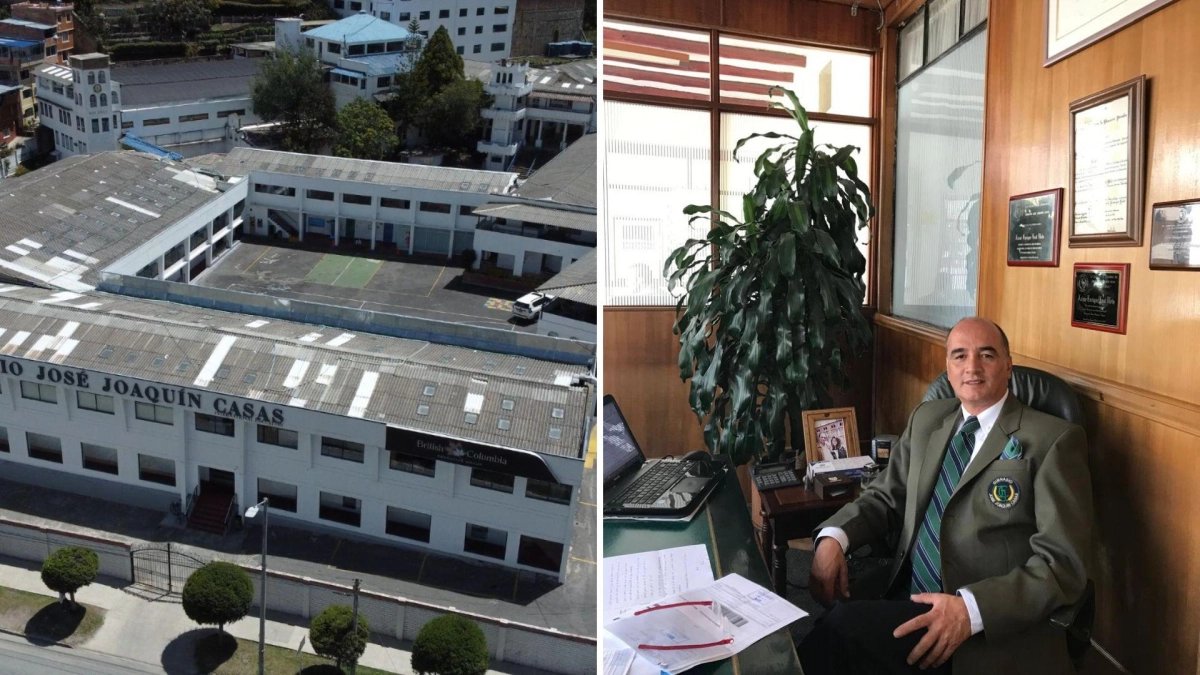
“I felt like I lost a battle, but in the end I know a lot was done.” These are the words of Jaime Lealowner and CEO of José Joaquín Casas Gymschool founded in 1959 by his father, Jaime Leal Gonzálezand that in December it will graduate its last generation of students.
Leal does not hide his sadness, but he also recognizes a reality that, as he explains, was decisive in the decision: “the lack of enough school-age children”one of the main reasons why the iconic school will close its doors.
In an interview with EL TIEMPO, the owner and general director remembers that The school was born with a purpose and a legacy from his father: to offer a personalized education.
A mission that, he reflects, made it possible to build a school with significant educational quality and that, over the years, trained important figures in politics and public life.
Among its graduates are Germán Vargas Lleras, Joaquín Gutiérrez Caballero, president of Ecopetrol; Camilo Sánchez, president of Andesco; and other personalities such as Rafael Novoa and Miguel Barón.
READ ALSO
In the interview, the owner of the school explains that making the decision to close it was very difficult. In fact, he has received calls from former students who have offered him resources to try to save the institution. However, he is emphatic in pointing out that, even with money, the underlying problem persists: there are not enough school-aged children.
Why was this decision made?
This doesn’t come from now. It is a situation that has been occurring for a few years. I would say that since the pandemic the issue of admissions has changed a lot. At one point, parents began to see virtuality as an option and admissions decreased.
There is also a demographic issue: families are no longer having the same number of children as before. That, obviously, ends up affecting the schools.
In addition, the lifestyle of many families has changed. There are people who work from home, from a farm, from an office or from anywhere and not necessarily in person. That type of life also changes family decisions and the way education is thought about.
What have we felt? That admissions are no longer sufficient compared to the investment that a school makes. You invest in advertising, infrastructure and many other things, but you expect, for example, 150 or 200 children in an admission process and 30 end up showing up.
And we must keep in mind that a school also loses students every year. About 30 graduate, 10 or 12 families leave because they change cities, others leave because of costs and, if one receives 30 new students, one ends up having a deficit.
That accumulates year after year. It’s been happening to me for about six years.
Jaime Leal Melo, general director of the José Joaquín Casas Gym. Photo:Courtesy
Could you make a parallel between the admissions of five or six years ago and those of today?
Five, six or seven years ago we easily had 70, 80 or even 100 admissions. Today those figures have become around 30.
And there are cases that show that this is not just our problem. For example, Marymount Campestre did not join because it simply wanted to have a coeducational school. The union also responded to a need for viability. Men’s and women’s schools today have a different demand and they found in union a way to strengthen themselves.
The same thing was happening to me. It had been dragging fewer admissions, fewer admissions and less and less.
By how much do you think admissions have decreased in the last five years?
I estimate that they may have dropped around 40 percent. I’m not saying that all schools are in the same situation. There are schools that are sustainable, that have their audience and a different cost structure. But if you ask me about our case, I think that’s roughly the decrease.
It’s almost half…
Yes, it’s outrageous.
How many students does the school currently have?
We currently have 198 students. And more than 25 or 30 schools approached us to ask what was going to happen to them, because they see an opportunity to receive students.
This also shows the situation that other schools are experiencing. I can assure you that there will soon be closures of several schools that were once large and that today have become small.
There are schools that had more than a thousand students and today have 300 or 400. And maintaining a huge infrastructure to serve a few students does not make sense.
If you look back, what was the school’s best year in terms of number of students?
The school was founded by my father 67 years ago. He was an educator, he was at the Cervantes and the Nuevo Liceo. He had a very personalized pedagogy and never wanted to overcrowd the school.
My dad was a civil engineer and was always building. The school had capacity for about 900 students, but he never wanted to reach that because he preferred to maintain a personalized model.
The year we had the most students was 1994, with 420. Today we have 198.
The pedagogy and educational model were always designed so that the school was not massive. We had one course per grade, with around 20 students, because my dad wanted to be close to each one and work on building their personality.
How difficult was it to make the decision?
Very fucking. There are a number of feelings involved. There are the alumni, the students, the parents and an entire community.
A former student even called me from Dubai and told me: “I’ll send you two million dollars to your account and don’t close the school, because your school is unique.” He told me that my dad had helped raise many people up and that the school’s pedagogy was special.
But the problem is not just having money to pay for things. The problem is that there are not enough children.
One may end up closing another school to try to attract students, but there are also schools with 120, 150 or 180 students, all trying to pay the rent, property taxes and other costs.
In addition, there are factors that have increased operating costs. For example, changes in teachers’ work hours imply higher costs for schools. There is also the increase in the minimum wage, which has an important impact on educational institutions.
If you look at the numbers, ultimately it is a financial issue.
Let’s talk precisely about the numbers. How much money was the school losing?
In the last four or five years we have been losing easily 300 or 400 million pesos.
There was also a portfolio of parents that was accumulating. There were years when some parents lost their jobs and were left with outstanding debts. But one said: “If 25 new children come in, we can recover that with admissions.”
It could be about 80 or 100 million pesos a year. It’s a lot of money.
How did you finally make the decision? Did you meet with the teachers and the community?
First it was a process with the board of directors. In a family school like this, where we are three brothers and there is a legacy, you want to maintain it as long as you can.
But the board of directors makes one see reality. He tells her: “You are trying to maintain a very beautiful, very romantic legacy, but look at the numbers.”
The value of property has also increased greatly and that has an impact on taxes. I have five lots and the appraisals have gone up significantly. Only in property we are talking about very high figures.
Then you start adding up all those costs and you realize that it is not sustainable.
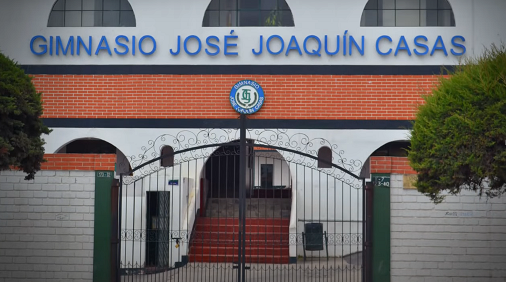
José Joaquín Casas Gym Photo:Courtesy
What is going to happen to the property?
We still don’t know. It’s something we’re going to study.
And what is going to happen to the students and the teaching staff?
Many of the schools that approached were primarily interested in students. There were few who asked me what was going to happen to the teachers.
That’s why I made an agreement with a school, Australiano Campestre. I told them: “Welcome me teachers.” My concern was that teachers and general services staff also had an alternative.
The idea is that some teachers can continue and that more than 100 students can continue together in an educational project that will be different from the José Joaquín Casas Gymnasium, but that is part of that alliance.
We also spoke with other friendly schools, such as Emilio, Santa Francisca Romana and other calendar A schools, to find alternatives for students.
The most difficult grades to place are ninth and tenth, because they are large students and not all schools have places available for them. On the other hand, those in preschool and primary school tend to have more possibilities.
And what role did the District have in this process?
You inform CADEL that you made the decision, as established by law, but it is not that the District says: “What do you need? How can we help you?” There was no such alternative.
And I return to the main point: the problem is that there are not enough children for the number of schools that exist. Only in Usaquén, where we are, there are a large number of educational institutions.
So for you, the main reason for the closure is the lack of children?
Completely. It’s the lack of children.
One does not see that this trend is going to change. The Bank of the Republic has studied demographic behavior and projections show that there will be fewer school-age children. The trend is very complicated and that will also affect universities.
How did the parents react?
The community was very receptive. They are very sad and heartbroken, but they also understand that it is a responsible decision.
They themselves are aware that the school is large and that there are fewer and fewer students. It has been difficult, but there has been no major trauma. The closure has been more emotional than conflictive.
And how do you feel?
I am very affected. I can’t feel that it was a defeat, because a lot was done. But I do feel like I lost a battle.
And, at the same time, when I see how the school has transcended and how we transcended so many people, I feel proud of what was built. There are so many graduates that one meets every day and who have passed through here.
When will the school stop operating?
We finish on December 5, when the last class graduates. We want it to be a very emotional ceremony.
We are going to present some decorations to graduates who have stood out. They don’t necessarily have to be public people. There are many university deans and people who have made great contributions from a low profile.
We want to have a dignified closure. Many alumni are writing to me and proposing that we do something to say goodbye to the school.
The idea is to make an institutional video, a cocktail and a nice farewell in the school space, to close this story as it deserves.
CAMILO ANDRÉS PEÑA CASTAÑEDA – EDITOR TODAY’S LIFE AND CULTURE