The government of USA announced this Monday the cancellation of entry visas to its territory for a group of judges, prosecutors, senior police officers and businessmen from Bolivia, Colombia, Ecuador and Peru, after accusing them of engaging in acts of corruption, links to drug trafficking and actions aimed at undermining democratic stability in their respective countries.
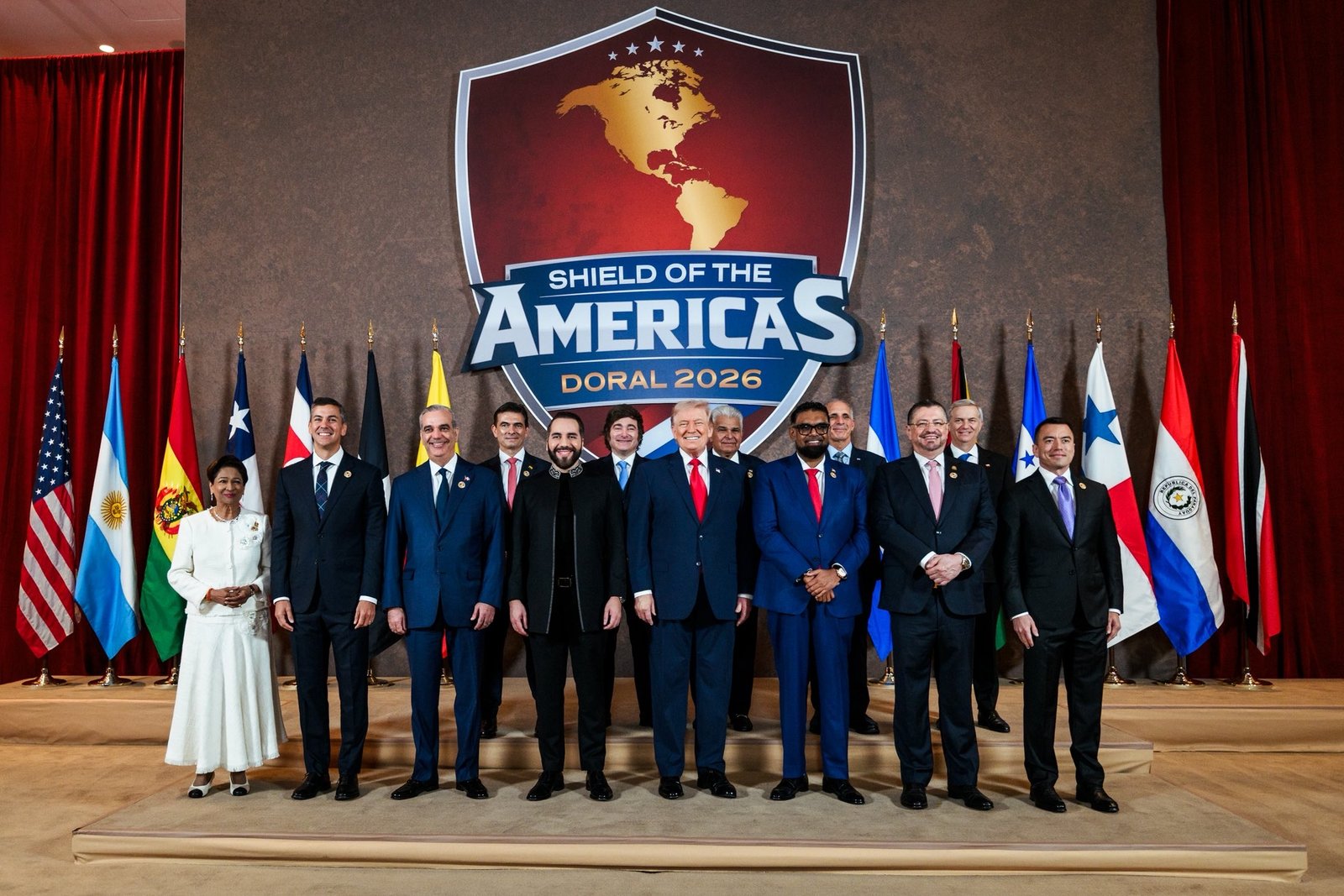
The measure, executed by the State Departmentreaches those sanctioned and their immediate family members, within the framework of the agreements assumed by the regional alliance Shield of the Americas, promoted in March of this year by the administration of President Donald Trump to combat organized crime and impunity on the continent.
Among the affected Bolivian officials, constitutional magistrate Israel Ramiro Campero, Attorney General Roger Mariaca, as well as judges, prosecutors from Santa Cruz and Chuquisaca, and police colonel Frans Cabrera stand out.
In the case of Colombiathe restriction falls on the senator of the Historical Pact Martha Isabel Peralta and the energy businessman Euclides Torres, while in Peru Juan Carlos Núñez, judge of the First Constitutional Court of Lima, was sanctioned.
“Under the trump administrationcorrupt foreign officials can no longer freely enter the United States. “Undermining a democratically elected government is a threat to security and the rule of law in the Americas, and will not be tolerated,” warns the official statement from the State Department.
The announcement of the immigration revocations coincides with the recent meeting of the leaders of the Shield of the Americas on the sidelines of the 81st United Nations General Assembly in New York, where the fifteen member countries agreed to apply batteries of collective sanctions against 24 criminal organizations and influence networks in the region.
The sanctions are applied in the midst of a turbulent South American political panorama, characterized by the state of exception in force in Bolivia, the recent inauguration of the conservative president Abelardo de la Espriella in Colombia, the joint military offensive against organized crime in Ecuador and the beginning of the presidential administration in Peru after a tight electoral process.
He State Department He specified that the list includes nine other Bolivian citizens and four Ecuadorians whose identities will be kept under legal confidentiality, reiterating that the denial of visas will continue to be applied systematically against institutional actors that hinder the fight against narcoterrorism in the region.