105 years is not a round anniversary. Still, it is worth remembering that this September it is 105 years since the schooner “Søkongen” sailed from Nuuk bound for the rest of the Inuit world. Also on board was 25-year-old Arnarulunnguaq, who completed all 18,000 kilometers on the 5th Thule Expedition 1921-24.
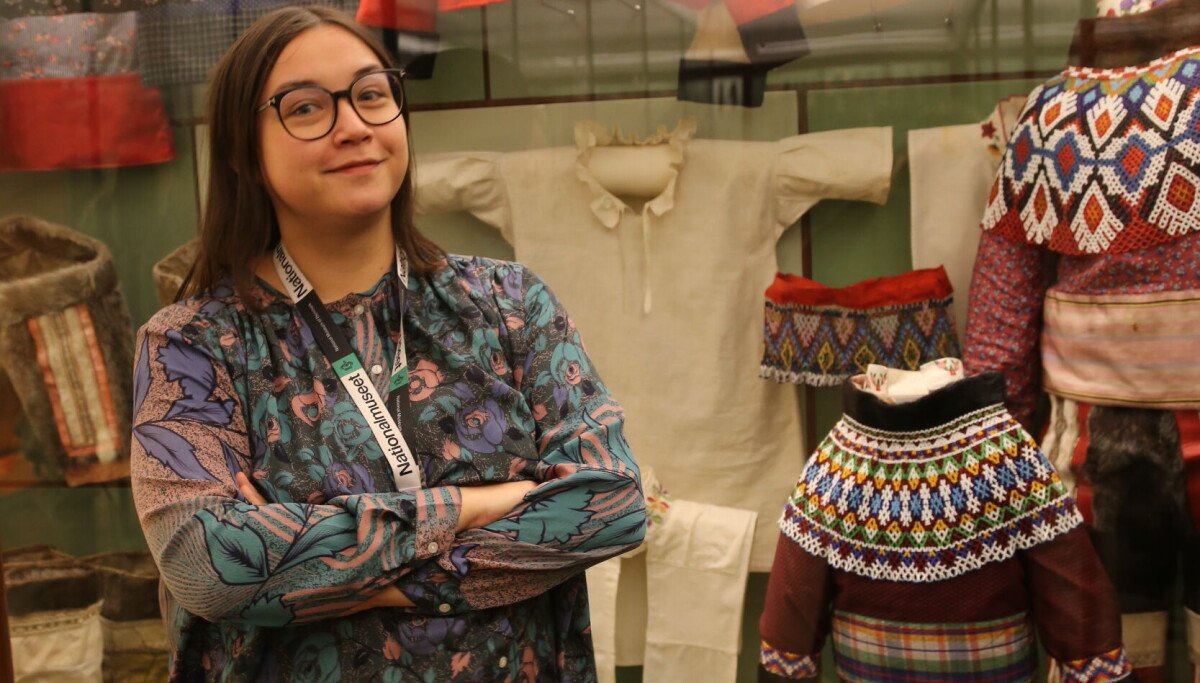
Among the many with a kind thought for the little woman on the big sled journey is cand.mag. in Greenlandic and Arctic studies Ivalo Olsvig, who on 22 September will give a lecture on Arnarulunnguaq at Rigshospitalet in Copenhagen.
105 years is not a round anniversary. Still, it is worth remembering that this September it is 105 years since the schooner “Søkongen” sailed from Nuuk bound for the rest of the Inuit world. Also on board was 25-year-old Arnarulunnguaq, who completed all 18,000 kilometers on the 5th Thule Expedition 1921-24.
Among the many with a kind thought for the little woman on the big sled journey is cand.mag. in Greenlandic and Arctic studies Ivalo Olsvig, who on 22 September will give a lecture on Arnarulunnguaq at Rigshospitalet in Copenhagen.
– Why does Arnarulunnguaq speak so strongly for our time, when the polar explorer Knud Rasmussen has run with all honor and glory for a century?
– I don’t really think that Arnarulunnguaq speaks more to our time than she did previously. It is perhaps more about the fact that today we ask some other questions about history, says Ivalo Olsvig to Sermitsiaq.
– For many years, the story of the great expeditions was largely told through the expedition leader and the great explorer. In the story of the 5th Thule expedition, it was then Knud Rasmussen. Today, other people come to the fore when we ask to a greater extent who actually made the expeditions possible, what knowledge they built on and which people contributed along the way.
Greenland’s history told by Greenland
Ivalo Olsvig became an M.Sc. from the University of Copenhagen in 2018 with a thesis on Arnarulunnguaq and Qaavigarsuaq and their participation in the 5th Thule expedition. Ever since, she has followed in Arnarulunnguaq’s footsteps through lectures and articles and as a consultant on dissemination projects, including theater about Arnarulunnguaq. Today, she is a communications officer at the Nordatlantens Brygge in Copenhagen, and she runs her own consulting company, Ivalo Olsvig (ivaloolsvig.com), at the same time.
– Arnarulunnguaq finds herself in many ways in several of the blind spots of classical historiography: She was a woman, Inuit/Inughuit and not the leader of the expedition, but her work, knowledge and role along the way were part of the prerequisite for the journey. I don’t think the new interest should be understood only as a matter of highlighting an overlooked woman. It is connected with a greater interest in Greenlandic perspectives on our own history and to see Greenlanders as historical actors – not just as people around the expedition leaders whose names were written into the history books, says Ivalo Olsvig.
– Large parts of Greenland’s history have been written down and interpreted by people from outside, but in these years we see Greenland’s history to a much greater extent being told from Greenlandic perspectives. It also makes room for other people, events and narratives. I think that the attention that Arnarulunnguaq is getting right now should also be seen as part of a larger shift in focus towards how and by whom Greenland’s history is told.
– My short version of the answer to Sermitsiaq’s question: Arnarulunnguaq has not become important in recent years. We just got better at spotting how important she has always been, says Ivalo Olsvig.