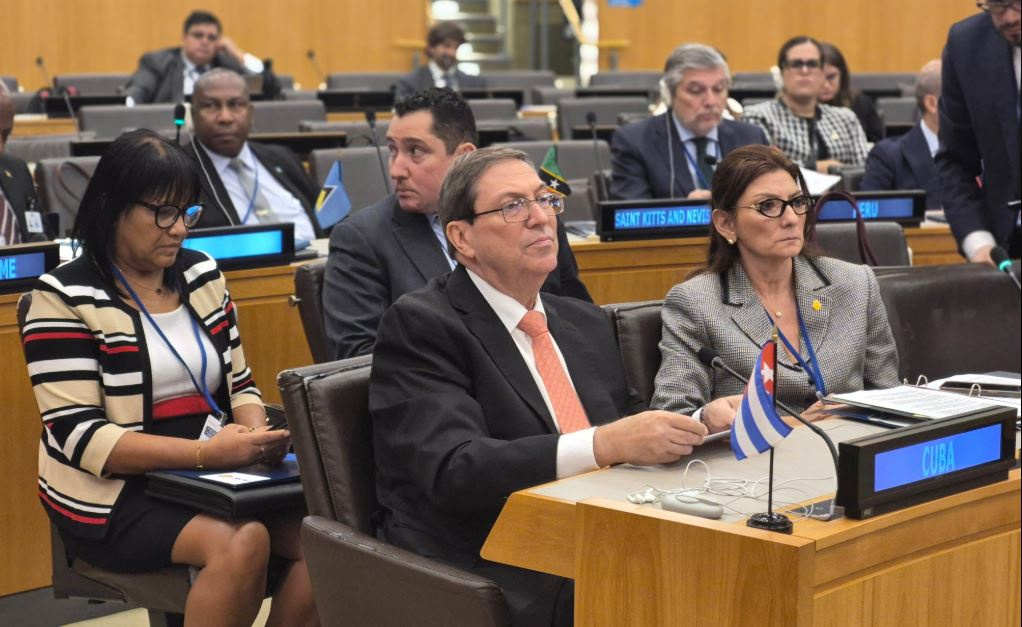
Madrid/The US Government is studying imposing “stricter controls” on Cuban officials traveling to the United Nations, according to a document obtained by Associated Press and confirmed by several officials to the agency. The information is brief and does not indicate what it could translate into, although the purpose would be to prevent Government representatives from voting on the annual resolution against the US embargo on the Island, something contrary to the statutes of the international organization.
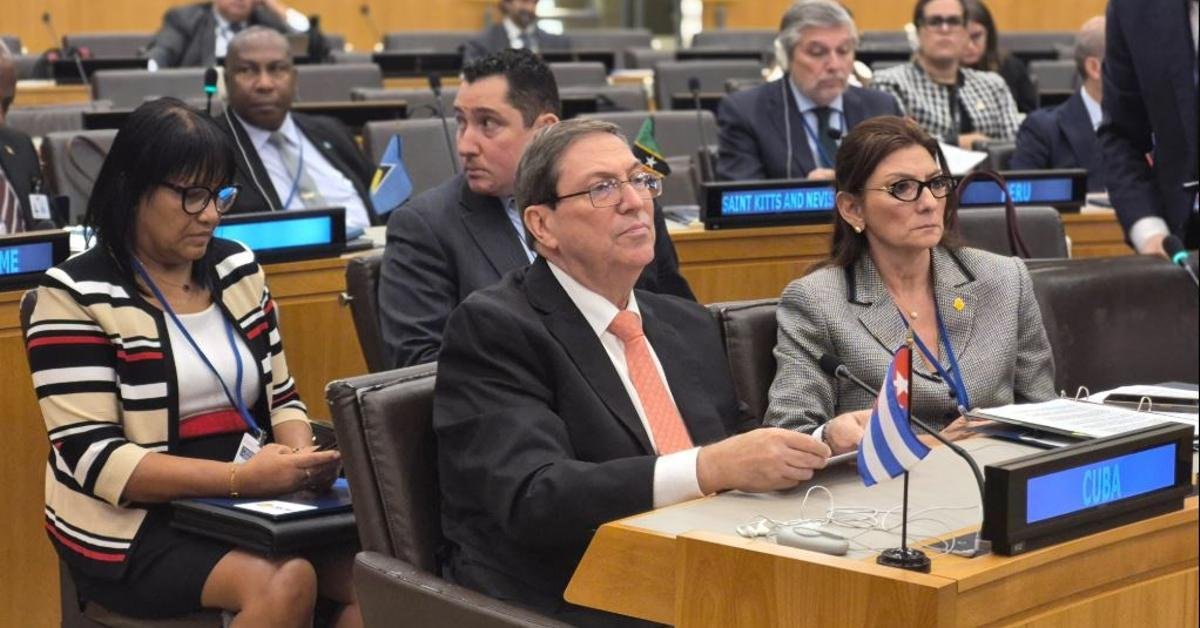
The agency recalls that the Cuban Foreign Minister, Bruno Rodríguez, is among those who could be affected, since there are personal sanctions on him, although all senior officials of the Cuban regime have limitations on their movements through the United States, restricted to their official activity. The designation of Cuba as a State sponsor of terrorism is the basis for these measures by which no senior government official can go beyond a 40 kilometer radius from the United Nations headquarters, located in the heart of Manhattan.
Rodríguez and other members of the Government, They are precisely in New York this week by the 81st UN General Assembly, and they are scheduled to return next month to witness the vote on the resolution, an event that the US apparently wants to prevent. However, officials told AP that there are no details because they are still discussing how to proceed, if anything.
The United States is obligated as a host country by the 1947 UN Headquarters Agreement to issue visas and allow access to representatives of all States.
The United States is obligated as a host country by UN Headquarters Agreement of 1947 to issue visas and allow access to representatives of all member states for the organization’s official activities and there are few exceptions, although the most invoked by Washington is usually the “risk to national security.” That was the assumption used to deny a visa to Iran’s Foreign Minister, Javad Zarif, in 2019 and 2020, among other examples. Another recent case is that of the Palestinian president, Mahmoud Abbas, although Palestine’s status in the UN – where it is a non-member observer state – changes the situation.
If the United States decided to apply an exception to Rodríguez and other Cuban officials that it has not used to date, the effects would be limited. The presence of Cuba’s permanent mission at the UN, currently made up of about 15 people, guarantees the presence – and vote – of the regime in the General Assembly. In addition, the United States can expel members of that team if it demonstrates that they carry out operations that exceed their diplomatic functions, as happened in 2019, but Cuba has the power to replace them with others.
Precisely in September, seven years ago nowaccused two members of the Cuban delegation of “carrying out influence operations” against the United States, abusing their residency privileges. At that moment he decided to expel them from the country and begin to apply a restriction measure to the mission in their movements through New York, which should only be limited to Manhattan. Bruno Rodríguez raised a protest and stated that it was “a vulgar slander” with the “objective of provoking a diplomatic escalation that leads to the closure of bilateral embassies, further tightening the blockade and creating tensions between both countries.”
As the agreements provide, the officials were replaced by others and there were no effects beyond the political scuffle. few weeks laterthe vote on the embargo resolution was held, approved with the favorable vote of 187 countries –Cuba included–. The United States, Israel and Brazil were against it, and Ukraine and Colombia abstained.
In 2025, Cuba again obtained the overwhelming support of the Assembly, although the loss of favorable votes was visible. The text passed with 165 votes in favor, seven against and twelve abstentions, the worst historical result to date, which this year will almost certainly be much worse.