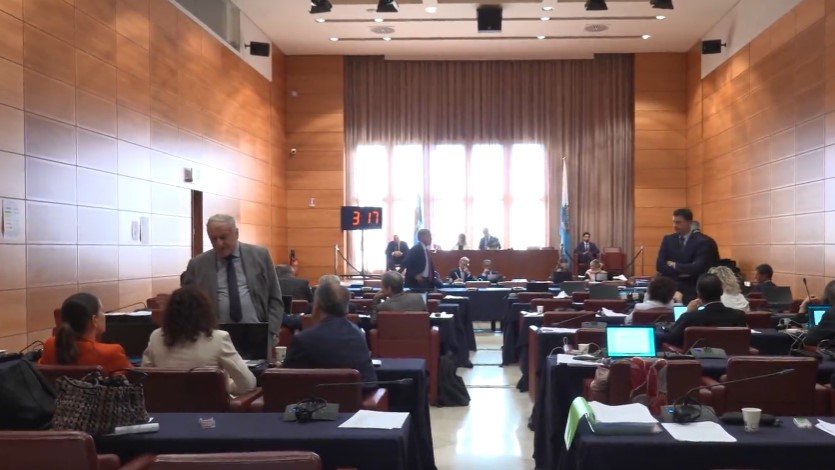
SAN MARINO – The September session of the Council ended yesterday morning, with the discussion focused on the reform of residences for economic reasons and on the bill on incentives to support sporting activity and interventions on public real estate.
The Chamber ratified delegated decree no. 115 of 2026 on the entry and permanence of foreigners in the Republic. During the examination, a Government amendment was approved on the substitute tax on foreign income of holders of atypical residence, equal to 7% of the “net border”, with a minimum of 10 thousand and a maximum of 100 thousand euros per fiscal year. The amendment clarifies that the tax is due even when foreign income is not taxable in San Marino by virtue of agreements against double taxation.
The clarification was contested by Antonella Mularoni (Rf), according to which a tax change of this importance should have been addressed before the decree was issued.
The discussion then moved on to the regulation of residence for economic reasons. The government amendment intervenes on the constraints envisaged for companies already operating, while in the debate requests were made for a broader review of the residence and residence permit system, also in relation to the path to association with the European Union.
Fabio Righi (D-ML) raised the issue of the objectives of the housing policy, asking whether the priority should be the increase in residents or the attraction of qualified entrepreneurs and strategic investments, with clearer criteria for evaluating the economic impact.
The Secretary of State Rossano Fabbri he explained that the provision aims to correct some distortions caused by the succession of regulations over the years, anticipating a broader political discussion on the residence system in the next legislative passages linked to international agreements.
An amendment presented by Rete was also approved which introduces the obligation of a periodic report to the Foreign Affairs Commission on the different types of residences granted, with the aim of strengthening monitoring.
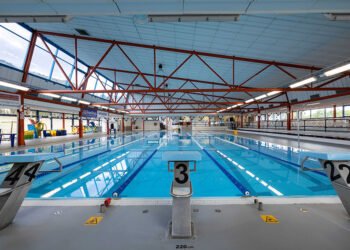
The House then began examining the bill on “Provisions and incentives to support sporting activity”, illustrated by the majority rapporteur Paolo Crescentini (PSD). The provision includes measures to support major sporting events and interventions to enhance public assets through the involvement of private resources.
It is precisely the extension of incentives beyond the sporting sphere that has fueled the political confrontation. Rossano Fabbri he argued that public control over priorities would remain guaranteed, since the State Congress will identify the financeable works each year, then submitting them to the Council for examination during the budget.
Perplexities have come from the opposition Matteo Casali (Rf), Fabio Righi, Gaetano Troina (D-ML) ed Emanuele Santi (Network), who recalled the risk of conditioning public priorities linked to the availability of private resources and dynamics similar to forms of “do ut des”.
Instead, they spoke in support of the measure Gian Nicola Berti (Ar), Dalibor Riccardi (Free) e Barbara Bollini (Pdcs), underlining the possibility of finding additional resources while maintaining public control over strategic choices.
The examination of the paragraph relating to sports incentives will continue in the next council session. At the end of the work, the Most Excellent Regent gave the traditional greeting at the end of the September session.