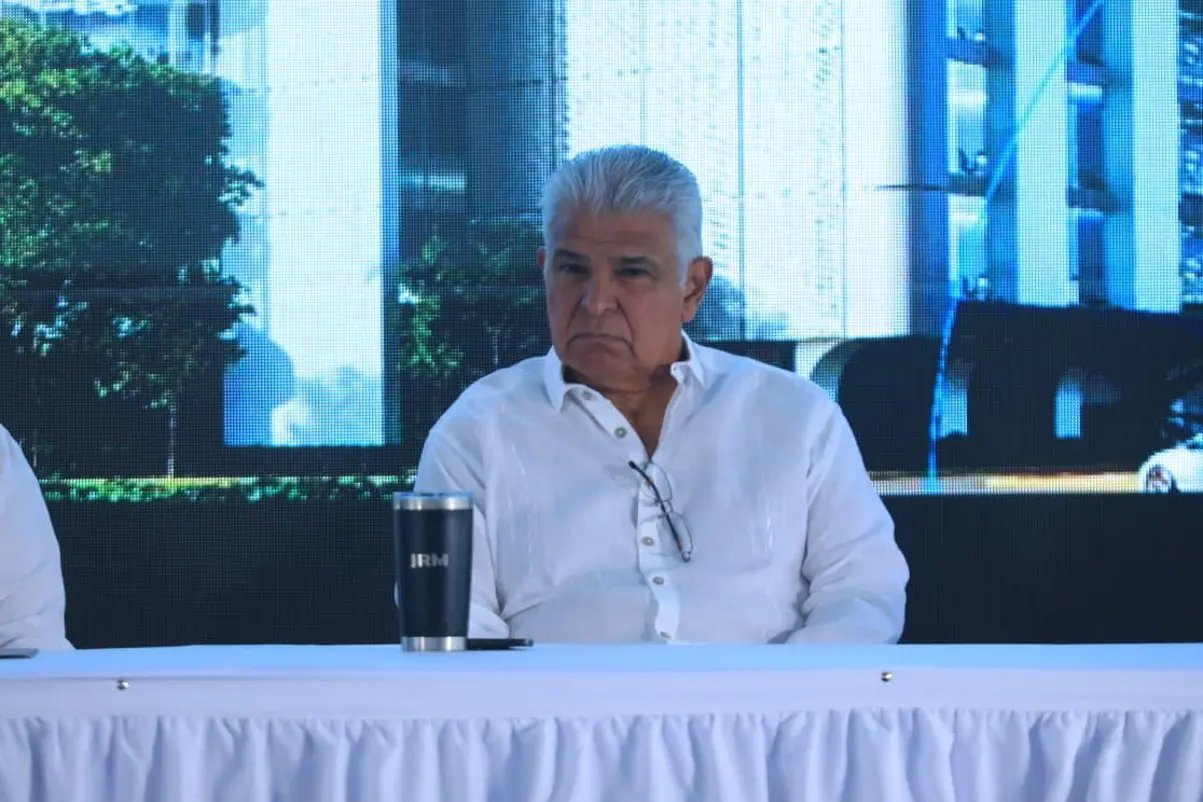
The President of the Republic, José Raúl Mulino, vetoed bill 226 related to greater discounts for retirees and partially objected to bill 594 on reforms to the internal regulations of the National Assembly (AN).
Through a letter sent to the president of the Assembly, Shirley Castañedas, Mulino pointed out that “Although Bill 226 pursues a legitimate social objective, its provisions violate what is established in the legislation and the National Constitution.”
Bill 226 of 2025 sought to modify and add articles to Law 6 of 1987 on benefits for retirees, pensioners and the elderly.
Regarding the reforms to the AN, the president explained that it was partially objected for reasons of unaffordability and inconvenience, since a total of nine articles of the text have been objected.
⚖️ President José Raúl Mulino totally vetoed bill 226, as well as bill 594, which reforms the Internal Regulations of the National Assembly. pic.twitter.com/LcVsvl9BU9
— La Estrella de Panamá (@EstrellaOnline)
September 20, 2026
Bill 226 sought to establish discounts of 50% from Monday to Thursday and 40% on Fridays, Saturdays and Sundays, applicable on regular and promotional lodging rates.
The initiative aimed to update the benefits established in Law 6 of 1987 in the face of the increase in the cost of living and the economic needs of older adults.
After the reactions of the commercial sector, the Presidency decided to set up a dialogue table between the private sector, retirees and state ministers.
After two meetings, the Minister of Economy and Finance, Felipe Chapman, confessed that among the alternatives that appeared were ‘special support’ and ‘monetary transfers’, although he stressed that “all ideas are on the table” to address a clearly identified problem.
However, this week, the president of the Panamanian Association of Business Executives, Alberto López Tom, had announced that after a consensus the bill would be returned to the AN Assembly.
During these meetings, he said, there was agreement on the need to modify the current text, because, in its original version, the proposal was not viable.
With 37 votes in favor and 21 against, the plenary session of the AN had approved in the third debate the controversial reforms to the Internal Regulations of this State Body.
The decision came amid a hundred modifications that included the power of deputies to manage community works, name family members, and count tours in their circuits as attendance.
The measures have been questioned within the Assembly and by organized civil society.
The Foundation for the Development of Citizen Freedom and Transparency, for example, had asked Mulino to object as unenforceable and not sanction the bill.
Through an open letter addressed to the president, the organization expressed its concern about several provisions of the initiative, considering that they distort the constitutional functions of the deputies and could once again generate mechanisms linked to political clientelism.
According to Libertad Ciudadana, the project establishes that deputies must “manage, promote and supervise” specific programs and projects in their respective circuits, in addition to contemplating a minimum investment for social works and projects within the General State Budget.