
All views and claims in this artilce belong solely to the author.
There are some lives which provide more than biography. They provide a vantage point upon history.
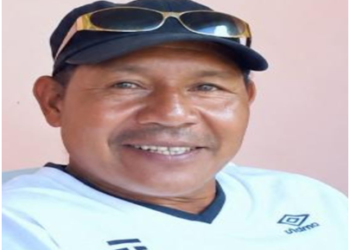
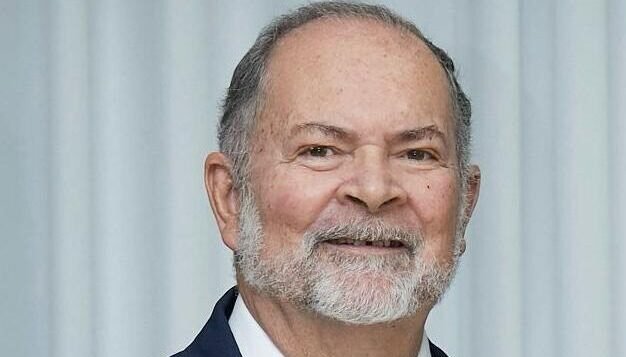
Henry Volney’s life is such a life.
Born in Montserrat in 1952, during the closing decades of British colonial rule in the Caribbean, Volney belonged to a generation that came of age under the Union Jack but would spend most of its adult life building the institutions of independent Caribbean states. His father, Cyril Frederick Louis Volney, was a St. Lucian engineer associated with Cable & Wireless whose work took the family from island to island. His mother came from the Dominican Nicholls family, connecting Henry to one of the old-established families of colonial Dominica.
Public genealogical accounts identify Cyril Frederick Louis Volney’s wife as Rosalind Nicholls-Volney, descended through the Nicholls, Royer and Shillingford lines. The Nicholls family occupied a prominent place in Dominica’s colonial professional and social history. That extended family also produced Phyllis Shand Allfrey, author, political activist and one of the founders of the Dominica Labour Party.
That ancestry gives Henry Volney’s testimony a particularly interesting quality. He emerged from a family connected to the older, comparatively privileged professional strata of colonial Dominican society, yet became an educator whose career served generations of young Dominicans from every social class.
His story therefore spans two Dominican worlds: the ordered but sharply stratified society of the colonial period and the more democratic, turbulent, assertively Caribbean society that emerged through Black Power, nationalism and independence.
A Caribbean Childhood
Volney’s childhood was Caribbean in the fullest sense.
Because his father’s employment required movement among the islands, young Henry was educated not only in Dominica but at different times in Montserrat, Barbados, Antigua and St. Kitts. His first schooling, as he remembers it, was at a small private institution in Montserrat before the family returned to Dominica.
That movement gave him an unusually regional outlook from childhood. Long before CARICOM and before governments routinely spoke of Caribbean integration, the Volney household was already living the reality of an interconnected Caribbean.
He came from a large family of nine children, including eight siblings. In his recollections, he speaks of siblings who entered banking, medicine and other professions and, like so many Dominican families of that generation, eventually scattered across the Caribbean, Britain and North America.
There was Cyril, the eldest, who pursued a career in banking; Claire, who would eventually leave Dominica for life overseas; Ronald, whose determination was demonstrated by his pursuit of medicine despite suffering a serious diving injury in 1969; Cheryl, who also entered banking; and Christian, remembered for an unusually gregarious personality and an ease in crossing the social boundaries that were once far more rigid in Dominican society.
The wider family included Henry’s brother Herbert Volney, who later became a jurist and public figure in Trinidad and Tobago.
Their generation was raised at a time when occupation, complexion, family name, school and social connections could still exercise an unusually powerful influence over one’s prospects. Henry remembers, for example, the prestige attached to obtaining employment in a bank. Such positions were scarce and were associated with education, social standing and, in the racial hierarchies inherited from colonial society, often with proximity to the lighter-skinned professional and commercial classes.
Yet those barriers were already beginning to crack.
Education would be one of the great instruments that broke them.
St. Mary’s Academy and the Christian Brothers
In 1961, at approximately nine years old, Henry entered St. Mary’s Academy in Roseau after passing its entrance examination.
He remembers the uniform: khaki, accompanied by the blue-and-gold school tie.
He remembers the discipline.
And, most importantly, he remembers the teachers.
St. Mary’s Academy was then being shaped profoundly by the Congregation of Christian Brothers, the Catholic teaching order founded in the tradition of Edmund Rice. The same religious order founded Iona College—now Iona University—in New York in 1940. The Christian Brothers’ historical records place their mission at St. Mary’s Academy in Roseau from 1956 through the upheavals of the early 1970s.
For Volney, their importance was not merely ecclesiastical.
They brought organization, a culture of study, extracurricular activities, sport and a wider intellectual and cultural world for Dominican boys.
Henry remembers basketball becoming a major feature of school life and producing outstanding players. He remembers cricket and football, the Glee Club, boxing promotions and the remarkable breadth of activities available to young men.
He also recalls one of the most socially significant innovations of the Brothers: night study.
For boys who came from homes where electricity was unavailable or unreliable, the school remained open in the evening. Students could study beneath proper lighting rather than allow poverty to determine academic performance. In a society still deeply divided by income and class, such apparently modest measures could be transformative.
The schoolyard also became an arena for spirited boxing matches among student boxers. Henry remembers young fighters battling it out in bouts at St. Mary’s Academy, contests that drew the attention and excitement of the wider school community. Among those who took part were future music-industry icons Gordon Henderson, the pioneering Cadence-Lypso music legend and bandleader of Exile One, and Marc Marie, who would later become an economist and the husband and manager of iconic Dominican singer Olivia Olivacee Marie. These matches were more than youthful spectacles: they reflected the energy, competitiveness and camaraderie of a generation whose members would go on to shape Dominica’s cultural, professional and public life.
Volney himself was athletic as well as scholarly, participating in cricket, football and basketball and retaining memories of schoolboy contests decades later.
But the Academy was not isolated from the political currents beginning to shake the Caribbean.
When Black Power Came to St. Mary’s
By the late 1960s and early 1970s, the old colonial order was under assault throughout the Caribbean.
African independence had transformed the international landscape. The American Civil Rights and Black Power movements had given young Caribbean people a new vocabulary of racial pride. Walter Rodney, C. L. R. James, Frantz Fanon, Kwame Nkrumah, Malcolm X and other voices circulated among an increasingly politically conscious generation.
Dominica was not immune.
At St. Mary’s Academy, questions of hair, dress and discipline became proxies for larger questions: Who determined what was respectable? What was acceptable Black identity? Why should European standards remain unquestioned in a predominantly African-descended society approaching the end of colonial rule?
Historical accounts record a particularly important confrontation at SMA in 1972, when a dispute between the principal and a student over an Afro hairstyle contributed to a virtual student strike and a wider Black Power confrontation. The Christian Brothers themselves became caught within the racial and political tensions of the period, and their Dominica mission was disrupted.
Volney’s own student years preceded the climactic 1972 confrontation, but the institution in which he had been formed was entering revolutionary times. When he returned to education as a teacher, he would encounter students who no longer automatically accepted the authority structures inherited from colonial society.
The necktie itself could become political.
Henry remembers the movement away from the old tie-and-shirt conventions toward the shirt-jack, part of a larger Caribbean rejection of European dress standards unsuitable to tropical life and increasingly regarded as symbols of an earlier age.
What had once simply been called discipline was now being interrogated.
What had once been called respectability could be challenged as colonial mimicry.
And the teacher standing before a classroom could no longer assume that his students would accept inherited orthodoxies without argument.
From St. Mary’s to the University of the West Indies
Volney was among the comparatively small number of Dominicans of his generation able to proceed to university at a time when university education remained a rare privilege.
He studied History and Economics at the University of the West Indies, Cave Hill Campus in Barbados.
In Henry Volney’s youth, a university degree marked a person as belonging to a small emerging Caribbean intellectual class. History was especially significant for a West Indian student of that generation, as the region increasingly confronted the histories of slavery, emancipation, Haiti, resistance, African civilization, labour rebellion, federation and anti-colonial struggle.
Volney returned to Dominica not merely with a degree but with a profession.
He became a teacher.
The Teacher and the Activist Generation
At St. Mary’s Academy, Volney developed a reputation as a serious teacher of history. Former students remember a demanding but knowledgeable educator. An account of SMA’s history places Henry Volney among the teachers of the period remembered for maintaining the Academy’s high academic standards.
His career eventually took him to the Sixth Form College, affectionately known to generations as SiFoCol.
Among the students he taught European History were young graduates of the Dominica Grammar School, including Gabriel J. Christian and Irving W. André.
Christian and André came out of the politically charged independence generation. Both would pursue law, scholarship, historical writing and public affairs. In 1992, they would establish Pont Casse Press, dedicated to recording and publishing Dominican and Caribbean history.
Thus the historical chain becomes visible: a boy formed at St. Mary’s Academy under the late-colonial educational culture goes to the University of the West Indies, returns as a historian and teacher, and teaches a generation coming of age during independence—one that would itself become writers, lawyers, judges, publishers and chroniclers of Dominican history.
The classroom is sometimes where national history quietly changes hands.
The Rise of SiFoCol
The Sixth Form College represented another important stage in the democratization of Dominican education.
Advanced-level instruction had initially been scattered among institutions including St. Mary’s Academy, the Dominica Grammar School and Convent High School. The Sixth Form College began operating in the mid-1970s and became the principal bridge between secondary education and university.
Before mass access to overseas universities, SiFoCol offered talented students an affordable path to advanced study. The doctors, lawyers, teachers, civil servants, scientists, engineers, accountants and public officials who emerged from its classrooms would help staff the institutions of the newly independent state.
Henry Volney became one of SiFoCol’s defining educators.
In 1990, when Rupert Sorhaindo left academic administration for government, Volney became Director of the Academic Studies Division, the successor structure to the Sixth Form College. Dominica State College’s official history records his service as director from 1990 until 1998.
His wife, Carmen Yvonne Severin Volney, played a decisive role in encouraging him to accept leadership. Henry later wrote that she pushed him to take the directorship when he would have preferred the familiar world of teaching at SMA. They married in 1990 and had a daughter, Giselle, who went on to become a physician.
After his administrative leadership, Volney remained involved in advanced-level education. Government records later identify him as coordinator of the A-Level programme at Dominica State College. He was still explaining and administering the programme publicly in 2015.
His career in education eventually approached half a century.
The Teacher Looks at Today’s Young Men
When the conversation turns to contemporary Dominica, Henry Volney becomes most provocative.
He is troubled by what he sees as the declining educational ambition of too many Dominican boys. This is not an indictment of every young Dominican male; Dominica continues to produce outstanding young men. His concern is a pattern he believes he witnessed developing over decades in classrooms and educational programmes.
Where once young men competed aggressively for academic distinction, he recalls reaching a point at which girls and young women substantially outnumbered boys in advanced educational programmes, sometimes by ratios closer to seven or eight females for every two or three males.
Volney points first to the home. He believes Dominican families have often imposed greater discipline upon daughters than upon sons. Girls are more closely supervised, he argues, while boys are too often permitted freedoms at precisely the age—roughly thirteen through eighteen—when structure is most needed.
The result, in his view, has been a generation of young women increasingly focused on examinations, university and professional advancement while too many young men drift away from formal education.
For some young men, he laments, ambition appears to have contracted to little more than getting a motorcycle.
The remark is intentionally provocative. He is not condemning motorcycles but the shrinking of horizons: a society that once taught children to aspire toward professions, craftsmanship, public service, entrepreneurship and mastery of difficult subjects may be producing too many young men satisfied by immediate consumption and display.
Marijuana and the Lost School Years
Volney also speaks candidly about marijuana, not as a criminologist or physician but as an educator who spent decades watching adolescents pass through classrooms.
In his judgment, marijuana became part of a broader culture of adolescent rebellion that damaged the educational prospects of some young men. He remembers the period when marijuana became increasingly visible among Dominican youth and believes boys were disproportionately vulnerable to allowing drug use and peer culture to displace study.
His criticism is directed particularly toward the casual normalization of drug use among adolescents. He distinguishes between abstract debates over marijuana policy and the reality of a thirteen-, fourteen- or fifteen-year-old whose school performance, discipline and ambitions may already be fragile.
For Volney, the central issue is developmental:
What happens to the child?
Does he read and study? Does he arrive at school prepared? Does he possess the self-command necessary to postpone gratification? Does he have adults who know his friends, whereabouts and habits?
Volney fears that where family supervision collapses, marijuana can become part of a progression of disengagement, exposing young people in the worst cases to more destructive substances and criminal environments.
Whether every causal connection can be scientifically demonstrated is less important to understanding his testimony than recognizing where it originates: nearly fifty years spent observing Dominican students.
“How Do You Speak?”
Volney’s concern does not end with examinations. He worries about language, manners, reading, courtesy, grace and the ability to carry oneself appropriately in different social settings.
The old educator detects a decline in what earlier generations called deportment. He remembers an educational culture in which a young person was expected to know how to greet an elder, address a stranger, write a coherent letter and speak Standard English when circumstances required it.
This does not mean rejecting Creole or pretending to be English. It means possessing range.
A properly educated Dominican, in that older conception, could enjoy the richness of Dominican Creole culture while also commanding the language required in a university seminar, courtroom, diplomatic meeting, scientific conference or international boardroom.
Volney worries that insufficient reading has reduced that command. Vocabulary contracts when reading contracts; expression suffers, and eventually thought itself may suffer, because the ability to distinguish between ideas is intimately connected to the language available to express them.
His concern about manners is similarly deeper than etiquette. Courtesy, in Volney’s worldview, is a form of social discipline. A society in which people cannot disagree without abuse, listen, wait their turn or extend elementary courtesies is losing habits required for civilized communal life.
Yet He Is Not Calling for a Return to Colonialism
It would be easy to misunderstand Volney’s nostalgia for discipline as nostalgia for colonial rule.
It is not.
The colonial Caribbean contained injustices that no serious historian should romanticize: racial hierarchy, restricted political power, class barriers, economic dependence and educational opportunities unavailable to much of the population.
The lesson Volney draws from the past is not that Dominica should recreate colonial society. It is that independence should retain what was useful—discipline, scholarship, responsibility and high standards—while discarding what was oppressive.
A nation becomes mature when it can discriminate between inheritance and injustice.
Education Must Serve Dominica
After nearly five decades in education, Volney also questions whether Dominican schooling is sufficiently connected to the country’s economic needs.
He argues for stronger practical and technical education. Dominica needs people trained for agriculture, tourism, aviation, technology, construction, hospitality, engineering, the marine economy, modern trades and entrepreneurship.
Education, in his view, cannot simply become an assembly line sending every talented young Dominican toward a conventional university degree and, eventually, migration.
The education system must ask:
What knowledge and skills does Dominica itself require in order to prosper?
The Sixth Form College that Henry Volney once helped lead eventually became part of the institutional foundation of Dominica State College in 2002, when the island’s academic, technical, teacher-training and nursing institutions were consolidated.
His warning is that access alone is insufficient.
Education must have purpose.
The Bridge Player
There is another Henry Volney beyond the classroom.
He is a formidable bridge player.
The card table may seem far removed from educational administration, yet perhaps it is perfectly suited to the historian: memory, probability, discipline, inference and strategy.
Volney represented Dominica in regional bridge competition for years. In the 2013 OECS championships, Henry Volney and Allan Guye finished second among twenty-two pairs in the Open Pairs competition, while Volney also participated in Dominica’s strong showing in team competition.
In retirement, he has remained involved in organizing and promoting bridge in Dominica.
The teacher still enjoys making minds work.
Henry Volney’s Witness
The value of Henry Volney’s story is ultimately not that every opinion he expresses must be accepted without qualification. Oral history is valuable precisely because it preserves perspective.
Here is a man born under colonialism who watched the colonial order disappear; a boy from a family tied to Dominica’s old professional establishment who lived to see mass education transform the social structure; a St. Mary’s Academy scholar formed by the Christian Brothers who witnessed Black Power challenge inherited notions of authority and racial respectability; and an early University of the West Indies graduate who returned home when many educated West Indians departed permanently.
Here is a teacher of European History who taught Gabriel J. Christian and Irving André before either became a lawyer, writer or publisher and decades before their work through Pont Casse Press became another instrument for preserving Dominican history.
Here, now, is the elderly teacher looking back upon almost three-quarters of a century and asking uncomfortable questions of the generations that followed him:
Why are so many boys falling behind?
Where has ambition gone?
Who is raising the children?
What are they reading?
How are they speaking?
What are they consuming?
What do they want their lives to become?
And what kind of education does an independent Dominica actually require?
Those questions deserve attention even when we disagree with some of Henry Volney’s answers.
For this is what elders are supposed to do.
They remember.
They compare.
They warn.
They preserve the things that younger generations never saw.
Henry Volney remembers a Dominica of neckties and shirt-jacks; Christian Brothers and Black Power; cricket fields and night study; Cable & Wireless families moving between islands; scarce university places; SiFoCol classrooms alive with argument; independence-minded students challenging their teachers; and young men and women for whom education could alter the trajectory of an entire family.
The world he describes is gone.
But its lessons need not disappear with it.
And perhaps therein lies the real value of Henry Volney’s testimony.
His story is not simply the biography of a distinguished Dominican educator.
It is the story of a country crossing the bridge from colony to nation—and of a teacher who stood in the classroom while history crossed with it.