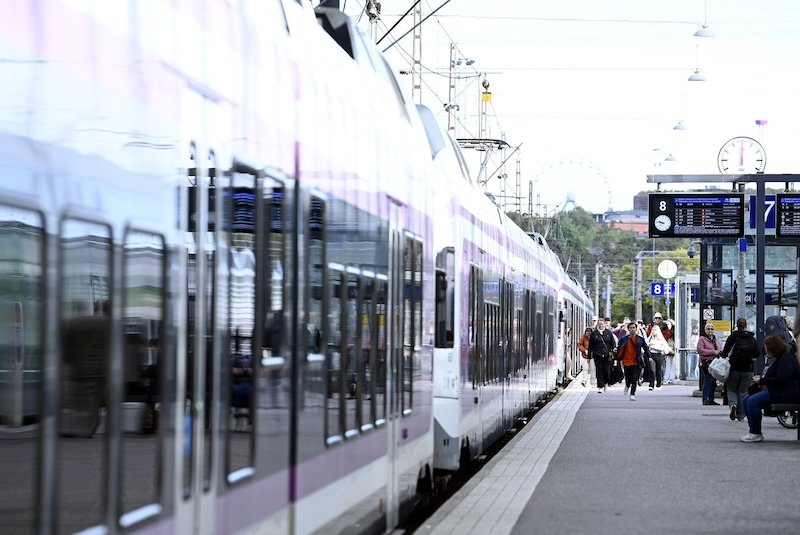
More than four in ten residents in the Helsinki region report feeling unsafe while using public transport, with many changing travel habits or avoiding certain services, according to a new survey commissioned by Helsinki and Espoo.
The survey, based on responses from over 1,000 residents, found that 41 percent had experienced safety-related concerns when travelling. The findings point to a direct link between perceived insecurity and reduced use of buses, trains and metro services.
Some respondents said they had stopped using commuter trains due to fear. Others reported choosing private cars instead, citing safety concerns as a deciding factor.
Women reported higher levels of concern than men. Among female respondents, 43 percent said they had experienced safety issues, compared with 30 percent of male respondents.
The most common cause of unease was disruptive behaviour and the presence of groups perceived as threatening at stations and on vehicles. Concerns increased during evening and night hours, when fewer passengers and limited staffing heightened the sense of risk.
Sasu Nuokkola, a specialist at the City of Espoo, said perceptions of safety influence behaviour even without direct incidents. “The feeling of insecurity affects people’s mobility choices even when there is no personal experience of danger,” he said.
Physical conditions also shaped perceptions. Respondents highlighted poor lighting, unclean environments and deteriorating infrastructure at stations as factors that reduced their sense of safety. Commuter rail stations drew repeated criticism in open responses.
Passengers called for more staff presence at stations and on vehicles. Views on security personnel varied, with some respondents saying guards increased safety while others said their presence had the opposite effect.
The survey also pointed to wider concerns in the transport environment. Pedestrians reported risks from fast-moving vehicles at crossings and conflicts with bicycles and electric scooters. Winter maintenance issues, including icy surfaces and snow build-up, were also cited as safety hazards.
The study forms part of the EU-funded SOLMU project, which aims to promote sustainable mobility solutions in the Helsinki region.
HT