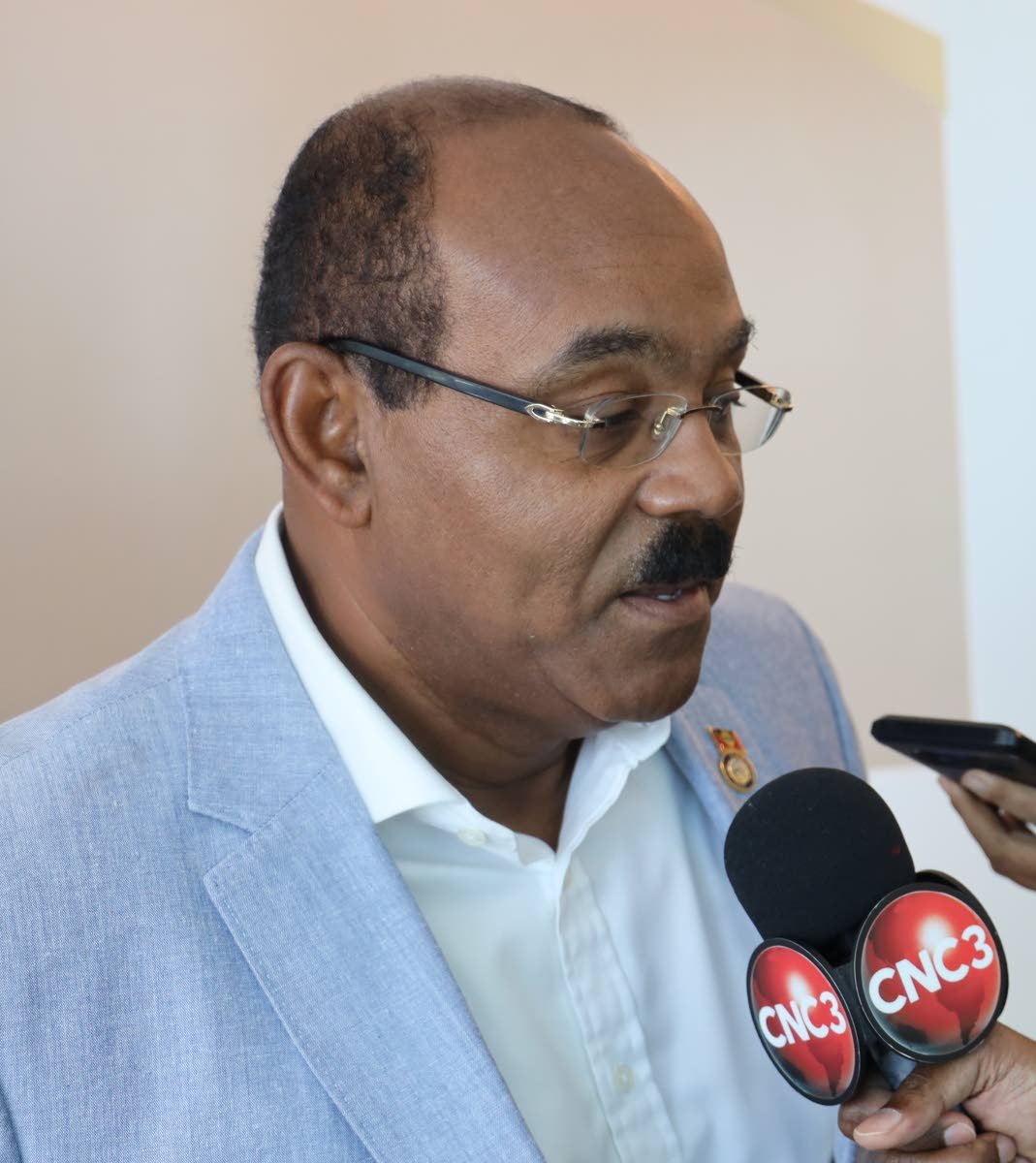
Antigua and Barbuda Prime Minister Gaston Browne has intensified his clash with the regional judiciary, questioning where associations representing women judges were when vulnerable girls were being raped and sexual offenders were receiving what he described as lenient prison sentences.
Browne’s latest comments follow a joint rebuke from five regional associations representing women judges, which expressed “grave concern” over his controversial threat to deport a sitting judge over sentencing decisions.
In a social media post, Browne shared a graphic asking: “Where were the concerns and rebukes of these regional women judges against the injustices, when little vulnerable girls were being raped and the sexual predators, pedophiles were given less than five years in prison? Where were you?”
He also shared a lengthy statement, attributed to an unknown author, which warned of an “unchallenged rogue judiciary” and accused judges of engaging in judicial activism.
“Wokeness has taken over our civilization!!” the statement said, arguing that judges were disregarding legislative guidelines and imposing sentences “in line with their liberal orthodoxy.”
It contended that the three branches of government, the executive, legislature and judiciary, must be able to hold each other accountable and argued that mechanisms should exist outside of the judiciary to address what it described as “rogue and activist judges.”
Browne added his own comment that the three branches “must hold each other accountable, to ensure responsible governance.”
The escalating dispute began after Browne criticised what he considered inadequate sentences for serious crimes during a national security meeting on August 10.
Addressing an unnamed judge, Browne warned that if the judicial officer could not follow Parliament’s lead in imposing longer sentences, the judge should leave Antigua and Barbuda voluntarily or face deportation and designation as persona non grata.
The Antigua and Barbuda Bar Association subsequently described the remarks as a grave threat to judicial independence and called on Browne to withdraw them and affirm that executive powers would not be used to influence or punish judicial officers.
Browne rejected that demand, telling the association in a Facebook post: “Here is my response to your request for an apology:Piss off.”
The controversy then widened regionally, with the Caribbean Association of Women Judges, Commonwealth of The Bahamas Association of Women Judges, Eastern Caribbean Association of Women Judges, Guyana Association of Women Judges and Trinidad and Tobago Association of Women Judges issuing a joint statement.
They argued that threatening a judge with deportation over sentencing could not be characterised simply as robust criticism and stressed that judges must decide cases according to the Constitution, law, evidence, sentencing guidelines and binding appellate authority.
Browne has maintained that judicial independence is essential but does not place judges or their decisions beyond public criticism. He previously said his concerns were prompted by complaints from law enforcement officials and citizens about sentences in firearm and statutory rape cases, insisting that as Prime Minister he has a duty to safeguard the public.