
Dominica has joined Indigenous communities around the world in marking the United Nations-designated International Day of the World’s Indigenous Peoples earlier this week.
Adopted in 1994, the UN’s International Day of the World’s Indigenous Peoples marks the first meeting of the United Nations Working Group on Indigenous Populations, held in Geneva in 1982 under the Sub-Commission on the Promotion and Protection of Human Rights.
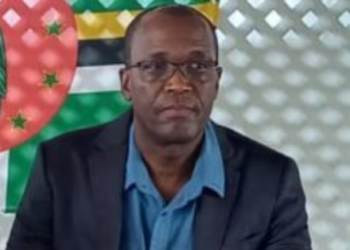
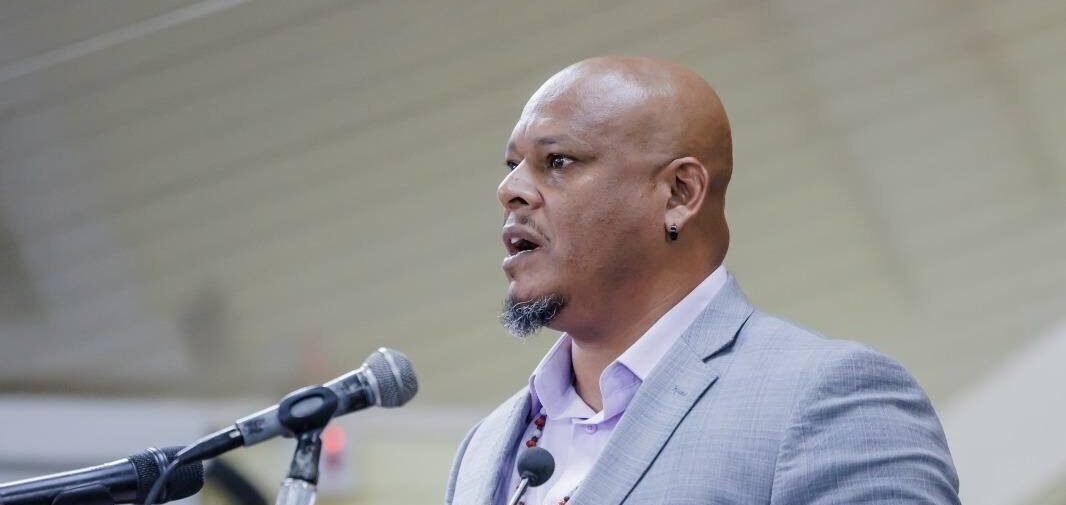
Commemorating the occasion on August 9, Minister for Kalinago Upliftment Cozier Frederick highlighted the resilience, culture and continuing contribution of the Kalinago people.
In his message, Frederick said the observance carries particular significance for Dominica because the Kalinago people remain a living and resilient Indigenous people whose identity continues to shape the country’s present and future. He emphasized that the Kalinago story is not simply one of history, but one that continues to be written by each generation.
This year’s United Nations theme, “Honouring Indigenous Midwives: Safeguarding Life and Well-being,” was a central focus of the minister’s message. Frederick paid tribute to generations of Kalinago women who served as midwives, describing their work as extending far beyond healthcare to include culture, community, continuity and survival.
He noted that these women carried traditional knowledge while adapting to modern healthcare, serving mothers in their homes, community health centres and hospitals.
Frederick specifically honoured six Kalinago midwives: Bernadette John Frederick, Bernadette Sanderson, Doreen Ettienne, Sylvie Paris-Warrington, Winnie Joseph and Porshia Burton.
He said their legacy should be measured not simply by the children they helped deliver, but by the generations that followed.
The tribute was also personal for Frederick, who revealed that Bernadette John Frederick was his grandmother and the midwife who brought him into the world. He said her role connected his own life story to the women being honoured.
Looking ahead, Frederick stressed that celebrating Indigenous heritage must be matched by action.
He called for the protection of Indigenous rights, cultural diversity and traditional knowledge, while strengthening communities and ensuring Indigenous people have a role in shaping the future.
He said the Ministry of Kalinago Upliftment remains committed to preserving the Kalinago language and traditions, expanding economic opportunities, building climate resilience and empowering younger generations.
Frederick also argued that Indigenous knowledge should not be treated as something belonging only to the past. He said ancestral knowledge can help communities respond to climate change and build more sustainable futures.
As Dominica joined the global observance, Frederick emphasized that Indigenous peoples are not simply part of history but remain part of the present and future. He said protecting Indigenous cultures and knowledge benefits not only individual communities, but humanity as a whole.
The minister closed by calling on the Kalinago community and Indigenous peoples worldwide to continue protecting their heritage, strengthening their communities and carrying their stories forward for generations to come.
According to the UN, indigenous people make up roughly 5% of the world’s population, at 476 million. They represent 5,000 cultures and speak the majority of the world’s 7,000 languages.
The Kalinago comprise approximately 3,000 people, the largest remaining indigenous inhabitants in the islands, and are concentrated on Dominica’s east coast.
***
Read the minister’s full remarks below:
TODAY, DOMINICA SPEAKS
From the mountains of Waitukubuli to the shores of the Caribbean, from the Kalinago Territory to every corner of our nation, we join Indigenous peoples across the world in celebration, remembrance and pride.
Today, we celebrate the people who endured.
The people who preserved.
The people who carried their identity across generations and refused to allow the passage of time to erase who they are.
Today, we celebrate Indigenous peoples.
And for Dominica, this celebration carries a profound meaning.
Because here, on this beautiful island of Waitukubuli, the Kalinago remain.
We remain a living people.
A proud people.
A resilient people.
Our presence is a declaration that Indigenous identity has survived, continues to matter, and continues to shape the future of this nation.
The Kalinago story is therefore not a story confined to the past.
It is a story still being written.
And we are writing it today.
This year, the United Nations has chosen a theme of extraordinary significance:
“Honouring Indigenous Midwives: Safeguarding Life and Well-being.”
Today, I ask us to pause and remember the women whose names may never have appeared in history books, whose photographs may never have hung in great halls, and whose service was often performed quietly and without ceremony.
But whose hands welcomed generations.
These women stood beside mothers at some of the most sacred moments of human existence. They carried knowledge passed down through generations. They understood the rhythms of the body, the strength of the mother, and the vulnerability of the newborn.
But they understood something even greater:
When you bring a child into the world, you are not simply delivering a baby.
You are delivering the future.
Indigenous midwifery was never simply about healthcare.
It was about ensuring that one generation could place its hands into the hands of the next and declare:
“Our story continues.”
For generations, Kalinago midwives served our people with courage, wisdom, compassion and unwavering dedication.
They travelled to homes. They served in community health centres. They adapted as our healthcare system evolved and eventually worked alongside modern medical professionals in hospitals.
Yet through every change, they carried something with them:
The wisdom of their people.
They embraced progress without abandoning tradition. They welcomed modern medicine without forgetting ancestral knowledge. And whenever a mother needed them, they answered the call.
Their reward was not wealth.
Their reward was not fame.
Their reward was knowing that another Kalinago child had safely entered the world.
And look at what those children became.
Chiefs. Teachers. Doctors. Nurses. Lawyers. Ministers of Government. Entrepreneurs. Artists. Farmers. Community leaders. Parents. Citizens. Builders of Dominica.
The measure of these women, therefore, cannot simply be counted in the number of babies they delivered.
Their legacy must be measured in generations.
Every child they welcomed represented another possibility. Another dream. Another future. Another chapter in the story of the Kalinago people.
Their hands did not simply deliver children.
Their hands delivered generations.
And so today, as Minister responsible for Kalinago Upliftment, and as Parliamentary Representative for the Salybia Constituency, I stand with immense pride to call their names.
Not because their service needs our validation.
But because their service deserves our remembrance.
Bernadette John Frederick
Bernadette Sanderson
Doreen Ettienne
Sylvie Paris-Warrington
Winnie Joseph
Porshia Burton
Six women. Six stories. Six lives of service.
And behind these six names stand generations of Indigenous women who performed this sacred duty before them.
So when we call these names today, we are also calling the names of many others whose hands served our people.
Today, I must also speak personally.
Because this is not simply an official occasion for me.
Somewhere in my own beginning stands one of these remarkable women.
Bernadette John Frederick, my grand mother: the midwife who brought me into this world.
Before I became a Minister.
Before I became a Parliamentary Representative.
Before I carried any public responsibility.
Before I stood here to speak on behalf of our people: I was simply a child.
And my first journey into this world was entrusted to the caring hands of a Kalinago midwife.
That is a debt no public office can ever repay.
Her hands were there at the beginning of my story.
And therefore, when I stand here today speaking about service, community, culture and generations, I know that my own story is connected to the very women we honour today.
So to her, and to every midwife who carried out this sacred work, I say:
Thank you. Thank you for the courage. Thank you for the compassion. Thank you for the sleepless nights. Thank you for answering the call. Thank you for standing with our mothers. Thank you for welcoming our children.
And thank you for helping to ensure that the Kalinago story continued.
My story began in your hands.
And today, I honour those hands.
To every Indigenous midwife, past and present:
Your legacy lives. It lives in every child you delivered. It lives in every mother you comforted. It lives in every family you strengthened. It lives in every community you served. It lives in every generation that came after you.
And perhaps most importantly: It lives in us.
You may have worked quietly. You may never have sought recognition. You may never have imagined that one day a nation would stand and speak your names.
But today, we say them. Today, we remember. Today, we honour. And today, we declare that your contribution matters.
The Kalinago Territory honours you.
Your hands helped carry our people forward.
But honouring the past must never become an excuse to neglect the future.
Our responsibility is greater than remembrance.
We must protect Indigenous rights.
We must protect cultural diversity.
We must safeguard traditional knowledge.
We must strengthen Indigenous communities.
And we must ensure that Indigenous people are not merely present in the future, but are architects of it.
As the Ministry responsible for Kalinago Upliftment, we remain committed to working alongside the Kalinago people to preserve our language, strengthen our traditions, expand economic opportunity, build climate resilience and empower the generations coming behind us.
Because we understand something fundamental: Indigenous knowledge is not a museum piece.
It is not something to be locked away and admired from a distance.
It is knowledge that can guide us.
It is knowledge that can protect us.
It is knowledge that can help us confront a changing climate and build a more sustainable future.
The wisdom of our ancestors is not simply where we came from.
It is part of how we survive what lies ahead.
The Kalinago have endured storms.
We have endured hardship.
We have endured attempts to diminish our identity.
Our language matters. Our traditions matter. Our stories matter. Our relationship with the land matters. Our relationship with the sea matters. Our elders matter. Our children matter. And our future matters.
We owe it to those who came before us to protect what they entrusted to us.
And we owe it to those yet unborn to leave them something worthy of inheriting.
Not simply land, buildings, institutions but identity, dignity knowledge, culture, pride and the freedom to say:
To say it without hesitation and without apology.
Today, Dominica adds its voice to the global celebration of Indigenous peoples.
And our message is clear:
Indigenous peoples are not the past.
And we are part of the future.
Our knowledge matters. Our cultures matter. Our rights matter. Our voices matter.
And the world is stronger when Indigenous peoples are respected, protected, heard and empowered.
The preservation of Indigenous culture is therefore not merely a responsibility to one community or one country.
It is a responsibility to humanity.
When an Indigenous language disappears, humanity loses a language.
When traditional knowledge disappears, humanity loses knowledge.
When a culture is weakened, humanity loses part of its diversity.
And when Indigenous wisdom is protected, humanity gains another pathway toward a more sustainable future.
Today, we remember our ancestors.
We remember the elders, the mothers, the fathers.
We remember the midwives.
We remember every hand that carried our people through difficult times.
And we remember every person who refused to allow the Kalinago identity to disappear.
We stand because they stood.
We remember because they remembered.
We endure because they endured.
And now the responsibility is ours.
To carry the torch. To protect the flame. To teach our children. To strengthen our communities.
And to ensure that when future generations look back at us, they will say:
They did not surrender what they inherited.
They strengthened it. They protected it. They carried it forward.
Thank you for your stewardship, your culture.
Thank you for your contribution to Dominica.
And to the Indigenous peoples of the world:
Today, we stand together.
Different nations. Different languages. Different histories.
But united by one profound truth:
And we will continue to be here. We will continue to remember. We will continue to protect. We will continue to build.
And we will continue to tell our stories.
Because our ancestors entrusted us with more than history.
They entrusted us with a future.
And we will not fail them.
On behalf of the Government of the Commonwealth of Dominica, I extend heartfelt congratulations to the Kalinago community and Indigenous peoples around the world on this International Day of the World’s Indigenous Peoples.
May we honour those who came before.
May we strengthen those who stand with us today.
May we empower those who will come tomorrow.
And may we build a future that honours both people and planet.
For our ancestors, our people, our children and the generations yet unborn.
And for the enduring spirit of the Indigenous peoples of the world:
We remember. We honour. We endure. We rise. And we continue the story.