Can I be a beekeeper for a day?
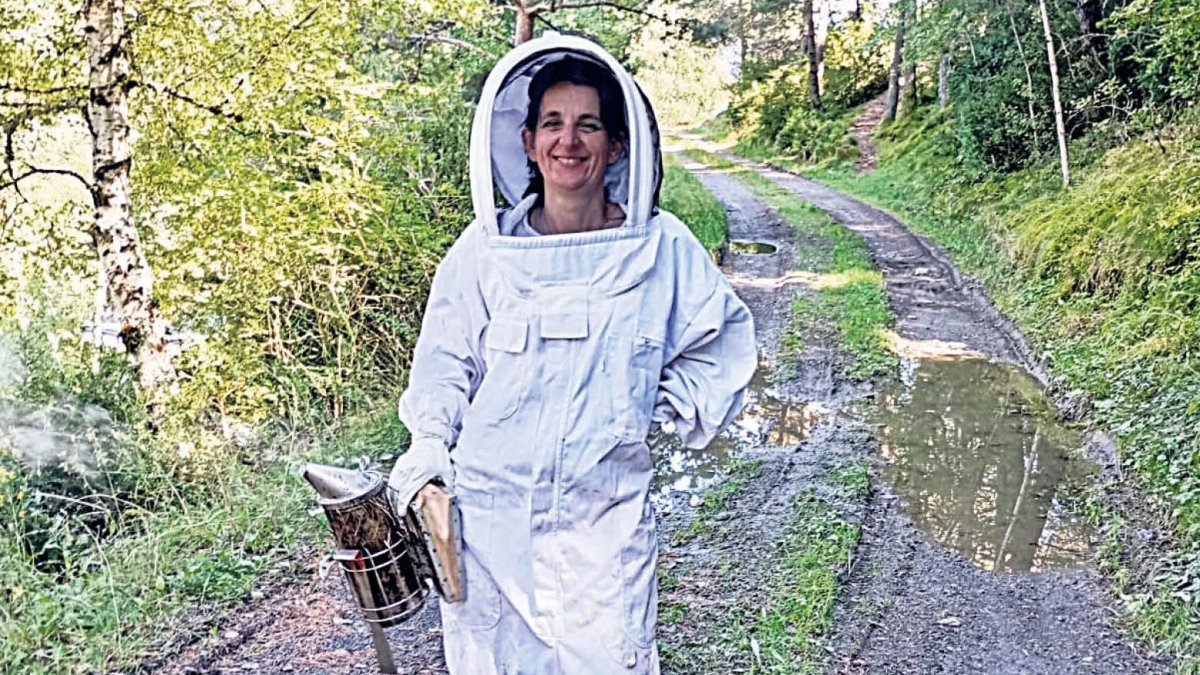
We will pay a friendly visit to the bees. We will put on the dress, open a moth, Mat will hold up a picture and we can see the queen, or how a bee is born. We like to explain everything about this world and what the future holds for us, especially children.
It all started with two hives.
Mat and I have been a couple for 30 years, he wanted to make a product that came directly from nature. He became interested in beekeeping and when he went to study in France he returned with the two beehives. If you had told me 18 years ago that I would end up in the house of Armiana, where my father was born, with almost 600,000 bees, I would have told you, yes, man!
You have up to 9 types of honey.
We put the bees at different altitudes, from Sta. Dove in Bordes d’Envalira, because the flowers are different. And we do transhumance! In winter we take them down between Encamp and Sta. dove Now we have put them in Arinsal. The differences can be seen in the analytics, last year we won a prize in Paris with honey that has 60% Abarset.
And this year you implemented therapeutic experiences.
Inside the Arniana house, “El cor de l’Arna”, we have 8 moths. The customer settles in and with a mask inhales the air of the hive, enriched with propolis and natural essences without direct contact with the bees. This benefits the respiratory system, bringing well-being and relaxation.
And it doesn’t end here.
We also do vibration therapy: you lie on three hives, without direct contact with the bees, and note the frequency. Each moth has about 70,000 bees and rebalances you, bringing a deep sense of rest.
How did you discover all this?
Last year we traveled to Slovenia. They are pioneers, they have been doing apitherapy for 80 years. Now Spain and France have also started to study it.
how is it going
People are surprised and repeat!
Returning to the traditional craft, do you notice the climate change?
The flowers that used to be at 1,000 m now you find them at 1,400. The vegetation rises because it is warmer. And this also affects the Asian wasp. A few years ago we saw her in La Seu and Foix. Three years ago we found her in St. Julià, last year in Encamp and this year we saw a beehive in Canillo. We are in constant communication with the flags to eliminate it. difficult
After so many years, what have the bees taught him?
They work tirelessly so that the species does not die out. They have brought us closer to nature and shown us how fragile it is. We have to slow down and take care of her.