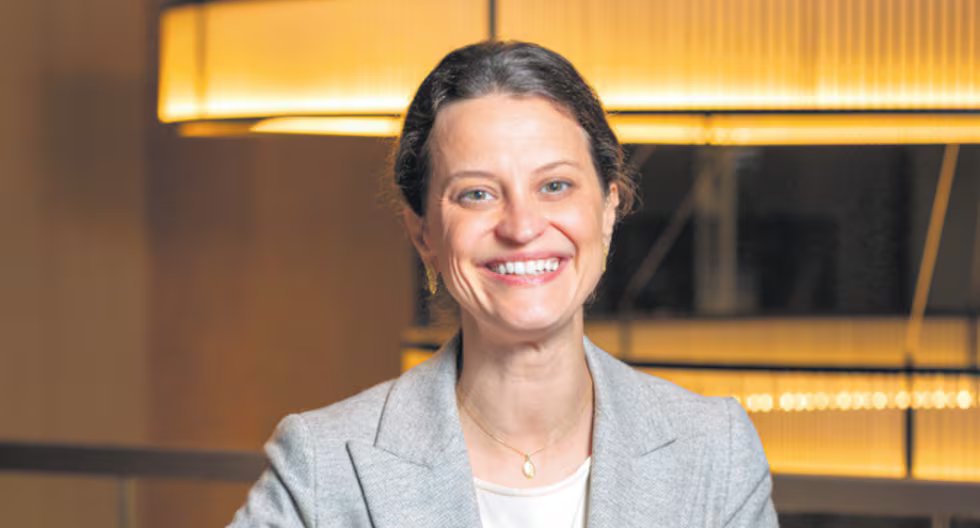

The Brazilian economist Susana Cordeiro was not even 24 hours in Lima, but she made time in her agenda to receive El Comercio last Friday. The vice president for Latin America and the Caribbean of the World Bank, who has led the region since September 2025, commented on the meeting she held with the president-elect, Keiko Fujimori.
LOOK | CAS bonus will remain at 10% for this July: MEF will apply gradualness until 2030
— Could you mention three economic risks for Latin America for this year?
One of the challenges is fiscal consolidation and continuing on the path of macroeconomic stability. That is a first priority area in the region. Another issue that I think could potentially affect a significant group of countries is the arrival of El Niño and the ways in which that could have economic and fiscal implications in terms of capital stock loss. That is, loss in damages and losses in infrastructure. Another challenge for the region is productivity and facilitating the growth of key sectors.
—How much of a concern is the tax issue?
If we look at El Niño, the key problem for Peru is not only financing. In fact, I believe that the country will access financing. Today (Friday) I spoke about this with the president-elect in a very productive meeting. We had an excellent conversation about the World Bank’s potential support to the government over the next five years, both for the public and private parties through IFC – an arm of the World Bank Group that works with the private sector in developing countries – and MIGA (Multilateral Investment Guarantee Agency). In general, we talked about ways we can support as a World Bank Group.
— They talked, then, about short-term plans –due to El Niño– and long-term plans.
El Niño was, of course, one of the priorities we discussed. The government has access to contingent financing from the World Bank. But, beyond financing and this rapid liquidity that we can provide when disasters occur, there is a need to move from reacting to anticipating and managing these climate risks.
—We haven’t been very good at it.
There is much to improve in terms of strengthening preparedness, improving forecasts, early warning systems and communication systems with the population.
—And also, the work between the public sector and the private sector.
Exactly, how to build more resilient infrastructure by attracting private sector investment. Also, improve water security and support so that agriculture is more resilient and climate-smart and can withstand impacts. In general, it is about having more institutional capacity. I could sense that the incoming administration is very focused on that priority. They are being very executive and systematic in taking stock of what has been done and what remains to be done in the future, and prioritizing those key areas where they can activate in the first 90 days. I have been impressed by Mrs. Fujimori’s concern, ability to prioritize, and preparation to make a rigorous diagnosis of what has been done and identify priorities where it is possible to act.
— For the long term, did you name key sectors?
In the long term, what was very interesting in the conversation was how to make the government, the State, work.
Mrs. Fujimori told us that they have been developing a series of indicators in all ministries to track their performance and monitor their progress; It is an area of government effectiveness. This is an area that the World Bank can support, bringing good practices from other parts of the world. This would be particularly important here, given the challenges the public service has faced in recent years.
LOOK | Peru would recover the number of foreign tourists only in 2031
—After this meeting, is there any specific alliance that you can share?
We have talked about this large and important area of technical assistance that the World Bank would provide and potential financing to a variety of sectors, including, for example, projects related to having quality water.
– Agriculture?
Health and general infrastructure. Again, the guideline is to attract the private sector. That is part of our approach as a Group. We want to be very clear about where the public sector should be and where the private sector can play a role. We want to be where there are market failures and where our participation is justified. We do not want to displace the private sector. In fact, we want to encourage private investment as much as possible.
— Is there a real possibility or probability of improving this in a practical way in the next five years?
There are many avenues for improvement. That is part of the World Bank’s global jobs and growth agenda. Our current Chairman, Ajay Banga, has largely focused our mission on jobs and growth. And here three pillars are fundamental. One is to create the enabling environment for private investments and for companies. And there, the rule of law is essential to create a level playing field for investment, and thus think about fiscal and macroeconomic stability more broadly. The second pillar is critical infrastructure. We are talking about roads, ports, airports. This also has a human side in health, education and social protection. The last pillar lies in being able to attract and mobilize private capital for key sectors. If you think about how to calibrate this strategy for Peru, let’s say that it is a country with solid macroeconomic fundamentals with a fiscal deficit of 1.3% of GDP as of June 2026.
— The deficit is a cause for concern because of the fiscal pressures that come with El Niño or the fiscal pressures that arise naturally for a new government. Do you see any risks in that sense?
The country has very solid macroeconomic fundamentals and has a very solid base on which to rely. Few economies in Latin America have an investment grade rating backed by these solid macroeconomic fundamentals of low public debt, considerable reserves, a credible central bank and a truly well-capitalized financial sector. The risks facing an incoming administration are mostly exogenous risks such as lower prices for major commodity exports, such as copper and gold. Additionally, as we mentioned, there is El Niño and the way in which a potential loss in the capital stock can translate into economic and fiscal difficulties, and also, how that event could affect certain agricultural products, which are among the country’s main exports. It is notable how demand has grown, more than 27 times in the last 25 years.
— Agroexports have established themselves as the second most important export sector in Peru, after mining.
Exact. Based on these fundamentals, an effective and executive management and transition of the potential shock – such as the natural disaster – would give a solid signal to the market in order to increase investment in the country. That will be key to managing these downside risks.
—What does Peru need to go from moderate growth to growth that generates well-being?
Peru has not reduced the level of poverty, since it was among the handful of countries in the region that have not reduced poverty levels and that still remain at pre-pandemic poverty levels. This is mainly due to the slow growth that has been persistent over the last ten years – around 2.5%. In the last couple of years there has been a recovery in private investment and this is mainly due to raw material prices. However, this has not translated into greater growth due to political instability. Today there is a new moment in the country; This recovery can be supported by solid fundamentals and thus drive growth. But for that to happen, concerted efforts will have to be made to eliminate bottlenecks in structural growth sectors, such as agribusiness and mining.
—What opportunities do you see for Peru in this new chapter?
Peru is one of the countries in the region with the greatest informality.
More than 70%.
(Nods). I think improving the business environment is very important.
— Through a reform of the tax system?
We need to create an environment that eliminates bottlenecks so that companies can grow and attract private investment, so that there are better quality jobs and so that companies can pay taxes. It is the only way to have a productive and more dynamic business fabric in the economy. Mining is a good example of how that has not happened with lengthy (operating) permits. The level of bureaucracy and regulation has really led to an expansion of informality. Approximately half of gold exports are from illegal mining.
— That is a huge problem right now; It is associated with violence and extortion. And not only in Peru, it is a regional problem.
It is a huge challenge across the region, but the solution is not simply to deregulate. Technical solutions and approaches must be provided to eliminate some of these bottlenecks in a selective manner throughout mining. We must think about the same approach for other sectors. We need to draw on technical expertise and work through government so that we can find the smartest possible regulation that can attract private investment into these sectors.