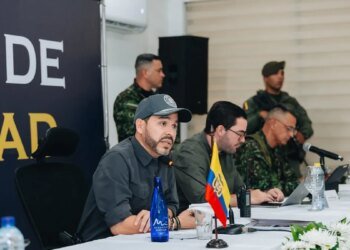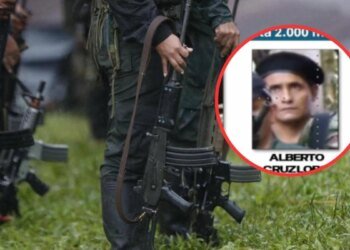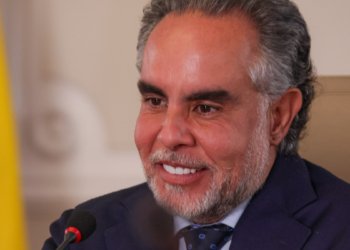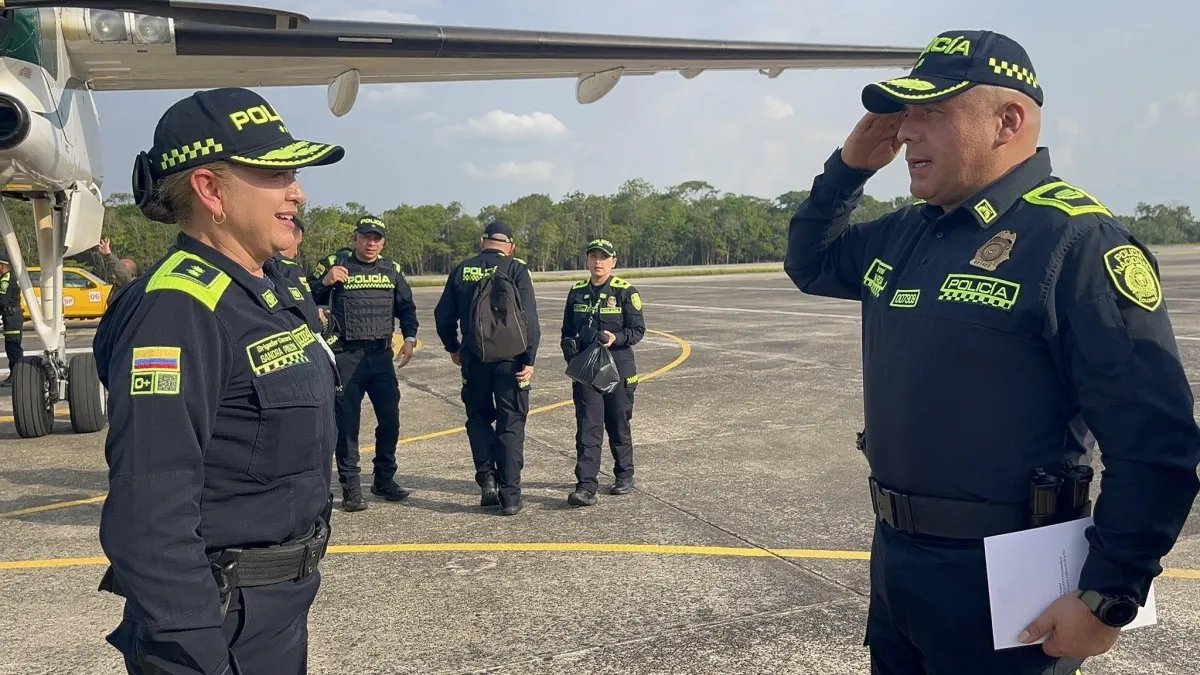
‘Mute a critical voice on ‘total peace’. That would be one of the reasons that led to the Brigadier General Sandra Patricia Pinzón Camargo to the office of the general director of the National Police, General William Rincón, last Wednesday afternoon, to receive the notification he placed end to more than three decades of service in the institution. The officer, who until then served as head of the Police Unit for the Building of Peace (Unipep)was announced from “call to rate services” through Decree 0722 of 2026, signed on July 7 by the Minister of Defense, Pedro Sánchez.
His departure did not occur at any given moment. It occurred at the close of a series of sweeps in the military and police leadership during the current Government, which has meant the ‘purge’ of more than 80 generals and admirals of the Military Forces and the Police. In several of those cases, retired officers have claimed that their departures were preceded by disagreements over implementation of ‘total peace’ policy. The Government, for its part, has maintained that these replacements respond to decisions inherent to the exercise of command.
Originally from Bogotá and a dentist by profession, Pinzón built her career in the National Police in charge of different areas of the institution. He directed the Health Directorate, commanded Police Region No. 4, with jurisdiction in Valle del Cauca, Cauca and Nariño, and held positions in the Anti-Narcotics Directorate, the Incorporation Directorate and the Santander Police Department. He also served at Inpec, on commission from the General Inspection. In June 2024 he assumed the direction of the Police Unit for the Building of Peace (Unipep)created for articulate the participation of the Police in the implementation of the peace policy and serve as a link between the institution, the communities and the processes promoted by the Government.
General Sandra Pinzón left in writing her objections to several decisions of the ‘total peace’. Photo:Private file
From that position, according to documents known exclusively to EL TIEMPO, differences between the official and some government delegates in charge of negotiations with illegal armed organizations. Reports indicate that Officer Pinzón insisted that the Police participation had to remain within the limits established by law and that any operational action required a sufficient legal support to avoid liability rear of the uniformed men. This position was repeatedly stated in internal reports, memoranda and documents which, according to the sources consulted, also rest in counterintelligence folders.
Objections to negotiations
One of the first disagreements occurred when it was proposed that the Police will accompany caravans in which members of illegal armed organizations would be mobilized. According to the documents, the general maintained that these types of devices could only be developed when there was a legal support derived from administrative decisionssuch as the suspension of arrest warrants or the formal designation of peace managers. His position was exposed during the episode known as the “UNP caravan”, which occurred in Antioquia in July 2024, after which she was summoned to the Office of the High Commissioner for Peace to provide explanations.
Differences also emerged after the capture of Geovany Andrés Rojas, alias Araña, top leader of the Border Commandos. “The official He opposed his transfer and detention in National Police facilities.specifically at the Graduate School (Espol), after he was detained on February 12, 2025 when leaving a negotiation session with Government delegates in Bogotá,” a source from the institution told this newspaper.
The documents indicate that Pinzón constantly warned about legal gaps in different actions related to ‘total peace’. In one of these reports it was stated that the official became “an obstacle” for some decisions promoted by government delegates, due to their insistence on leaving a written record of the legal risks that, in his opinion, the officials faced responsible for executing several of the agreed measures.
Alerts about Catatumbo
The objections were not limited to a single process. During the conversations with the General Staff of the Blocks and Fronts, a structure commanded by alias Calarcá, the general stated that the location of some Temporary Location Zones in Catatumbo “was responding to strategic interests of the 33rd Front” and warned that the Public Force could end up favoring positions of that armed organization.
Different police sources also stated that the officer recorded observations on the behavior of that structure during ceasefires. “There he pointed out the territorial expansion of the grouphe increase in extortion and the strengthening control mechanisms over the civilian populationaspects that, according to reports, should be considered before adopting new decisions within the negotiation process,” they indicated.
Disagreement over the ‘platimazo’
In Medellín, during the approaches with criminal structures in the Aburrá Valley, the officer also expressed objections to the participation of members of criminal gangs in public events related to the peace process, among them the so-called ‘tarimazo’. The documents indicate that he sought prevent the Police from assuming institutional responsibilities or convey an image of support for scenarios whose management corresponded exclusively to the National Government.
Internal reports reveal the differences between the former head of Unipep and government delegates. Photo:Archive
Something similar happened during the process carried out with the Conquering Self-Defense Forces of the Sierra Nevada, known as ‘the Pachenca’. There, according to sources, he insisted that actions such as receipt or delivery of weapons “they had to have sufficient protocols and legal supports to protect the officials in charge of executing them and avoid possible disciplinary or criminal responsibilities”.
Tumaco episode
One of the moments of greatest tension occurred during the negotiations with the National Coordinator of the Bolivarian Armystructure linked to the Second Marquetalia with presence in Nariño.
According to one of the documents, the Police were required to guarantee security of several meetings held in the town of Inda Zabaleta, rural area of Tumaco. There, according to reports, members of the illegal armed group requested that the uniformed officers will provide the service dressed in civilian clothes“without visible rifles and carrying only concealed handguns.”
The general rejected that possibility and in the reports he maintained that the Safety devices had to be defined based on technical and operational criteria of the National Police and not based on demands made by an illegal armed organization. That position, according to the documents, gave rise to internal calls for attention and pressure to modify the initially arranged scheme.
Furthermore, in different scenarios, the official warned of a “growing disorder” in the development of the dialoguesespecially for the participation of delegates of illegal armed groups who, after being granted release from prison to attend the negotiations, allegedly returned to criminal activities instead of contributing to the peace process.
The report cites as an example the cases of “Ángela Izquierdo” and “Óscar Barreto”who, after leaving prison and joining the Dialogue Table with the Central General Staff (‘Iván Mordisco’ dissidents), They abandoned the talks and would have ended up forming a criminal structure identified as the ’57th Jair Bermúdez front’.
The documents also show that a good part of the differences revolved around the same discussion: how far the participation of the Police within the negotiation processes without going beyond the current legal framework.
The general insisted that each action must have legal support. Photo:Archive
EL TIEMPO consulted the Police in order to know their position regarding the general exit and obtain an official response, but until the closing of this edition no statement was received from the institution.
Jesus Blanquicet
Justice Editorial