-
By Bonnie Yushih Liao
Guo Baosheng 廖雨詩,郭寶勝
The recent push by Washington and Tokyo to expand Indo-Pacific multilateral cooperation — including the Indo-Pacific Energy Security Ministerial and Business Forum and its US$50 billion project pipeline — reflects a shift toward institutionalizing cooperation in response to a more complex and less predictable strategic environment, in which frontline actors such as Taiwan face growing pressure.
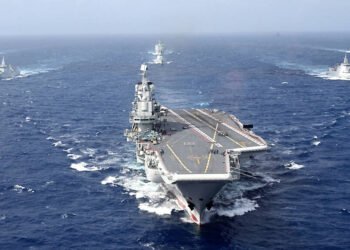
Over the past few weeks, US-Iran tensions have swung between escalation and a fragile pause, while China has intensified near-daily military pressure around Taiwan.
US President Donald Trump has threatened punitive measures against NATO allies, reinforcing perceptions that alliance commitments might be shaped by transactional considerations rather than institutional continuity. Even close US partners have begun hedging: Japan has reportedly secured maritime arrangements with Iran to ensure safe passage through the Strait of Hormuz — underscoring that alignment within bilateral alliances can no longer be assumed.
These developments highlight a deeper structural problem. Instability today is driven less by shifts in power than by miscalculation, signaling failures and policy volatility — including within the alliance system itself.
As environments grow more fluid, the absence of predictable coordination mechanisms increases the risk of misinterpretation and unintended escalation.
The US-led bilateral alliance structure in East Asia was designed for a different era. As Center for Strategic and International Studies Korea chair Victor Cha said, the “hub-and-spokes” model allowed Washington to restrain allies as much as defend them. That logic has eroded. Today’s frontline states — Taiwan, Japan, South Korea and the Philippines — are consolidated democracies confronting a shared challenge: a revisionist China employing military pressure, economic coercion and “gray zone” tactics.
However, the weaknesses of bilateralism are increasingly exposed. Since alliances are managed separately, coordination is fragmented and reactive. More critically, bilateral frameworks leave partners vulnerable to sudden shifts in US policy, with limited mechanisms for consultation or collective response. In crises, such fragmentation can delay coordination, complicate signaling and weaken deterrence.
A key limitation is the inability to manage policy divergence.
Decisions taken in Washington — whether on deployments or crisis responses — could impose strategic and political costs on partners with limited prior consultation. Recent calls for escort missions in the Strait of Hormuz illustrate how partners must balance alliance expectations with national interests, producing gradual divergence rather than open disagreement.
A multilateral framework would mitigate these risks by institutionalizing consultation and aligning expectations in advance.
Instead of reacting to unilateral shifts, members would coordinate positions, reduce uncertainty and better reflect shared interests. Multilateralization therefore strengthens deterrence while stabilizing alliance governance.
Japan has long recognized this gap. From the Quadrilateral Security Dialogue to the Comprehensive and Progressive Agreement for Trans-Pacific Partnership, and renewed discussions of an “Asian NATO,” Tokyo has consistently promoted structured multilateralism to address China’s rise and build a rules-based order.
The emergence of initiatives such as the Indo-Pacific Energy Security Ministerial and Business Forum suggests Washington is beginning to adapt, albeit cautiously.
For Taiwan, this shift is critical. Remaining confined to bilateralism leaves Taipei exposed not only to coercion, but to strategic bargaining among major powers. Embedding Taiwan in a multilateral framework would raise the costs of destabilization and strengthen its role in regional resilience.
The central question is no longer only how to deter China, but how to build a regional order resilient to external pressure and internal uncertainty.
Without that shift, the Indo-Pacific would not drift into crisis because alliances collapse, but because they lose the capacity to function as intended, with Taiwan among the most exposed.
Bonnie Yushih Liao is an assistant professor in Tamkang University’s Department of Diplomacy and International Relations. Guo Baosheng is studying for a master’s degree in Asian studies at the George Washington University Elliott School of International Affairs. His research interests center on Asia, Sino-US relationships, Chinese politics, the democratic movement in China and the security of Taiwan’s cross-strait relations.