Iranian sea mines in the Strait of Hormuz could severely restrict global trade for months – even after the war ends. Because the removal is complex and lengthy. German expertise could play a big role. The most important questions and answers.
What do we know about the mining of the Strait of Hormuz?
According to the Pentagon, Iran may have placed 20 or more sea mines in the Strait of Hormuz. Some of them are said to have been designed remotely using GPS technology, which makes them difficult to locate. Others are said to have been placed in small boats, the Washington Post reported, citing three anonymous sources from a confidential briefing in the House Defense Committee. The Pentagon therefore assumes that the evacuation could take six months and could probably only begin after the end of the war. President Donald Trump ordered this Thursday that the eviction should proceed three times as quickly.
CNN previously reported that Iran began planting sea mines in March. Iran’s Deputy Foreign Minister Majid Takht-Ravanchi denied at the time that Iran was using sea mines. The New York Times reported in mid-April that Iran was unable to recover all of the mines it had planted.
Why does it take so long to clear sea mines?
It is very time-consuming to detect sea mines in order to then render them harmless. A Navy spokesman compared the search to the FAZ with looking for a needle in a haystack, since during the operation you neither know where they are nor how many were laid out.
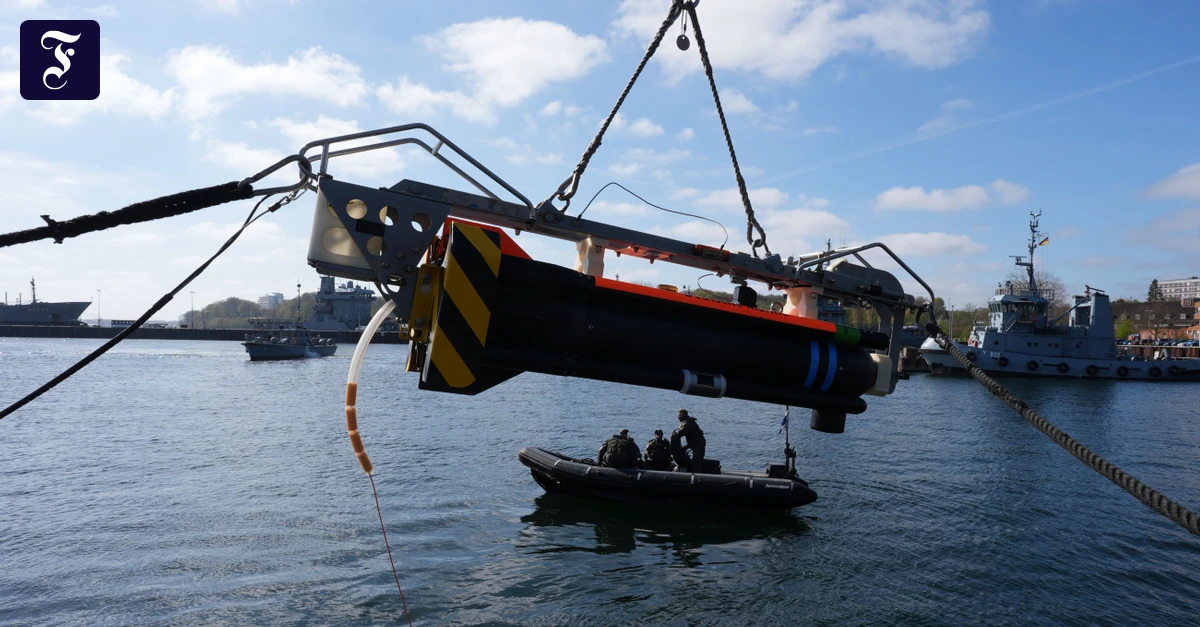
When hunting for mines, specially equipped ships with sonar systems search the seabed piece by piece. Evaluating the sonar images takes time. If a sea mine has been found, a small underwater vehicle with an explosive charge is sent there and the mine explodes in a controlled manner.
Another option is demining. For example, a remote-controlled surface drone is sent through the mined area, which uses magnetic and acoustic signals to simulate a significantly larger ship such as a tanker. This is intended to cause the sea mines to detonate.
What lies ahead for Germany?
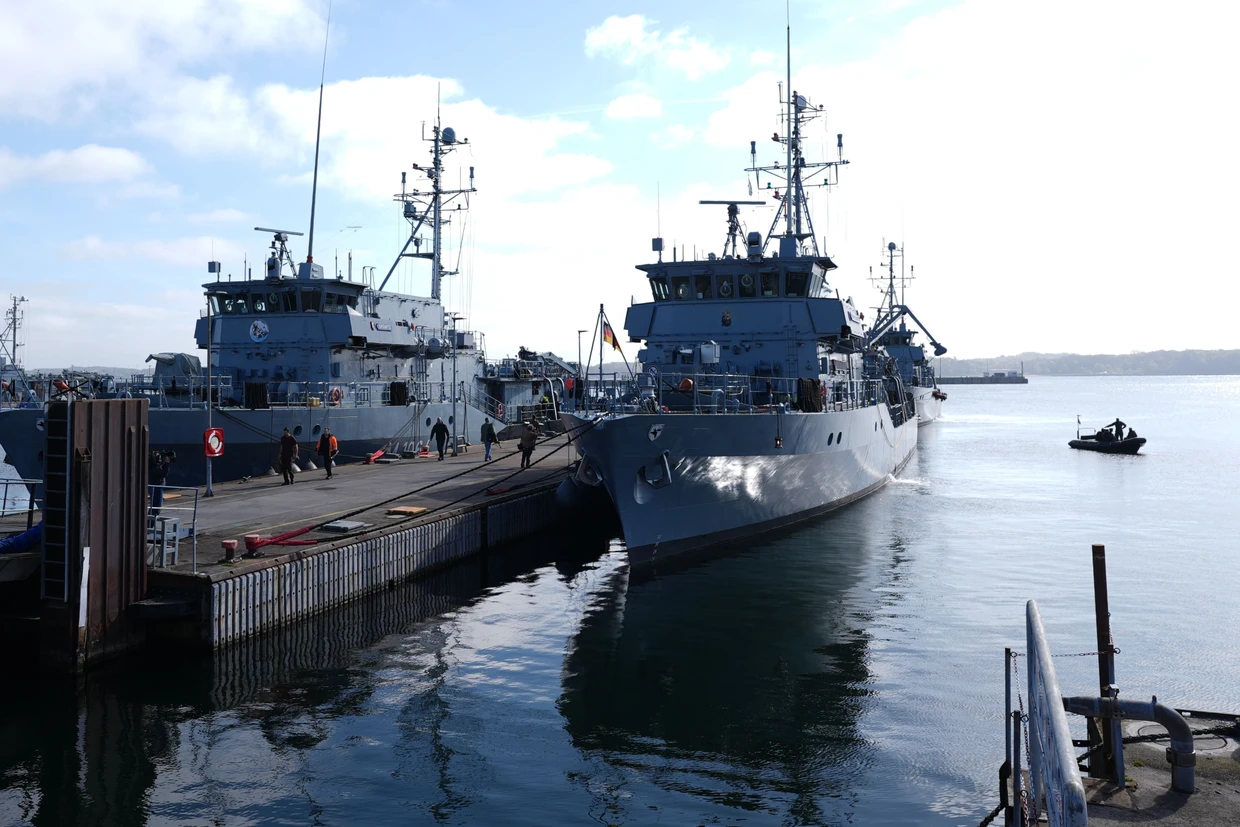
The German Navy has been taking part in NATO missions to combat sea mines continuously for decades and has a consistently high level of training in sea mine defense. Defense Minister Boris Pistorius (SPD) also said about a possible deployment in the Strait of Hormuz: “Within NATO, with our mine clearance capabilities, we are traditionally a leading and support nation for others and therefore of course we must and will play a role if the other conditions are met.” But that would only come into question after the end of the war.
Consideration is being given to sending some minehunters. The Navy has ten such boats of the Frankenthal class MJ332. The modern ones have repellents that are suitable for large-scale mine clearance. These include the underwater drones Seefuchs and surface drones Seal, which can simulate large ships. The ability to detect and destroy mines is considered to be in short supply in NATO, even in the United States.
Under what conditions could the Bundeswehr take part?
The Chancellor has made it clear which conditions must be met for the Bundeswehr to participate in the Hormuz mission: The Federal Government wants the fighting to end, the Americans to be involved, and it expects an international mandate on the basis of which a Bundestag mandate can be decided.
There are different views between Paris and Berlin on the question of whether and how the Americans should be involved in a coalition of the willing. What exactly the ceasefire means has already been the subject of discussions within the coalition in Berlin – the SPD has made it clear internally that a binding and permanent ceasefire with Iran is needed in order to enter into the discussion about German participation in an operation in the region. The recent extension of the ceasefire would not correspond to this.
The Federal Government announced: “As soon as a sustained end to the hostilities has been achieved, the Federal Government, together with its partners, stands ready to contribute to freedom of navigation in the Strait of Hormuz in accordance with international law and in compliance with national procedures.”
When could the Bundeswehr get started?
Bundeswehr missions abroad require the approval of the German Bundestag if the soldiers sent could get into armed conflicts. It is still unclear how a Bundestag mandate for the operation will come about. This first requires an international mandate. Whether a mandate from the coalition of the willing is politically and constitutionally sufficient is doubted in Berlin. A NATO mandate is unlikely because the French want to keep the Americans out of the mission. There are also several concerns about the idea of adopting an EU mandate or expanding the EU Aspides mission: the diplomatic path would be long, all 27 states would have to agree – and around half of the coalition of the willing are not EU members at all.
In Paris, people had expressed confidence that they had a basis for UN Security Council Resolution 2817 on the Iran War, which was introduced by Bahrain and passed in the Security Council on March 11th. There is skepticism in the federal government; the SPD rejects the text as inadequate. When it is clear which international mission is to be followed, the Ministry of Defense and the Foreign Office work together in Berlin to write the mandate. If no shortening of the deadline is requested, foreign policy experts expect the Bundestag to take up to three weeks of sessions before it is passed. That would be the beginning of June at the earliest. According to the Navy, the journey from the port of Kiel to the Strait of Hormuz alone would take around six weeks.
In certain cases, the federal government may also act without a prior mandate. This is permitted if there is imminent danger, i.e. immediate intervention is necessary and waiting would jeopardize the success of the mission. This was the case, for example, with the 2021 evacuation operation in Afghanistan. The Federal Constitutional Court can subsequently check whether the urgency actually existed. In addition, the federal government must inform the Bundestag immediately. Parliament then subsequently decides on the deployment and can even demand that it be aborted.