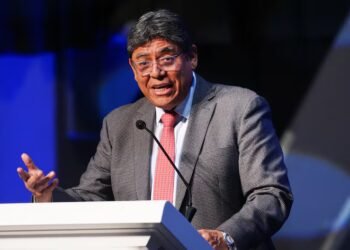
Salaverry is remembered for being part of multiple parties and benches. He was a councilor of Trujillo for APRA between 2007 and 2010. After failing to win the Trujillo mayoralty with Haya de la Torre’s party, he founded the Political Movement Democracy, Security and Values. In 2014, he ran for mayor again with Fuerza Popular, without success. In 2016 he managed to reach Congress, where he went from party spokesperson to president of Parliament in 2018. From that position he broke with Fujimorism and allied himself with the United for the Republic party. For 2021, he ran unsuccessfully for the presidency with Somos Perú with Martín Vizcarra and is now seeking the regional government with Perú Primero.
During his time in Congress, the Plenary Session constitutionally accused him of the alleged crimes of fraudulent embezzlement, ideological falsehood and generic falsehood, assuming that he did not personally carry out his representation trips in La Libertad, but rather delegated that function to his advisor Geanmarco Quezada and received payment for it. The National Prosecutor’s Office formalized the process and requested eight years in prison plus five years of disqualification. The Judiciary convicted him in the first instance of fraudulent embezzlement, but the Supreme Court acquitted him in the second instance.
In 2022, Pedro Castillo’s government appointed him president of the board of directors of Perupetro, a designation that led to an inspection by the Comptroller’s Office for not meeting the technical requirements demanded in hydrocarbons. Salaverry resigned 17 days after taking office, after criticism. As a result of that episode, the Subcommittee on Constitutional Accusations approved a report on June 26 that recommends charging former President Castillo and his former Minister of Energy and Mines, Eduardo González, for incompatible negotiations and illegal appointment.
Added to this history is an incident from March 2021, when Salaverry got out of his vehicle to confront a Venezuelan citizen who questioned him with xenophobic insults. There is also a precedent from 2013, when more than seven thousand residents of the San Vicente de Paúl Population Center reported that a sewage project carried out by DSV Constructores, a company where he served as legal representative, collapsed. As a result, local authorities filed four complaints for environmental contamination, although the Prosecutor’s Office filed them. In 2018, a report from the Ministry of Housing concluded that the construction company abandoned work, generating unrest among the population and a source of contamination.

Salaverry has been in the ranks of APRA, Fuerza Popular, Somos Perú and now for Perú Primero.
/ SYSTEM
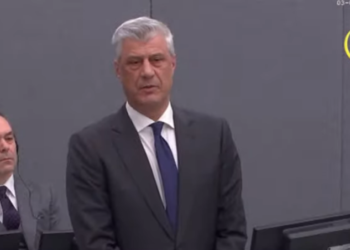
The Podemos representative was a congressman for three consecutive periods – from 2006 to 2019 – until Congress was dissolved. Faced with the decline of APRA, he founded the regional movement Trabajo Más Trabajo, a decision that cost him the definitive expulsion from APRA for “treason.” In 2024 he formalized his entry into Podemos Peru.
In September 2016, shortly after being sworn in as third vice president of the Congressional Board of Directors, plagiarism was revealed in bills with his signature. He resigned from the position after the media uproar. The Ethics Commission confirmed plagiarism in six legislative initiatives and the Plenary sanctioned it with a fine equivalent to 30 days of remuneration.
In addition, the Prosecutor’s Office opened an investigation in 2025 for alleged usurpation of functions and generic falsehood, having appeared between 2023 and 2024 before different state entities as a representative of the district municipalities of Sánchez Carrión, Virú, Santiago de Chuco and Gran Chimú, without having a formal link with them.

Elías Rodríguez when he was institutional secretary of the Peruvian Aprista Party. (Photo: Piko Tamashiro / GEC)
/ PIKO TAMASHIRO
The candidate was active in the Peruvian Nationalist Party between 2010 and 2014, ran unsuccessfully for Direct Democracy in 2018 and, in 2022, won the provincial mayor of Pataz with the same “Work More Work” movement. In his resume presented to the JNE, he indicated that he resigned in 2024 from Alianza para el Progreso, César Acuña’s party, which he harshly criticizes today and whose management he has described as “incapable.”
In 2025, he led a march to Lima to present various demands to the Central Government, such as the improvement of the Pataz Hospital. The walk generated controversy because the polo shirts he wore had the colors of the party for which he is running today, and because the Police arrested him and his companions for alleged illegal possession of weapons; They claimed to belong to his security team and have proper documentation. In parallel, the provincial prosecutor’s office of La Libertad began an investigation for alleged embezzlement of use, having used a van from the Provincial Municipality of Pataz to provide logistical support for his personal march.
The Special Electoral Jury of Trujillo also determined that he incurred a violation of neutrality due to untimely propaganda on panels and posters, although the JNE later annulled the actions.

Aldo Carlos Mariños arrived in Lima after 48 days of walking with a delegation that accompanied him on the route. Photo: GEC
The lampa candidate heads the list to reach the Regional Government, but behind him Guillermo Guzmán Obando, current mayor of Usquil and candidate for regional councilor, is also running.
During Guzmán’s current management in Usquil, the company Inversiones COINPERÚ EIRL went from having only two contracts with the Municipality of Laredo to obtaining 21 contracts with the commune of Usquil between August and December 2025, for a value of more than 300 thousand soles. A similar case is that of Constructora Flaval SAC, which according to the OSCE portal did not register previous contracts with the State and which, however, was hired 15 times by the Municipality of Usquil between July 2024 and May 2026, for more than 900 thousand soles. Added to this is Constructora Martínez SAC, which obtained ten contracts, of which eight were in less than a year, for more than 30 million soles in total.
In his resume presented to the JNE, Guzmán Obando declared three sentences for driving while intoxicated and one for minor injuries. According to police reports to which we had access, he did not have a driver’s license when he was intervened. Furthermore, in June 2025, the Special Electoral Jury of Chiclayo opened a sanctioning process against him for alleged violation of neutrality, after the dissemination of institutional banners about municipal tax discounts in which his name appeared.
We spoke with Benavides and he told us that if he reaches the regional government he will focus on confronting extortion and contract killings, as well as eradicating hunger in the region. However, when consulting about his candidate for regional councilor, he admitted that he was unaware of Guzmán’s judicial record, as were the provincial candidates.
“I don’t know those sentences or that type of behavior that he has had, to be honest,” he commented.

Guillermo Guzmán is running for regional councilor for Acción Popular. Photo: Municipality of Usquil
This media tried to communicate with the candidates mentioned in this note, but we only obtained a response from Óscar Benavides.
For Miguel Rodríguez Albán, dean of the Faculty of Law at the National University of Trujillo, candidates with questions like those mentioned are not ideal to govern the region. In that sense, he maintains that it is likely that they will not exceed the 30% necessary to win in the first round.
“They are not ideal. In La Libertad, in reality, the majority of voters have not yet decided their preference. They are the best known because they have already been politicians. People are looking for political renewal in the region,” he explains.
He adds that some organizations will lose their registration and that, to reactivate it, they must once again meet the requirements of the Political Organizations Law. Given this panorama, it does not rule out that some candidates who are elected end up seeking the support of other political forces, including Fujimori.
“ Podemos did not pass (the electoral fence), Somos Perú did not pass, Perú Primero did not pass either, with which they are risking political participation, but if any of them win, the party for which they are running would no longer exist starting next year,” he indicated.
Mirko Campaña, journalist and professor at the Antenor Orrego Private University (UAPAO), also considered that these candidates are not ideal for the position and that some of them come from APRIS or the Acuña party.
“In my opinion, I do not think they are the most appropriate to occupy such an important seat, even more so considering that we have been in charge for several years of a party that has already lost at the national level. The majority of candidates with a political career come from parties that are recycled by the Peruvian Aprista Party or are from APP. The same happens with Aldo Carlos and Elías Rodríguez,” he commented.