Madrid/Astronomy usually goes back to what happened millions of years ago, but it can also look to the future, with the study of a planet that, strangely, survived the death of its star, which offers a vision of what could happen in the distant future of the Solar System.
A team led by the University of Saint Andrews (United Kingdom) studied one of the “strangest” planetary systems we know, said researcher Christopher O’Connor, from Northwestern University (USA), one of the signatories of the article.
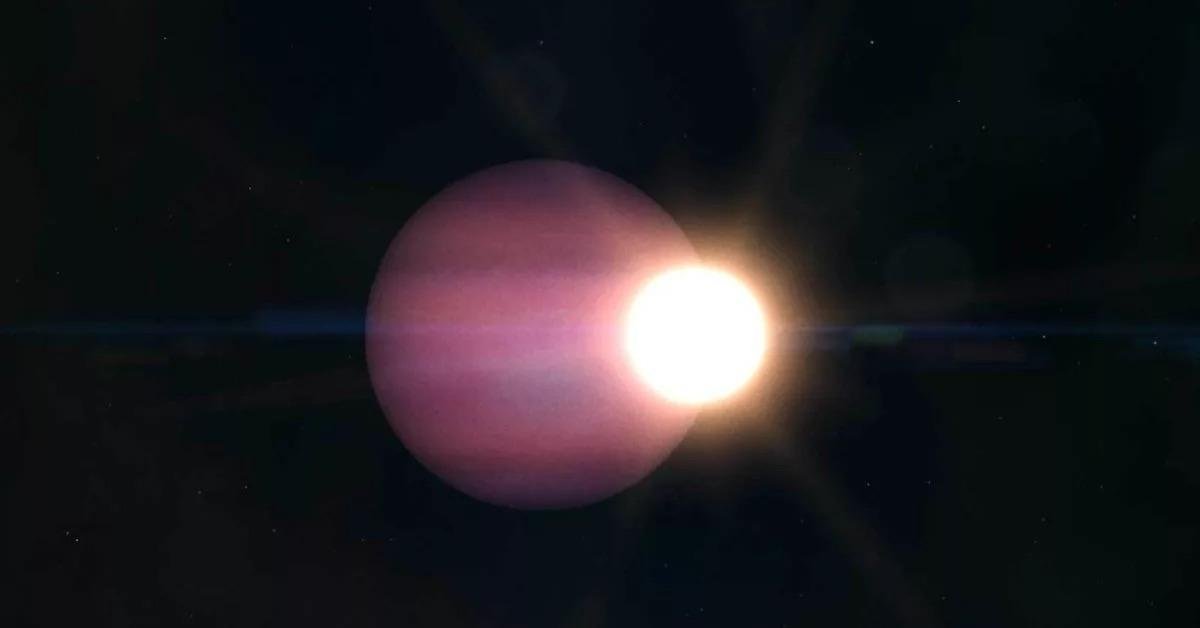
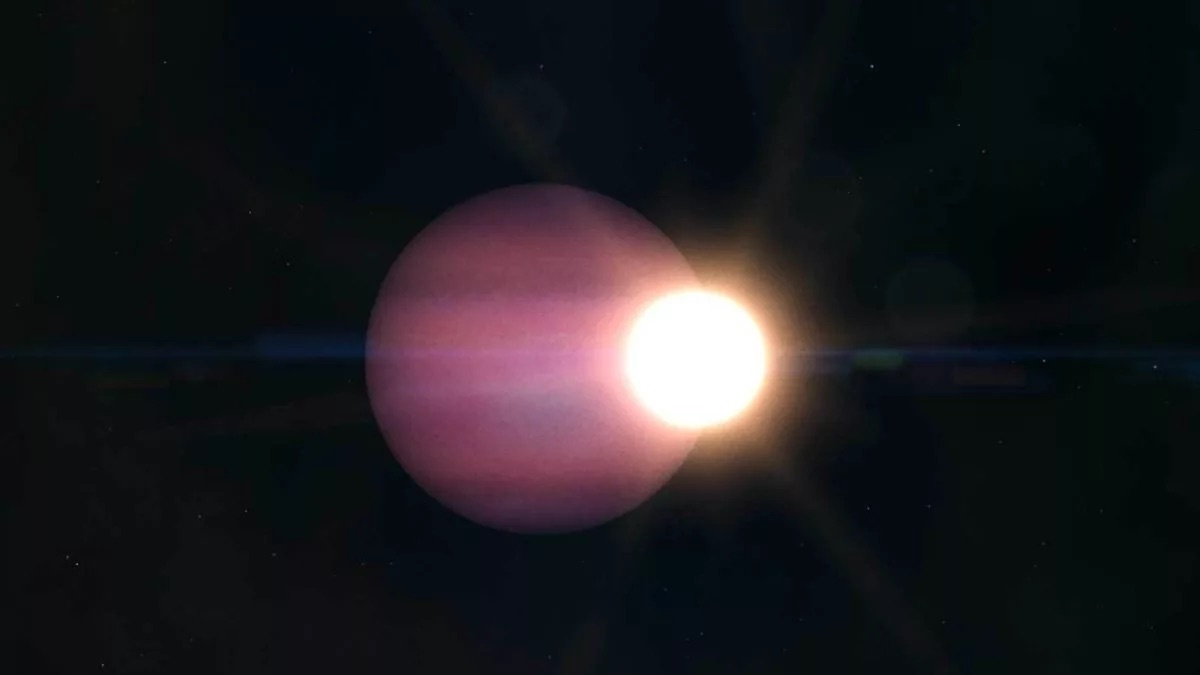
In most planetary systems the stars are much larger than their planets, but in this case, WD185B is the size of Jupiter, with a radius about eight times that of the white dwarf it orbits, approximately the size of the Earth, and does so at an extremely close distance.
White dwarfs are dense stellar remnants left after a Sun-like star exhausts its fuel and dies.
White dwarfs are dense stellar remnants left after a Sun-like star exhausts its fuel and dies.
When astronomers discovered this giant planet orbiting a dead star in 2020, they wondered how it had survived, against all odds, the red giant phase of its star, when it runs out of fuel and swells to more than a hundred times its original size.
Red giants usually engulf nearby planets before collapsing and becoming white dwarfs, so when the Sun dies in about 5 billion years, it will engulf Mercury, Venus and possibly the Earth.
“Our findings have implications for the long-term fate of our Solar System,” O’Connor said, when in about 5 billion years the Sun dies and it is not known exactly what will happen to the planets at that time.
The fact that planets can survive “really expands the range of possibilities for where and when habitable planets might exist in the universe.”
Thanks to the James Webb Space Telescope, the team was able to study the atmosphere, mass and temperature (it is considerably warmer than expected) of the planet, to reconstruct its trajectory and determine the most likely way it came to have that orbit.
The second is that the planet’s migration was due to the gravitational effect of other objects in the system, since the white dwarf is part of a triple star system.
Originally, the planet would have orbited at a safe distance from the star, but billions of years after its death it migrated towards it, settling at a distance 50 times closer than that between Earth and the Sun.
The researchers point out in their study, which they publish Naturetwo theories: one that, indeed, it was swallowed by its host star, while it was dying, and managed to survive inside it to come out on the other side.
The second is that the planet’s migration was due to the gravitational effect of other objects in the system, since the white dwarf is part of a triple star system, and these more external companions could have influenced the orbit of WD1856b.
In that scenario, the planet remained at a safe distance during its star’s destructive red giant phase and migrated to its current location much later.
Observations of this planet’s migration, as well as the evolution of the composition and temperature of its atmosphere, can help scientists determine the fate of planetary systems after the death of their star.
“We are used to looking into the past when we use telescopes, but this is the first time we have been able to anticipate what could happen to the outer planets orbiting the remains of a star similar to the Sun; it is like using a time machine to peer into the distant future of our Solar System,” McDonald noted.