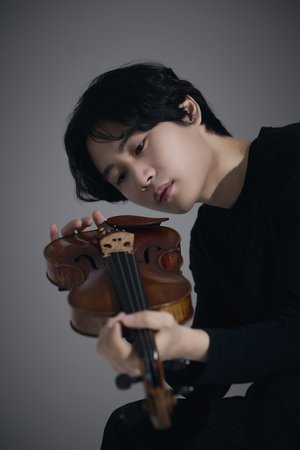
An award-winning violinist and a media-art duo fuse two art forms to create something new
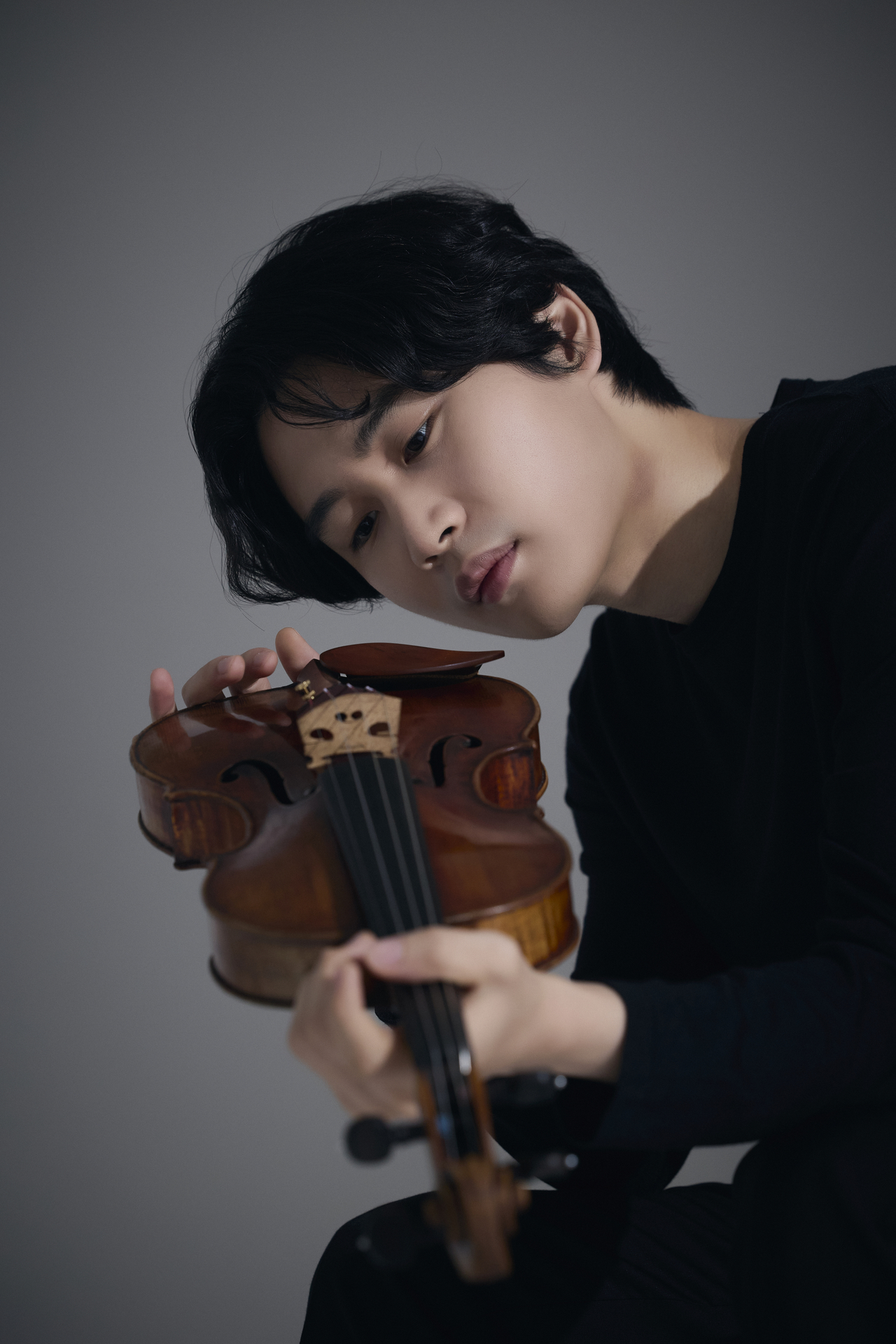
When the GS Arts Center approached digital art duo Kimchi and Chips last year with a proposal to collaborate with a classical violinist, the artists were hesitant. The timeline was tight, but the heavier weight was the prospect of fusing two art forms so different in texture. That unease lifted, the duo says, the moment it first sat down with violinist Yang In-mo.
“We had no idea where the journey of this collaboration would end up,” the duo said in a recent email interview, “but talking with Yang In-mo, we had the feeling that we’d surely be able to make something exciting and fun.”
Yang, 30, is one of the most decorated violinists of his generation, having won the Premio Paganini in 2015 and the International Jean Sibelius Violin Competition in 2022. Kimchi and Chips, a leading media-art duo, pairs Korean digital artist Mimi Son with British physicist Elliot Woods, and is known for large light installations made with the idea of “drawing in the air.”
For Yang, the spark came over a shared reference. That first meeting opened with talk about composer Morton Feldman, then widened into minimalism, conceptual art and new ways of telling a story, until their overlapping tastes became the program itself.
All three artists wanted to set down the familiar grammar of music and visuals. For Yang, the hard part was the program — sifting through 20th-century and contemporary works to build one that held both continuity and variety.
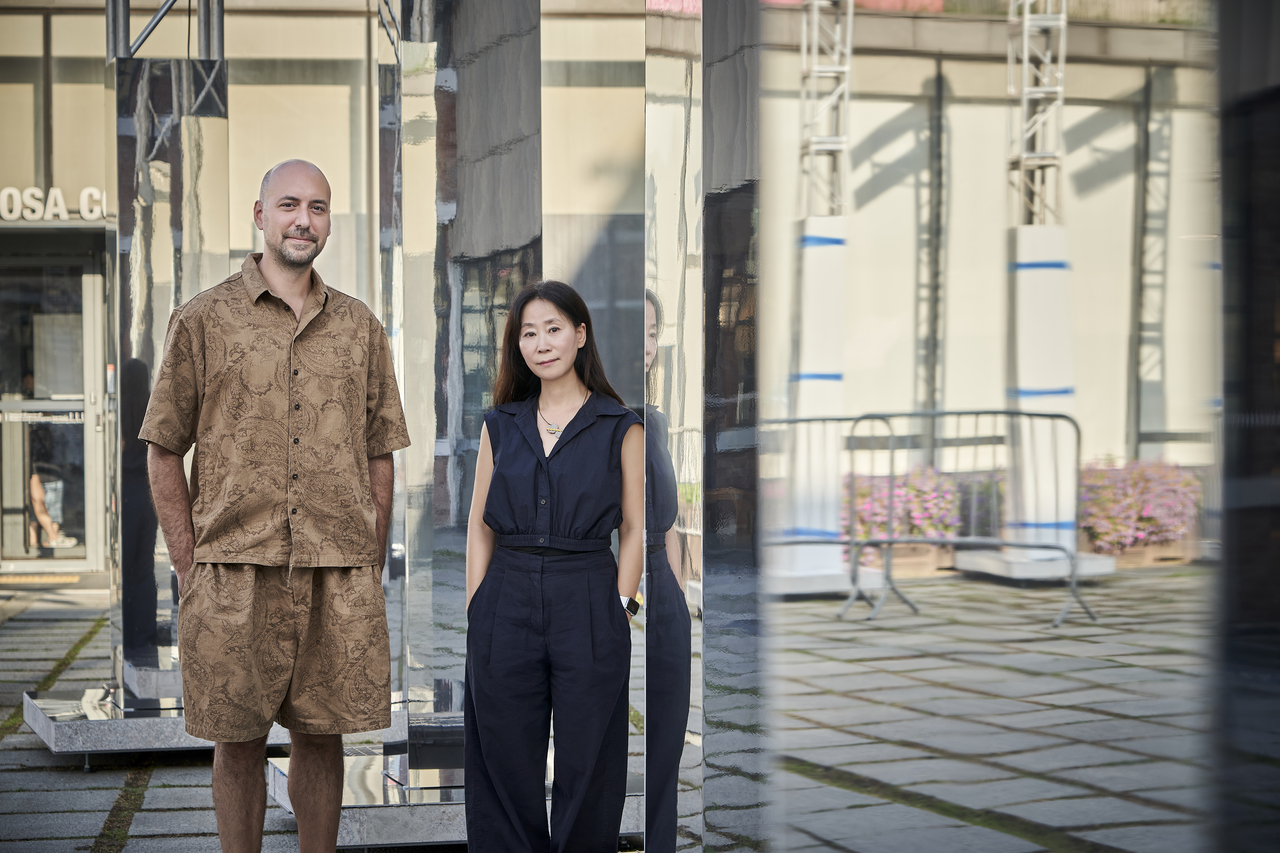
For Kimchi and Chips, collaboration is already an act of discarding one’s own familiar grammar — and for individual artists each with their own practice and style, it is at once a new challenge and a risk. Yet what they cared about most was the result: They wanted the performance to stand on its own, so that what remains is the work itself, not the names Yang or Kimchi and Chips.
The program puts J.S. Bach next to two contemporary composers, Steve Reich and Julia Wolfe. It pairs Bach’s Violin Partita No. 2 in D minor, BWV 1004, with Reich’s “Violin Phase” (1967) and Wolfe’s “LAD” (2007/2022, arranged by Rakhi Singh), which gets its first performance in Korea. The fact that Bach was a Baroque composer doesn’t matter much here, Yang says. He wants the audience to hear Bach’s patterns and variations not as a style, but as a way of feeling time.
The project also brought back a question Yang first asked more than a decade ago in Iceland, when he heard Reich’s “Violin Phase” played live by four violins: What does it mean to listen? These pieces don’t really fit the old idea of a climax, he says.
“Here the ear doesn’t follow a story, or wait for the endings that harmony seems to promise,” Yang said. “Instead, it focuses on the texture and sound of this exact moment, and on how sound and silence relate to each other.”
Light plays a central role for Kimchi and Chips. Light has always been a crucial visual element in its work, the duo explains, so this was less a special choice for the occasion than a natural one.
In a collaboration between the visual and the musical, the artists were careful to not let either side dominate the other. They were also mindful of the risk posed by having only a single day of installation time, so they avoided the excessive use of physical materials. Instead, they let light shape the walls and objects on stage.
Working with Yang, the duo says, it was struck by his openness — and came to see why he is called a young master.
The performance takes place at 7:30 p.m. on Tuesday at the GS Arts Center, running 60 minutes without an intermission.
gypark@heraldcorp.com