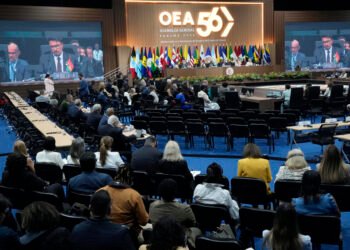
A good number of worthy columnists and faithful members of the Mexican commentocracy have analyzed the new turn to the right in several Latin American countries. The recent elections – or in any case since a couple of years ago – in Argentina, Chile, Bolivia, Ecuador, Peru and now Colombia, without forgetting Costa Rica, have produced favorable results not only for right-wing candidates – which some call far-right – but contenders with many common points between them, and with positions that are more extreme than those of a certain traditional right that dominated part of the ideological and political spectrum of these countries.
Kast aspires to be much more radical than Piñera was in Chile, although it is not certain that he can achieve it. De la Espriella intends to be much more draconian in his fight against drug trafficking and his alignment with the United States than Iván Duque was recently, and of course Juan Manuel Santos — who has never really belonged to the Colombian right — or even Álvaro Uribe. And while Keiko Fujimori sometimes seeks to emphasize her father’s more social and centrist legacy, she has also assumed more virulent positions than the traditional Peruvian right.
Another common characteristic that these candidates turned rulers have is their clear affinity or sympathy for Donald Trump. Many of them received the explicit support of the US president: Milei, Noboa, de la Espriella, Kast. They have already begun, or have promised to do so very soon, to participate in the Shield of the Americas, the militarist and anti-drug front that Trump and Rubio have launched. In this sense, too, perhaps these new right-wing leaders are different from the traditional conservative currents in Latin America, which were not all blindly pro-American. And if it were not enough to seek proximity to MAGA in the United States, some of the leaders already mentioned are also trying to get closer to right-wing – or extreme right – forces in France, Germany, England and Spain, and to a lesser extent in Italy.
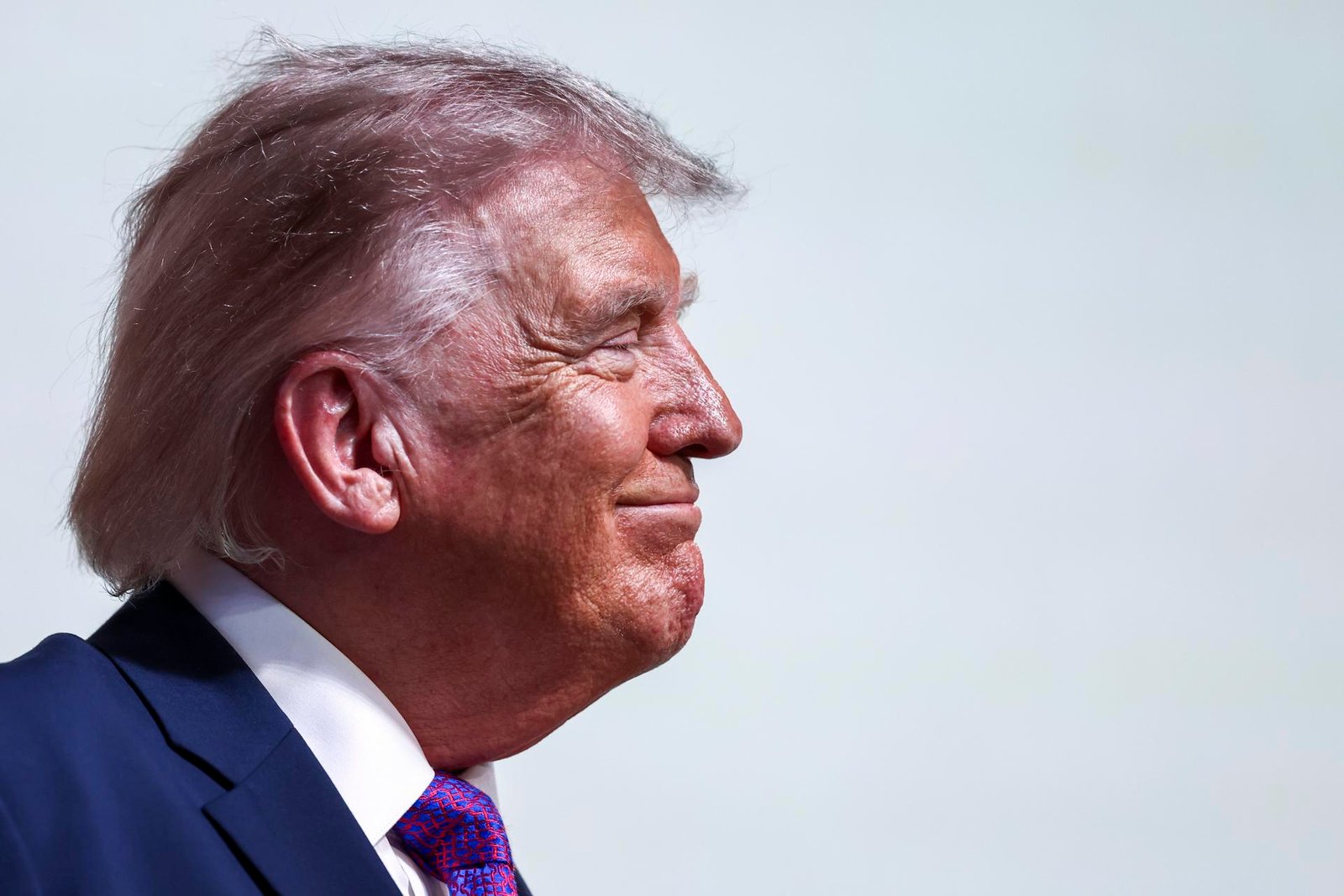
This trend represents a great challenge for countries that, for now, are exceptions to this conservative tide, to which we cannot apply a color label, although some, such as The Economisthave dared to paint it orange, more because of the color of Donald Trump’s hair than because of the revolutions in Eastern Europe. Firstly, governments such as those of Mexico, Brazil and Uruguay today find themselves much more isolated in the region than before. And this, although it will probably not affect the Brazilian electoral result towards the end of the year – Lula seems to be the exception to the orange tide – does make it difficult for them to continue holding pro-Cuban, pro-Nicaraguan, anti-imperialist, anti-Israel positions, and a certain neutrality in the face of the Russian invasion of Ukraine.
The challenge becomes more acute when one incorporates into the analysis the probable outcome of the elections that will take place in Spain before the spring of 2027, where the PSOE, burdened by corruption scandals that have tarnished its good economic leadership, – the best performance in the European Union – and may lose power to the PP, with or without the tacit or explicit support of Vox. If we go to the Barcelona Summit, which Claudia Sheinbaum attended, of the various leaders present there, it is possible that by next year only she and Lula will remain in power in Brazil, and who knows.
The second challenge has already been pointed out by many analysts for some time. It consists of the central issue that has brought the orange tide to power in these Latin American countries: security. With or without reason—in Chile and Argentina it is evident that there are exaggerations—the electorates of these countries have entered into a true panic in the face of the perception and reality of a rise in crime, criminality, the strength of organized crime, and the seduction of aberrant models like that of Bukele in El Salvador.
This has left a good part of the Latin American left helpless, which, as Pérez Ricart says in Reform Today, he always preferred to talk about the root causes of violence. But, in addition – and this is not mentioned enough – it has not known how to dissociate the need for democratic, effective and forceful security policies from the undeniable repressive antecedents in Latin America. People like Lucía Dammert in Chile, or Lisa Sánchez in Mexico, have shown how the Latin American left breaks out in hives at the idea of a democratic security policy (the term Uribe used) to reassure voters, both those who really have reason to feel afraid and those who only get hysterical over news that does not necessarily reflect a more complex reality.
Sheinbaum is a bit like some others in this matter. Obviously, he is terrified of repression, although at the same time he has ordered the arrest of tens of thousands of people in less than two years of his presidency, the vast majority still without trial or sentence. But we saw it with the Coordinator and the Searching Mothers before the World Cup. The memories of ’68, ’71 and other moments in Mexico’s modern history prevent him from applying the law. It is understood. But this, without a doubt, opens the way to positions like those that have emerged and won in the other Latin American countries that we have mentioned. This is something that will have to be followed carefully.
*This article was originally published in Nexus.