-
By Lin Hsin-han and Fion Khan / Staff reporter, with staff writer
The central government’s general budget for this fiscal year is today to be sent to committees for review, after Premier Cho Jung-tai (卓榮泰) presented it at the Legislative Yuan.
Addressing the legislature, Cho expressed his gratitude to all party caucuses for their positive interactions and commitment to fiscal discipline and national development.
Over the past year, the international situation has been turbulent, marked by conflicts in the Middle East, the war in Ukraine and new US tariff measures, Cho said.
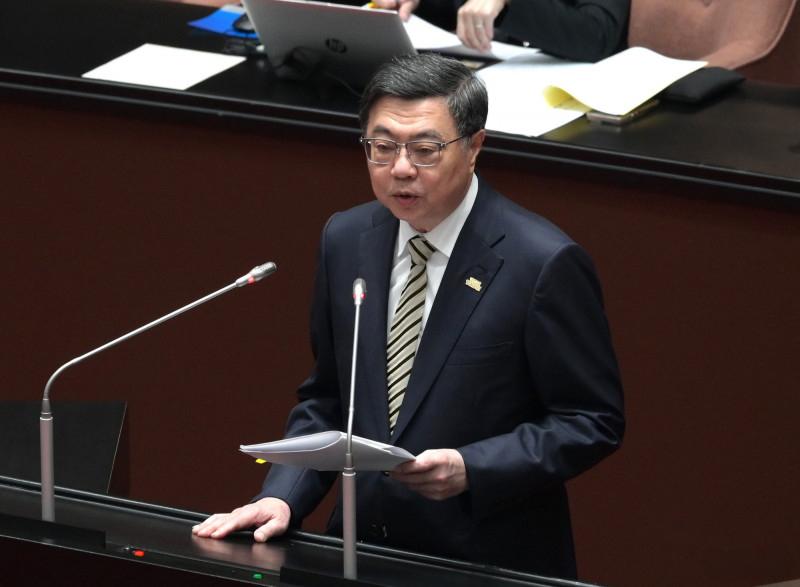
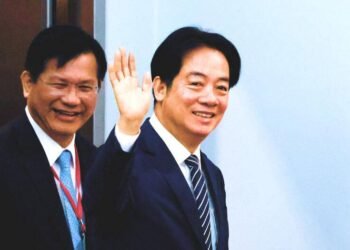
Photo: Wang Yi-sung, Taipei Times
Despite severe challenges, Taiwan’s economic growth last year reached 8.68 percent, the highest in 15 years, thanks to the collective efforts of every citizen, he said.
Taiwan rose two spots to sixth place in last year’s IMD World Competitiveness Ranking published by the International Institute for Management Development and retained its position as the world’s most competitive economy among economies with populations of more than 20 million for a fifth consecutive year, he said.
Taiwan’s market capitalization also rose to US$4.14 trillion as of Wednesday last week, making it the world’s seventh-largest stock market, he added.
The general budget for this fiscal year was formulated in light of domestic and international economic conditions, while taking into account policy priorities and development needs, Cho said.
By the end of this year, the ratio of outstanding central government debt to the average nominal GDP of the previous three years is projected to fall to 26.4 percent, down 1 percentage point from the end of last year, he said.
The budget projects NT$2.8623 trillion (US$90.96 billion) in revenue, a decrease of 9.6 percent from last year, and NT$3.035 trillion in expenditure, an increase of 0.9 percent, Cho said.
The resulting deficit of NT$172.7 billion, combined with NT$126.5 billion for debt repayment, leaves a financing requirement of NT$299.2 billion, which the government plans to cover through further borrowing, he said.
The central government recorded budget surpluses for eight consecutive years from 2017, while the ratio of outstanding debt to GDP has steadily declined, allowing the government to promote policies that benefit the public and maintain flexibility in responding to changing domestic and international conditions, he said.
The Executive Yuan would pursue a policy direction of building “a more open, more prosperous and more secure nation” to support Taiwan’s upward development and enhance national resilience and security, Cho said.
The goal is to make Taiwan a fairer society and a more civilized nation, in line with President William Lai’s (賴清德) vision of “innovation, prosperity, justice, sustainability, democracy and peace,” he added.