It was 4:20 in the afternoon that Friday. April 18, 1980 when the sky of Lima, somewhat gray and dense as usual, was crossed by an aircraft that transported, beyond travelers and crew, the living testimonies of a desperate search for a new future
In the belly of that Jet One Elevencommanded by Captain Fernando Brunethey traveled 97 people who had just broken the chains of a nightmarish confinement in the Peruvian embassy in Havana, in Cuba.
The trip, which lasted just over four hours from San José, Costa Rica, where they arrived first, was an explosion of contained joy, of “cheers” to the Peru and songs that celebrated the end of an odyssey that the world followed with its heart in its hand.

On April 18, 1980, the Cubans arrived at the Jorge Chávez airport from Costa Rica. (Photo: Historical Archive of El Comercio)
/ THE TRADE

News on the front page of this newspaper of the night arrival of the first contingent of Cuban asylum seekers. (Photo: Historical Archive of El Comercio)
First Cubans in Lima: The stay at the Túpac Amaru
Upon landing, the contrast could not have been greater: from the suffocating overcrowding under the Caribbean sun at the Peruvian embassy in Havanaabandoned by Castro police custody, fresh and orderly Túpac Amaru Zonal Parkin Saint Louiswhich the Peruvian authorities had conditioned against the clock.
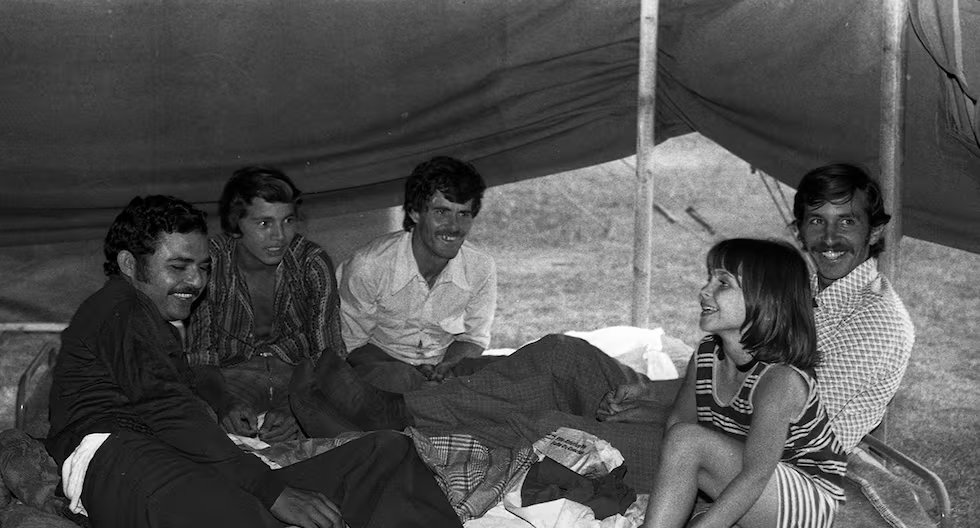
There, under the gaze of lifeguards from the Peruvian Red Cross and strict police surveillance to avoid excesses, the newcomers began to understand that fear was no longer the master of their steps. Their faces, although visibly contorted by the days of hunger and vigil, let out shy smiles when they saw the tents and supplies of medicines that the military government of the General Francisco Morales Bermúdezalmost on their way out, had prepared them.
KNOW ALSO: The first Peruvian photo of Halley’s Comet: 40 years of the historic record in Paracas
Santiago Sánchez Espinosaa 25-year-old mechanic who arrived with his wife, his two children and his brother, was one of the first to break the silence before the tumult of journalists waiting at the front of the park. “A whole drama has been left behind that I wouldn’t wish on anyone.”, he confessed with a broken voice.

Police movement in the vicinity of the San Luis zone park. (Photo: Historical Archive of El Comercio)
/ THE TRADE
Sanchez remembered how Friday April 4 jumped over the embassy fence along with fifteen other families, which the Cuban regime called “lumpen”, but for the Peruvian authorities they were simply “dissidents” to the Castro dictatorship. The story of Santiago Sanchez was that of many: a week of horror living in the collapsed Peruvian embassy “one on top of the other”, between the stench and the constant fear of diseases.
Cuban exile in Lima: Testimony of barbarism
Not everyone was looking for the American dream in Miami; some, like Lazaro Ortiz Domingueza railway specialist, immediately expressed their desire to work in the Peru. “I don’t even remotely plan to go back Cuba while Castro is there“, he declared Ortizthanking the humane treatment he received since he set foot on the first stop in Costa Rica.
SEE ALSO: Valentine’s Day: from the kissing ritual to its world record in Chicago in 1984
The refugees recounted with horror how the “incited mobs” by him Castro regime They had attacked them with stones and bottles the previous Saturday, leaving many injured. Even in the midst of tragedy, there was room for tenderness, like the “honeymoon” improvised between two young people.

Personnel from the Peruvian Red Cross were alert to any needs of the Cuban family groups. (Photo: Historical Archive of El Comercio)
/ THE TRADE
The husbands José Manuel Lago Rodríguez and Nereida Cubarecently married, spent eight days in the embassy without eating or sleeping, sharing a tiny space with thousands of people who arrived from all the provinces of the island.
Jose Manuel He remembered with amazement how the soldiers of the cuban government They even shot up a collective taxi (“Guagua”) that desperately entered the Peruvian diplomatic headquarters, even injuring children in the midst of the chaos, and then demanding that they be returned since they were, for them, simple criminals.
MORE INFORMATION: Mario Poggi: The secrets behind the murder of the “lima dismemberer”. The event occurred 40 years ago |PODCAST
Cuban nostalgia in Lima: Tension in the Caribbean
While in Lime This first contingent was installed, in Havana The tension reached its boiling point with the announcement of a massive demonstration in front of our embassy. The Peruvian Foreign Ministrythrough an official statement from the Ministry of Foreign Affairsdenounced the serious responsibility of Cuba for any hostile act.

Long lines of tents awaited more Cuban refugees in those days of April 1980. (Photo: Historical Archive of El Comercio)
/ THE TRADE
The threatening groups were going to participate in the parade for the anniversary of Giron Beach. Thus, the atmosphere was one of maximum alert, since it was estimated that more than a million people would march in front of the headquarters, inside which there were still thousands of asylum seekers.
The diplomatic impasse was aggravated by the refusal of the Cuban authorities to accept the lists of visas granted by the Peru. While Tagle Tower sought to speed up the evacuation, the Fidel Castro He installed loudspeakers around the embassy to threaten those who did not take advantage of the exit exceptions.
READ ALSO: The arson attack that destroyed 30 properties in Jirón de la Unión in 1986 | EXCLUSIVE PHOTOS
The situation was so critical that the government of Cuba decided to suspend all asylum flights to Costa Rica that same day, citing alleged domestic problems and lack of publicity. But international pressure helped save these families from the Castro reprisals.

Among the most needy were the children who arrived at the hands of their parents, who risked everything to leave Cuba. (Photo: Historical Archive of El Comercio)
/ THE TRADE
Cubans in Lima: An uncertain future
Despite the shadows that still covered those who remained on the Caribbean island, the 97 Cubans from Lime They felt like they had been reborn in that corner of Saint Louisin the immense zonal park, which today is La Videna. The gesture of the Peruvian consulate in Havana was highlighted by several refugees, who recalled how staff worked tirelessly, sacrificing their own sleep to get basic food for the crowds.
The majority denied being anti-Castro and stated that they were only seeking to lead a normal life. They rejected the government’s propaganda Castro that presented them as marginal and assured that they had professions, jobs and families, accusing the regime of trying to discredit them before the world.
At the end of that day, the Tupac Amaru Park It became a temporary refuge, but, above all, a symbol of a country that opened its doors to those who had lost everything in their search for freedom. The chroniclers of that time pointed out that this “first trip” would remain engraved in the national memory.

The Cuban family heads reaffirmed that they were not lazy or criminals. They were just men who were looking for freedom and security to work for their families. (Photo: Historical Archive of El Comercio)
/ THE TRADE

The news of that first day of Cubans in Peru was reported by the national press. (Photo: Historical Archive of El Comercio)
It was, without a doubt, the beginning of an exodus that changed the appearance of the city of Lime and the hearts of its inhabitants. The newspapers of the time attested that the Peru had fulfilled its tradition of asylum, under the watchful eye of an international community that firmly supported the position of our foreign ministry.
Second group of Cubans in Lima
The second contingent of Cubans arrived the next day. Saturday morning April 19, 1980. At 6:20 in the morning, the roar of the engines of a Costa Rican company plane “Sparta” marked the landing, on the runway Air Group No. 8.
SEE ALSO: The challenge of the “Ciudad de Lima” marathon during El Niño of 1983 | UNPUBLISHED PHOTOS
Were 231 faces marked by uncertainty and hope, which descended under a strict military protection and the watchful eye of the authorities of Civil defense. The physiognomy of this group, equal or more than the first, reflected the human drama of an unprecedented exodus: 113 women, 48 men and 37 children, in addition to two infants, who left their island behind to start a new life in unknown lands.

Little Cubans protected by volunteers from the Peruvian Red Cross. (Photo: Historical Archive of El Comercio)
/ THE TRADE
Under the supervision of the colonel Heraclio Fernandezthe refugees were immediately transferred to the camp of the Tupac Amaru Parkwhere the first group awaited them with similar stories of resistance and desires for the future.
MORE INFORMATION: Alianza Lima: the Fokker tragedy that ended the generation of the blue and white ‘foals’ in 1987 | PHOTOS
In the camp, life began to reorganize itself between tents and elected committees by the asylum seekers themselves to manage their new daily life, while the Lima population observed with empathy the arrival of these “brothers from the Caribbean”.
What happened that April 18, 1980 and the following days was, in essence, one of the largest humanitarian aid operations that the Peru had recorded up to that point.