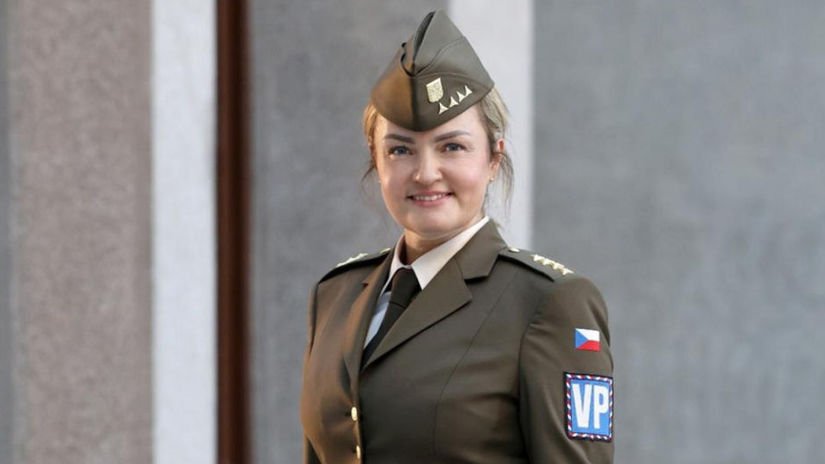
The Army of the Czech Republic has started testing the new service uniform in practice. The Ministry of Defense of the Czech Republic presents it as a more modern, lighter and more functional successor to the uniform model 97, which has been in service for almost three decades. The first prototypes are now being tested by five servicemen and women across the ranks, from the Chief of the General Staff to the Warrant Officer.
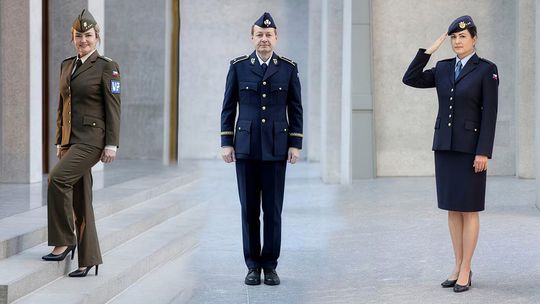
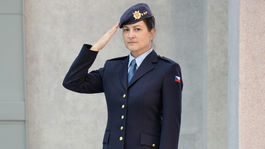
Department of Defense admitsthat the straight dress 97 at one time meant a significant shift, but after years, according to him, it no longer meets the current requirements for material processing and cut. While the other armed forces in the Czech Republic have already received new service uniforms, professional soldiers have been waiting for their change until now. The impetus for the creation of the new model came at the end of 2023, when the then Minister of Defense Jana Černochová ordered the preparation of a new service uniform with the preservation of functionality and historical legacy.
Its shape was worked on by a team of experts from the Military Historical Institute in Prague, equipment development and testing facilities in Brno, and from the Logistics Agency. The current Minister of Defense Jaromír Zůna stated that the proposal took into account historical, modern and economic aspects. According to the department, the new uniform should offer soldiers greater variability and at the same time represent the army more dignified at home and in the alliance environment.
Historic colors and no Russian influence
The new model is strongly based on the traditions of the Czechoslovak army. The ground version is based on the historical khaki color that the Czechoslovak army has used since 1919. The chosen shade is also intended to resemble the uniforms of Czechoslovak soldiers from the Second World War. A dark blue version was created for members of the air force, following the tradition of the Czechoslovak military air force from the second half of the 1930s.
The authors of the proposal emphasize that they also paid attention to symbolism and details during the preparation. Instead of crossed swords, a Czech lion appears on the buttons, and the shape of the collars, pockets and epaulettes refers to the pattern 45 uniform, which shortly after the war unified all components of the Czechoslovak army. According to the ministry, the new clothing should maintain a presentable appearance, but at the same time get rid of impractical and expensive decorations, such as ceremonial cords or brigadier.
A significant change also concerns the designation of individual types of troops and specializations. The Ministry of Defense pointed out that part of the signs used are still based on the Soviet model adopted after 1950, and several of them are still identical to the signs used by the Russian army. The regime at the time defended this move by saying: “As for the designation of ranks and the insignia of belonging to the type of troops, we adopt the designations that are established in the Soviet Army. And this is a great honor that our army receives.” The symbolism of the army was not supposed to be based on domestic traditions, but was also supposed to externally demonstrate the political and military subordination of Moscow.
Although the five-pointed star disappeared from many signs after 1990, some of the symbols survived practically unchanged until today. Therefore, the Ministry of Defense draws attention to the “alarming and unacceptable fact” that the nine distinctive signs have remained identical to those used by the Russian military. It is for this reason that the preparation of the new uniform is combined with the revision of these elements, so that the Czech army can definitively cut itself off from the symbols that were created as an expression of loyalty to the Soviet army and which today inevitably remind us of Russian influence.