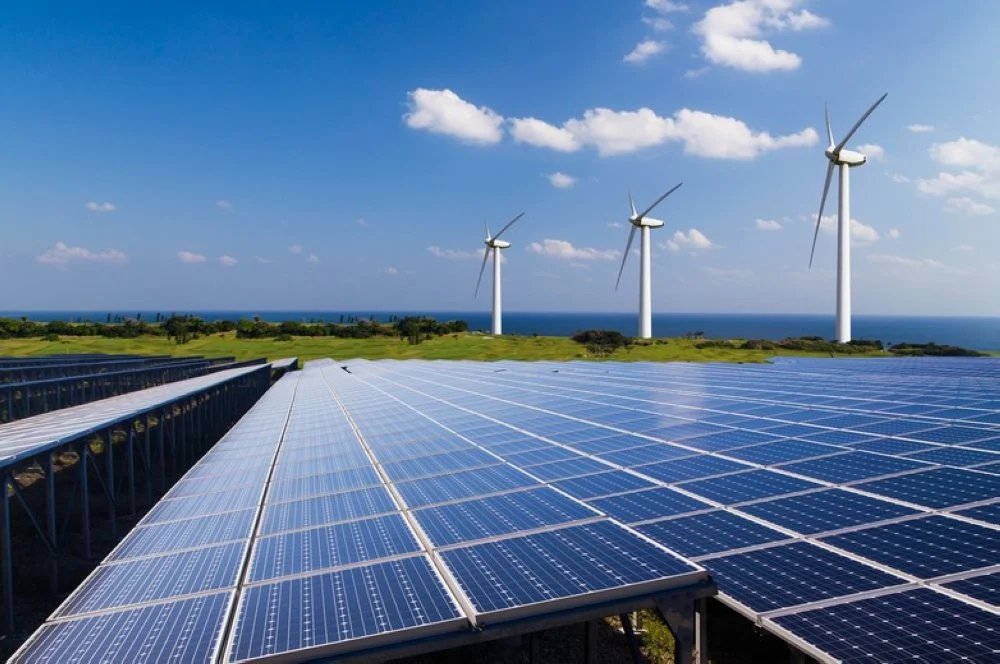
Morocco continues its energy transitionbut its global rank reminds us that the ambition displayed is not yet enough to place the Kingdom among the best prepared countries. In the “Energy Transition Index 2026” report, published in June by the World Economic Forum, Morocco ranks 72nd out of 120 countrieswith an overall score of 54.5 out of 100. A result which places it below the world average of the index, established at 57.3.
To properly read this ranking, it is important to remember that the index does not only measure solar or wind projects or the objectives announced by States. He evaluates the overall performance of energy systems and their ability to achieve a sustainable transition. In other words, producing more clean energy is not enough. We still need to have solid networks, a stable regulatory framework, sufficient funding, security of supply and skills capable of supporting this transformation.
The index is based on 44 indicators and combines two main components. The first concerns the current performance of the energy systemwhich accounts for 60% of the grade. It measures equity, i.e. access to energy and its cost, security of supply and environmental sustainability. The second part, which weighs 40%, concerns preparing for the transition. It assesses the conditions that allow a country to move forward in the long term: regulations, political commitment, infrastructure, financing, innovation, training and human capital.
On the current performance of its energy system, Morocco obtains 58.4. But on preparation for the transition, its score drops to 48.6. This gap constitutes one of the main lessons of the ranking. It shows that the Kingdom has acquired assets, but that the necessary basics to sustainably accelerate its transition still need to be consolidated.
The African comparison also qualifies the idea of a clear Moroccan advance. The Kingdom only comes to 5th continental rank among the countries covered by the index, behind Namibia, Tunisia, Gabon and South Africa. Behind Morocco, we find Mauritius, 73rd, Cameroon, 78th, Nigeria, 80th, Egypt, 84th, Ghana, 85th, Kenya, 87th, then Algeria, 94th.
In the Arab world, Morocco is also in an intermediate position. United Arab Emirates top the Arab countries covered by the index, in 49th place worldwide, followed by Saudi Arabia55th, Qatar, 58th and Jordan, 67th.
Globally, the gap with top-ranked countries remains significant. Sweden tops the rankings for the third consecutive year, ahead of Finland and Denmark. Germany ranks 9th, France 10th, China 14th, Brazil 17th and the United States 19th.
The report shows, however, that this slowdown is not limited to Morocco: in 2026, the energy transition is slowing down globally. The overall average score only increased by 0.03%. Even more worrying, preparation for the transition is declining for the first time in more than a decade. The World Economic Forum explains this situation by geopolitical tensionsfinancing difficulties, infrastructure delays, regulatory uncertainties and increasing pressure on electricity networks.
The challenge for the coming years will therefore be less display of ambitions that consolidation of execution conditions. Modernization of networks, acceleration of investments, improvement of the regulatory framework, development of storage, skills training and security of supply will be decisive. It is on these levers that Morocco will be able to transform its relative lead into real global progress.