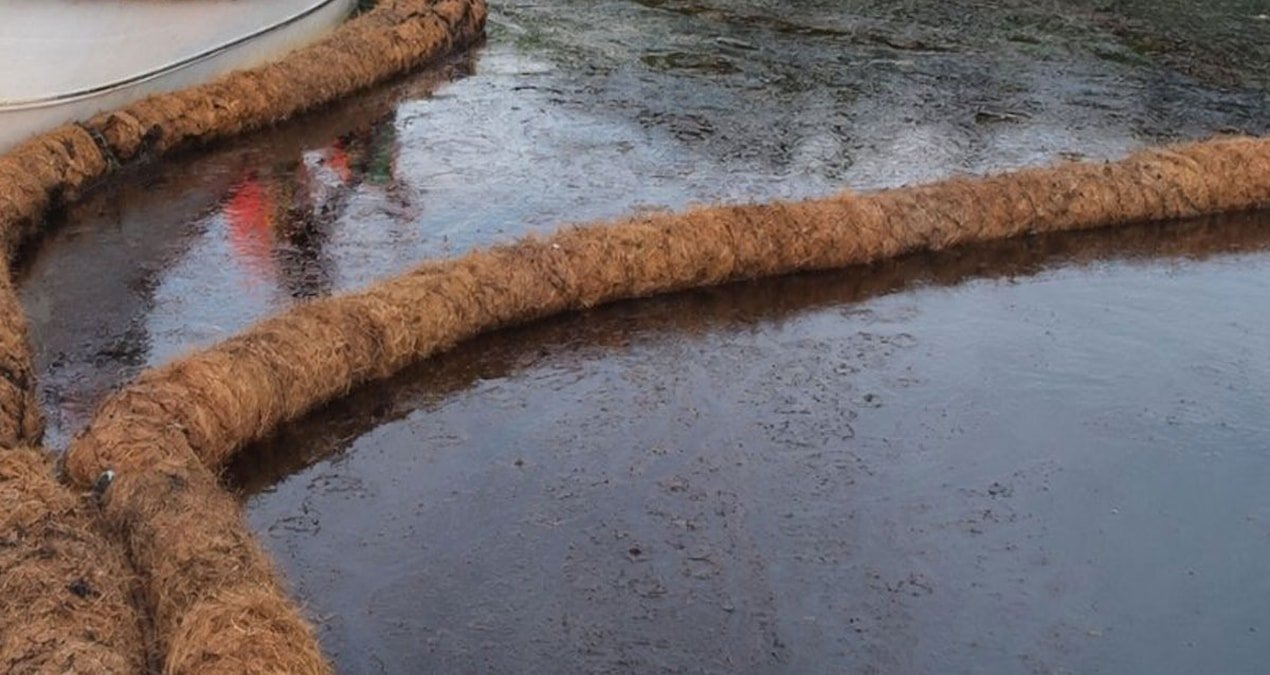
Following the marine oil spills that occurred in the Philippines, locally developed coconut fiber barriers began to be used to protect mangrove areas, fishing activities and coastal settlements. These fibers, obtained from coconut shells, which are considered agricultural waste, stand out as an alternative emergency method to synthetic barriers, thanks to their oil-absorbing and buoyant structures.
THEY FILLED THE SAGS WITH COCONUT FIBER AND SHELLS.
As a result of the sinking of the tanker “MT Terra Nova” carrying industrial fuel off the coast of Bataan in 2024, there was a risk of oil spill in Manila Bay and its surroundings. Residents and local emergency response teams fixed sacks filled with coconut fiber and husks to floating structures and placed them in risky areas to prevent the spread of the leak.
Similarly, it is stated that in the “MT Solar 1” disaster, which sank near Guimaras on August 11, 2006 and carried approximately 2 million liters of fuel, this method was used at the local level to protect the coastline, fishing areas and tourism areas.
BARRIERS CAN BE ESTABLISHED QUICKLY
Experts state that heavy fuel oil does not stay on the sea surface and sticks to rocks and mangrove roots, making cleaning efforts difficult. In the Philippines, which is among the largest coconut producers in the world, it has been noted that due to the porous structure of this material, it repels water while attracting oil and can remain without sinking for a certain period of time.
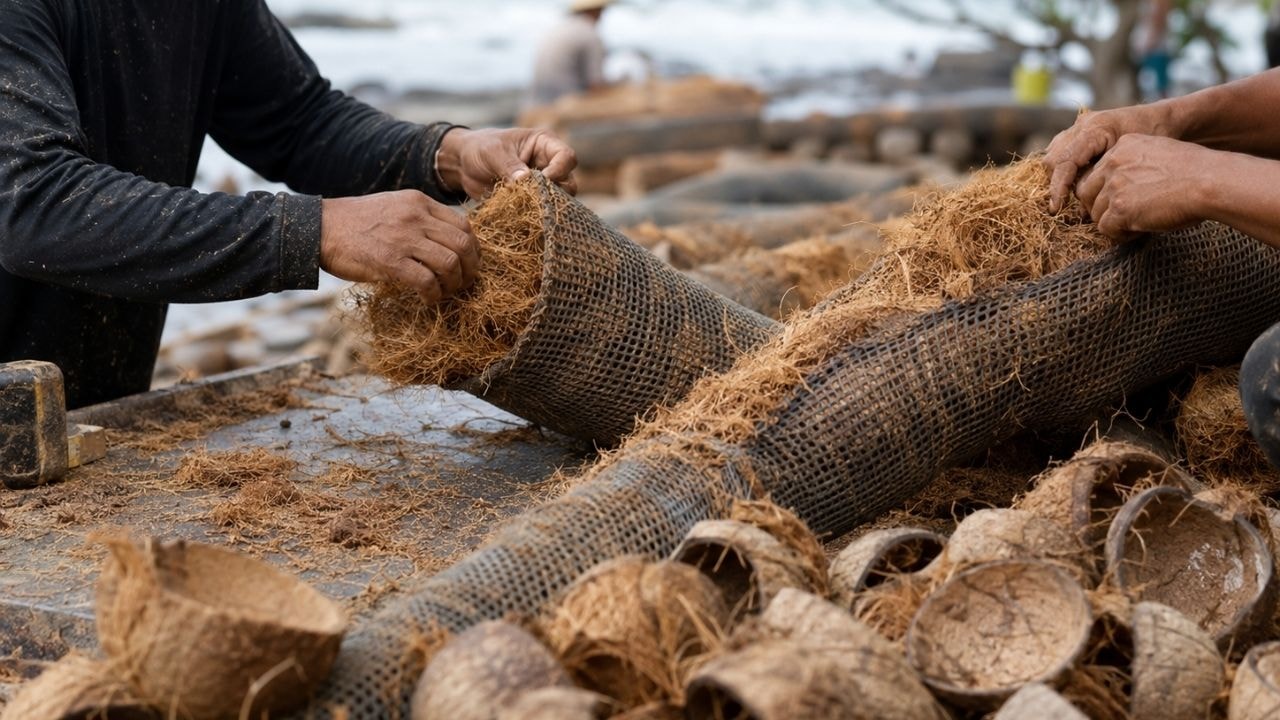
In terms of logistics, it is stated that in remote island regions where industrial equipment cannot be delivered, barriers can be quickly installed thanks to the local workforce and agricultural waste available in the region.
ATTENTION DRAWN TO THE COMPLEMENTARY ROLE
Experts emphasized that barriers made of coconut fiber do not completely replace advanced technologies such as skimmers, industrial barriers and aerial monitoring, but provide a complementary first response layer until expert teams can be dispatched.

It was stated that oil-absorbing fibers should not be left in the sea after use and should be collected, separated and disposed of in safe areas in accordance with official environmental protocols to prevent secondary pollution.
All copyrights of the articles, news and photographs published on the website www.sozcu.com.tr belong to Mega Ajans and Rek. Tic. It belongs to A.Ş. It cannot be quoted without permission, even by citing the source.