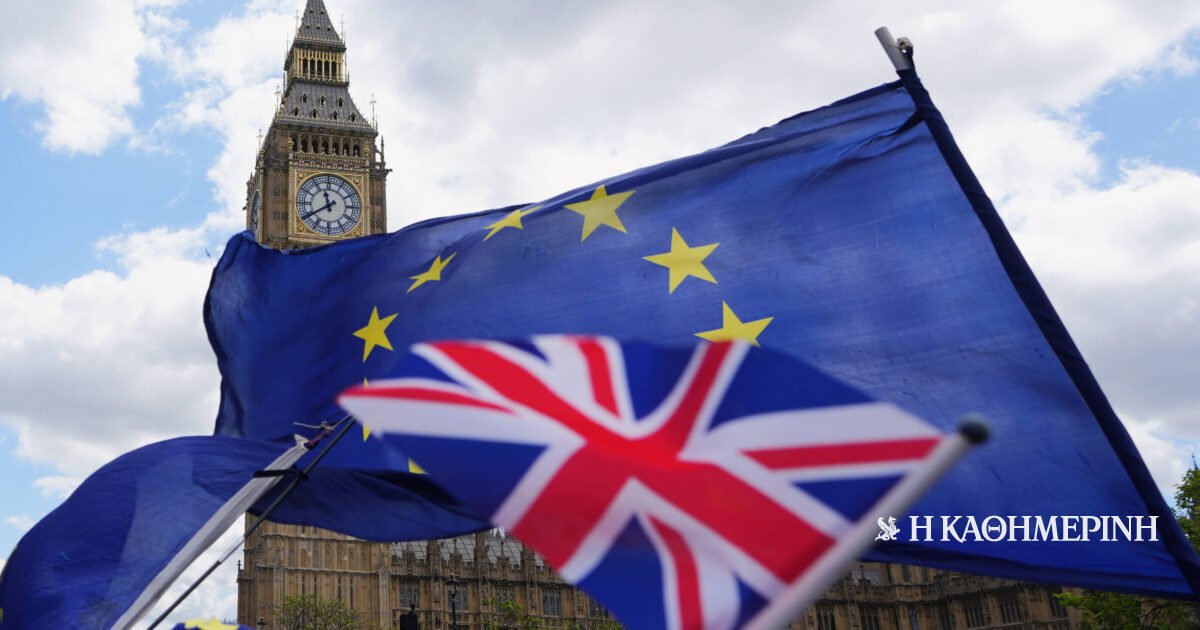
The youth generation Britons who was ineligible to vote due to age in the 2016 referendum on Brexit considers that the attempt to leave the European Union has failed, with the majority in favor of a new vote for the reintegration of the country into the EU.
The Generation Z Brits appear deeply disillusioned since Brexit, according to a More in Common survey of 18 to 28-year-olds and published by the Guardian.
The evidence shows that 60% of this age group would vote to rejoin the European Union if given the chance, compared to just 9% which would choose for the country to remain outside the European bloc.
When the analysis is limited to respondents who say they would probably participate in a second referendum, the predominance of the camp in favor of remaining or rejoining the EU. is overwhelming: 81% are in favor of the country’s European course, against 19% which wishes to remain outside the European Union.
The More in Common study, which involved 440 young people from across Britain, also showed that 50% of Gen Z Brits characterizes Brexit as a failure. On the contrary, only 16% consider it a successful venture, while 34% are undecided.

Luke Trail, chief executive of More in Common, said: “For many Gen Z Brits, the Brexit referendum was a defining moment in their political coming of age. Many young people in this age group report that Brexit was the first political event they vividly remember – they were too young to vote but have clear memories of the election campaign and the years of political wrangling that followed.
Ten years on, our poll of Britons aged 18 to 28 reveals how they feel about Brexit: they generally think it has failed and three out of five want a new referendum on rejoining the European Union. It is interesting, however, that few believe that the basic idea of Brexit was doomed in the first place. Like the rest of the electorate, they tend to believe that it could have succeeded, but that the politicians ruined it.
And while most young Britons theoretically support rejoining the EU, debates among these age groups show they are hesitant to return to the endless Brexit arguments they remember from their youth. They feel that this could distract from issues that concern them more, such as cost of living, affordable housing, employment and climate change’.
Opposition to Britain leaving the European Union is stronger at younger ages. Among 18- to 21-year-olds – who were six- to nine-year-olds in 2016 – 53% consider Brexit to have been a failure, while only 12% call it a success.
This attitude is slightly softer among the older Generation Z, aged 25 to 28, although the overall picture remains negative: 48% consider Brexit a failure, compared to 20% who assess it as a success.
Although there is widespread agreement that the current situation is not working satisfactorily, young Britons appear divided as to whether the problem lies in the very conception of the Brexit idea or in the way it is implemented by the political system.
Some 37% believe Brexit could have worked successfully but was “ruined by politicians” who mismanaged it. On the contrary, 29% say the venture “was doomed from the start”.
Just 11% think Brexit has worked well so far, while 23% have no opinion.
The Brexit majority no longer exists
The poll comes at a time of wider debate about demographic changes in the UK electorate. The 2016 referendum was decided by a narrow margin, as the Leave camp prevailed with 51.9%, compared to 48.1% for Remaining in the European Union. The Brexit victory rested mainly on older age groups.
However, the composition of the electorate has changed significantly since then. Pollster Peter Kellner has argued that the Brexit majority that existed in 2016 no longer exists. According to the figures, around 15% of original Brexit voters have passed away, compared to around 10% of Remain voters.

At the same time, some six million young people who were disenfranchised in 2016 have now joined the electorate. This generational renewal has led several analysts to conclude that the majority is in favor of Brexit has virtually disappeared due to natural demographic changecreating an active majority of several million anti-Brexit voters.
According to the More in Common poll, almost three in five young Britons (62%) think there should be a referendum on re-joining the European Union within the next five years. Only 11% of citizens under the age of 29 oppose a new vote, while 27% are undecided.
Support for a second referendum is strongest among those who want the UK back into the European family, with 88% of likely Leave voters favoring another go to the polls.