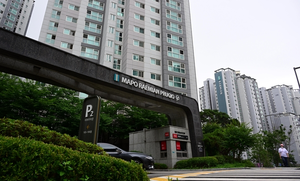
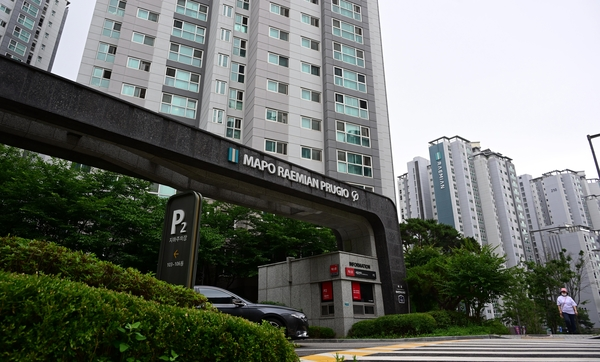
In an emergency, police can reach an apartment complex within minutes — only to lose crucial time at its locked entrance.
That delay is what the National Police Agency hopes to reduce with a new digital access system for apartment buildings.
The agency is developing a feature for the police 112 mobile application that uses Bluetooth technology to unlock communal apartment entrances, granting access when responding to emergency calls.
The plan, aimed at shortening response times, has raised questions over how far police access should extend in a country where apartment security is often treated as part of residential privacy and property value.
Police say the system would allow them to open entrances within about three seconds, instead of requiring officers to wait for security guards or residents to let them in.
“Even when officers arrive at the scene quickly, they are often delayed at communal entrances while trying to gain access or contact security guards,” police said. “Such delays can slow the initial response. We needed a system that could help minimize harm in violent crimes or medical emergencies.”
The National Police Agency has allocated 214 million won ($139,600) for the project, according to a bid notice posted on the online bidding platform Bidpro.
Current law allows police to enter premises during emergencies, and residents or other citizens are required to cooperate with police access in such situations. But the law does not specify a standardized method for gaining access to residential buildings.
Police have tried several ways to enter apartment complexes more quickly during emergencies.
In 2022, police introduced an emergency vehicle plate system to open barriers at apartment complexes.
But officers still had to wait for security guards or callers to unlock the doors to individual apartment buildings.
In 2024, Jung-gu in Seoul and Jungbu Police Station introduced a “free-pass system” that provided police with a master key to override security systems in certain apartments and residential complexes.
The system was introduced after a survey found that 96 percent of officers in the district had experienced delays while trying to enter houses because they could not open entrance doors.
Police sought to expand the free-pass system nationwide about a month after its launch, but faced limitations. Not all apartment complexes were willing to share security codes or RFID-based access cards with police.
Similar projects were tested in other regions, including Cheongju, North Chungcheong Province, and Ulsan, using remote controllers and copies of RFID master cards for entrance access.
The new plan takes a different approach.
“Unlike the previous system in Jung-gu, which used master cards for entrance access, we will be using an app connected to several operators that manage security systems,” said the head of one Crime Prevention and Response Division, explaining the new system.
The function will be added to the police 112 mobile application. The app will be connected to the servers of certain automatic entrance system developers, including Bluen and Trustay, with which police are currently testing the system.
Pilot programs are being run at apartments under contract with the two companies across four regions nationwide: Gangnam in Seoul, Yeongtong in Suwon, Dongtan in Hwaseong and Suseong in Daegu. Around 140,000 households are participating in the pilot phase.
“On top of the two companies that we are working with now, we estimate there are four to five more. These companies will work together to build a unified application that would cover over 2 million households in Korea,” Kim Sang-kyun, chief of the 112 System Account Management at the National Police Agency, told The Korea Herald.
Using one digital access system for all residential buildings could reduce the time officers spend calling security guards or waiting at locked entrances, especially in situations where every second matters.
Homes as emergency scenes
Apartments dominate Korea’s urban housing landscape.
According to police statistics, 15.8 percent of reported crimes in 2024 occurred in residential areas, including apartments, multi-family homes and single-family houses. The crimes included murder, arson, sexual crimes, and theft. Apartments alone accounted for 7.6 percent of all reported crimes.
Rapid police responses can be critical in cases of assault, threats, kidnapping and other violent crimes that occur in residential settings. But because residential buildings use different access systems, officers may face different entry procedures at each site.
But the initiative also raises concerns among residents who value privacy and strict access control.
Some high-end apartment complexes are known for their strict security, and many residents view these measures as a key feature of their communities.
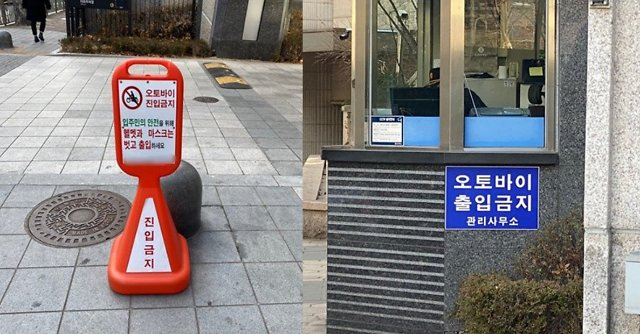
Such guardedness toward outsiders does not apply only to police. Many apartment complexes restrict access for delivery riders and postal workers. In some cases, delivery riders are asked to leave their vehicles at the entrance, leave their ID with security guards and walk to each apartment building. In more severe cases, they are barred from using elevators reserved for residents.
When police tried to expand the free-pass system nationwide in 2024, high-end complexes in Seoul, including Galleria Foret in Seongsu-dong, IPark in Samseong-dong and Raemian One Pentas in Banpo, refused to cooperate.
Some residents argued that weaker access controls could undermine security and negatively affect property values.
Apartment management offices have also argued that when police are dispatched to homes, security guards open doors for them anyway, leaving no need to share keys.
“When we ask them to open doors, most do because we are in uniform,” one senior officer at Gangnam Police Station told The Korea Herald.
Still, police argue that faster access could improve emergency response times and increase the chances of saving lives.
“Resident feedback will also be an important factor,” Kim said. “Whether the program is expanded will depend on the results of the pilot project and public acceptance. The system will not be rolled out nationwide immediately simply because it has been developed.”
mjcha@heraldcorp.com