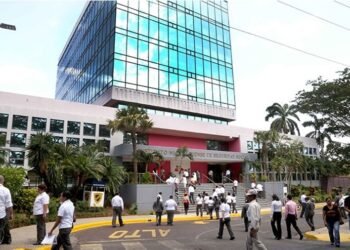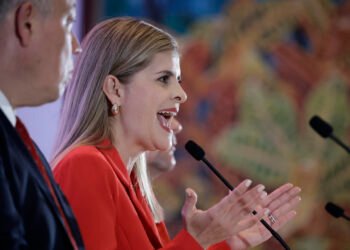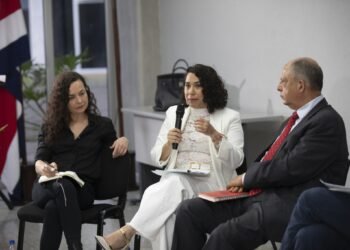
The National Assembly of People’s Power (ANPP, unicameral parliament) of Cuba, approved on Thursday, June 18, 2026, a package of reforms that seek to liberalize and decentralize the island’s economy, which is suffering its worst crisis in decades for internal and external reasons.
The Prime Minister, Manuel Marrero, explained at the end of the meeting that a working group will be created to manage the impact of the reforms on the country’s legal system.
When presenting the proposals to the deputies, Marrero referred to “measures of strategic impact” that “are not rigid” and are not conceived as a renunciation of the construction of socialism, but are “an indispensable condition for its preservation.”
The package contemplates the entry of “new actors” in the tourism sector under “new modalities”, the promotion of foreign direct investment (especially for non-resident Cubans), including measures to expand the role of the private sector.
It also provides for the creation of procedures for the bankruptcy, liquidation and restructuring of companies, as well as the possibility of converting state companies into commercial companies with shares or participations.
In this regard, the Head of Government explained that the State would define its shareholding in each sector of the economy and would maintain a majority position in those considered strategic for national development.
The reforms also include changes that would lead to boosting agriculture, foreign trade and the real estate sector, in addition to decentralizing decision-making and providing greater “autonomy” to state companies and municipalities.
It also plans to authorize greater participation of private capital in financial activity, including the possible creation of a private bank under the supervision of the Central Bank and subject to the same regulations of the state banking system.
They deny that they are due to pressure from the US.
The president of Cuba, Miguel Díaz-Canel, denied that the package of economic reforms approved on the island is a reaction to pressure from the United States, and affirmed that it is a “sovereign” exercise by his country.
“We are not doing it because of pressure from the Yankees, but because we have reached a moment of maturity, of reflection,” Díaz-Canel stressed in the speech that closed the extraordinary session of the ANPP.
Díaz-Canel maintained that “Cuba decides without permission other than that of its people” and “sovereignly designs and proposes the changes it needs.”
He also reiterated that his Government is willing to dialogue on all possible issues with Washington “without hatred, but without fear” and pointed out that this willingness is “historically proven.”
The president added that “Cuba is ready for a civilized and respectful relationship that benefits both peoples” and “if you really want to help the Cuban people, let them live,” he added.
Urgent approval
Díaz-Canel had announced the measures since Friday, June 12, 2026, without providing many details; These were processed with unusual urgency on the island, with a first approval by an extraordinary plenary session of the Central Committee of the Communist Party of Cuba (PCC, the only legal one) held this Wednesday.
“Reality imposes urgent and necessary changes on us. And when the life of the people becomes so hard, the first duty of the PCC of Cuba and the revolutionary Government is not to better explain the crisis; but to change what needs to be changed to get out of it,” he stated before the Central Committee.
Díaz-Canel, who also leads the PCC, acknowledged that “they are not new ideas” that were proposed years ago but were not implemented, which was a “mistake.” “Cuba does not need more delays, it needs solutions. It is not about creating more offices or multiplying meetings, but about achieving concrete results,” he stressed.
These economic changes can serve two objectives at the same time: to tackle the serious structural crisis suffered by the island, which has registered a sustained contraction in the last six years.
The reforms also seek to calm pressure from Washington, which demands profound political and economic changes in Havana and, according to Cuban sources, has even threatened military intervention to achieve this.
Since January, Washington has almost completely prevented the entry of oil and derivatives into Cuba and has caused a rout of international companies that operated on the island (hotels, shipping companies, airlines and banks) for fear of suffering the latest round of secondary sanctions.
Likewise, the internal situation is critical: agricultural and industrial production has collapsed, energy generation is collapsing, prices are multiplying, macroeconomic distortions are entrenched, the peso is depreciating rapidly, and the banking system and the Cuban State are decapitalized.
The deterioration of the quality of life, progressive in recent years and accelerated since January, after the oil blockade and the additional maximum pressure sanctions applied by the United States Government, is encouraging unusual protests on the island – small and peaceful, but increasingly frequent -, where pots and pans are touched and garbage accumulated in the streets is burned.