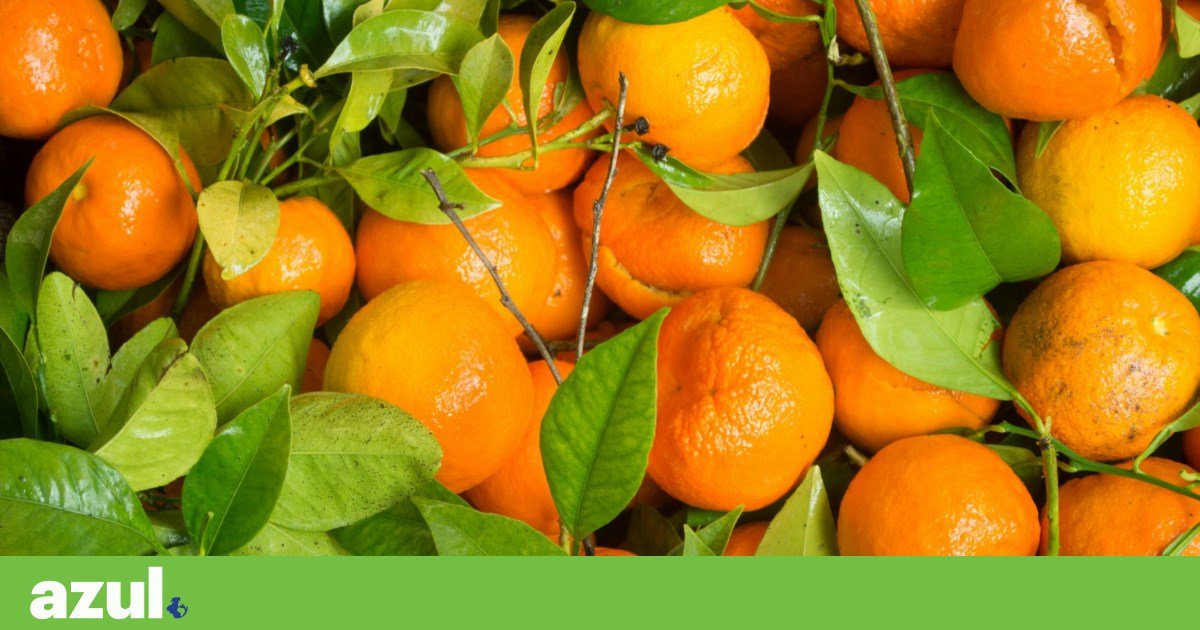
The fourth reformulation of the Herdades de Murta e Monte Novo Agroforestry Project is once again under public consultation within the scope of the Environmental Impact Assessment. The Aquaterra group project, in Alcácer do Sal, began by envisaging the intensive planting of avocado pear on 658 hectares, was rejected and returned in the meantime converted into a tangerine plantation — version that the Evaluation Committee once again rejected, with an unfavorable opinion regarding the ecological systems factor. The new version, according to the Environmental Impact Study (EIA) now under public consultation, “introduces cuts in the production area and water use, but maintains environmental impacts”.
The project, located in the parish of Comporta, in the municipality of Alcácer do Sal, envisages the planting of tangerines under an intensive irrigated regime on a property measuring 2405 hectares. The agricultural component now occupies 295 hectares — a reduction of around 18% compared to the previous proposal —, while the forest area remains at 1443 hectares and 271 hectares of ecological recovery and recovery areas are created.
The reformulation eliminated four water capture holes groundwater and two reservoirs, reducing annual water needs from 2.28 million to 1.74 million cubic meters. The Portuguese Environment Agency (APA) issued a preliminary favorable opinion in April 2026 that sets this volume as a maximum, informing that “the total volume to be allocated in the TURH (Water Resources Use Titles) cannot exceed 1.74 hm³/year.”
With regard to the impact on underground water resources — one of the descriptors considered crucial for the decision on environmental viability —, the study itself recognizes that the extraction of water necessary to irrigate the tangerine orchard causes “impacts considered to be significant”. The simulations carried out indicate, however, that the lowering of the piezometric surface is only reflected at a local level, within the property limits.
The reformulated project also integrates river, structural and functional ecological corridors, and maintains a 25-meter protection strip for the water lines identified in the military cartography and in the Municipal Master Plan.
From an ecological point of view, the study area falls within two Special Conservation Zones — Comporta/Galé and Sado Estuary — and a Special Protection Zone, Açude da Murta, and is also intersected by the Sado Estuary Natural Reserve and the Sado Estuary Ramsar site. The study recognizes that the intervention will affect flora species with high conservation value, such as Armeria rouyanathe Thymus capitellatus and the Printed Santolinaalthough the project avoids areas with the highest density of these species and does not involve the felling of cork oaks or holm oaks.
Before this reformulation, the National Energy and Geology Laboratory (LNEG) had also issued an unfavorable opinion on the previous project, considering that the left bank of the Sado “already shows significant subsidence phenomena associated with the over-exploitation of groundwater”.
LNEG was based on data from the European Copernicus/EGMS system to identify progressive land declines in the project area and on other agricultural holdings in the region, interpreting them as a consequence of “the continuous decrease in piezometric levels, associated with the increase in agricultural extractions and aggravated by the reduction in precipitation and the increase in evapotranspiration.”
The non-technical summary concludes that the reformulation fully responds to the concerns expressed by the EIA authority, considering the project environmentally viable.
Quercus asks for lead
The environmental association Quercus defends the lead in the project, classifying it as “unsustainable in a region already severely affected by water stress”.
In a statement, Quercus argued that the Alentejo coast “continues to be an authentic ‘wild west’ of intensive irrigated agriculture, without local and national authorities taking drastic measures to stop new agricultural projects” that cause “the depletion of water resources already at the limit”.
The association submitted a negative opinion to the project as part of the public consultation, which ran until this Friday, and demanded “the issuance of an unfavorable Environmental Impact Statement (DIA)”. Quercus also refers to data from the Copernicus system, in October 2025, which recorded the subsidence of the soil in Alcácer do Sal, caused by “intense water withdrawals” that exceed “the natural replenishment of the aquifer”.
For Quercus, the new reformulation is a “cosmetic” operation that exudes “false ecological gains”, adding that the project “in essence remains unsustainable and based on vague and non-binding compensation measures”. The association also demanded from the Government an opinion from LNEG on the Alcácer do Sal aquifer system and the cumulative impacts of existing projects in the area. with Lusa