The care team sat together for the daily handover, from day to evening shifts. The door to the hallway was closed and a ‘do not disturb’ sign hung on the door. A daughter of a nursing home resident saw the staff through the door window, rushed in and started screaming. The nursing home could not be reached by telephone due to a technical malfunction! While the hospital wanted to discuss her mother! Sorry, we are currently busy with our transfer, replied the care workers, familiar with the daughter’s temper. They kindly referred her to the receptionist: could she report it there? The woman ran out of the room ranting and returned a moment later ranting. The scene repeated itself. And then again.
Also shouting was the daughter of another resident of this nursing home, a location of Cordaan, a healthcare institution with 6,400 employees, more than 2,000 volunteers and about 19,000 clients in Amsterdam, Diemen, Nieuw-Vennep and Het Gooi. To be on the safe side, staff are present when mother takes her medication. Mother puts them in her mouth, but one day she was rebellious and apparently didn’t swallow the medicine. ‘God damn it!’ the daughter shouted at a healthcare worker. ‘I found two tablets in my mother’s room! Aren’t you paying attention or something?’
A man in his nineties pressed the alarm button in his room, but according to his daughter the staff did not respond in time. She stood in the doorway, ready to unleash her anger on the first caregiver who passed by, in this case a young woman, not yet twenty years old, who was combining her healthcare training with a job in the nursing home. It made an impression, her team leader noticed while listening to what had happened to her. The young woman was talking so fast that she couldn’t find the words.
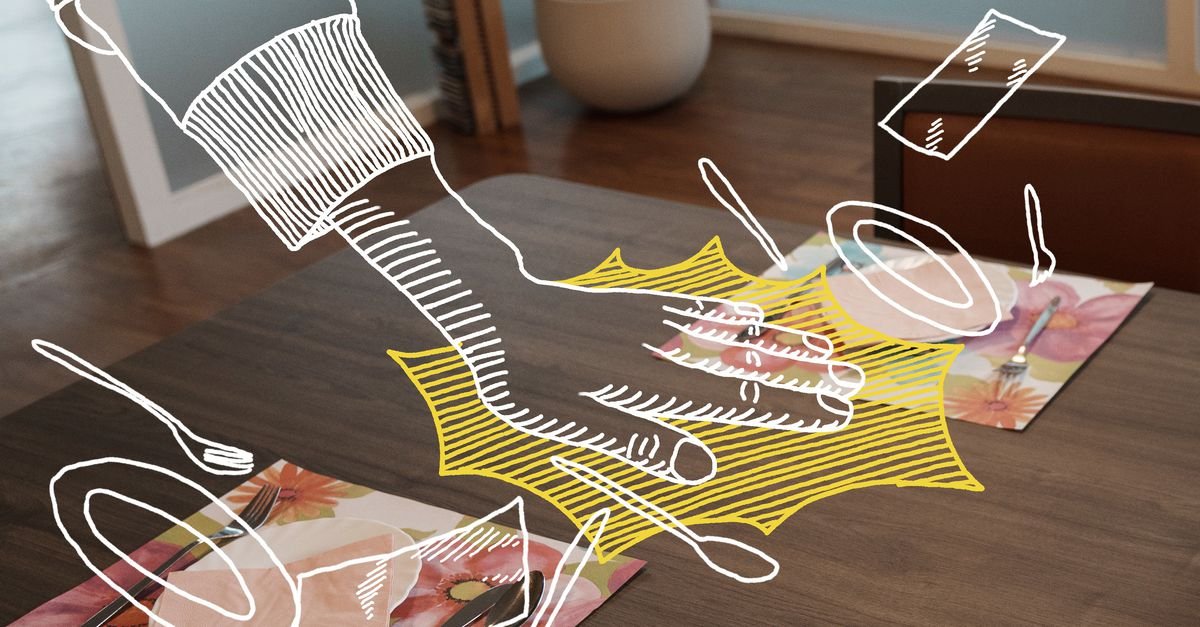
All this took place in one nursing home over the past six months, but the overview is not complete. Cordaan has sixteen nursing homes and also offers home care, mental health care and care for the disabled. A son dissatisfied with the care of his rapidly deteriorating father demanded improvement – now! – and hit the table top with the flat of his hand. In the rehabilitation department of Cordaan, a family member punched a healthcare worker. Pens and coffee cups were thrown at staff. Security guards have been hired in two nursing homes. A psychologist who works for Cordaan walked into the supermarket and was pushed against the wall by a client’s family.
Also read
Healthcare providers are increasingly becoming victims of aggression from patients and their loved ones. ‘I no longer dared to care for the patient’
:format(webp)/s3/static.nrc.nl/wp-content/uploads/2025/04/14094456/data130735805-d2eb79.jpg)
Snarling and sneering
It also plays a role in other institutions for elderly care, a survey shows NRC. Family members filming employees without permission. They snarl and sneer. They threaten to go to ‘the press’ and regularly do so. Archipel, a Brabant healthcare institution with ten nursing homes, more than a thousand residents and 2,200 employees, held a symposium on safety in March at the Van der Valk hotel in Best. At half past three, healthcare staff went through workshop round two: they could choose from ‘Increasing aggression in relatives’ (Grand Room 2), ‘Self-protection & resilience’ (Grand Room 3), ‘Nonviolent communication (The Study) and ‘Effective boundaries’ (Grand Room 4).
The word ‘incidents’ no longer covers it, says Cordaan director Ronald Schmidt. He calls the problem “systematic”, although he also wants to emphasize that the “vast majority” of family members are “a true partner in care provision”. But once aggression rears its ugly head, the impact on employees is “gigantic”. “Impact on their sense of safety, job satisfaction, ability to provide good care,” says Schmidt. There are employees – “more than ten” – who are at home with “PTSD-like complaints”.
When asked about the reason for aggression in healthcare, he does not want to give an immediate answer. Because then he would come up with an explanation like this and an explanation like this and then it would seem like those are legitimate reasons for reprehensible behavior. Of course, Schmidt agrees, sometimes elderly care falls short. Also Cordaan. For example, at the beginning of last year, the Healthcare and Youth Inspectorate was very critical of the care in a nursing home location in Amsterdam Nieuw-West. de Volkskrant wrote a big article about it. “We have to admit it when something goes wrong and we also have to be accountable for that,” says Schmidt. “But that does not mean that we should no longer mention the development of increasing aggression that we are identifying. That we should not draw a line. We have to do that too.”
People are not in dialogue mode but in persuasion mode and the superlative of persuasion is intimidating
He draws a comparison with the political debate after the fire set by anti-asylum demonstrators at the emergency shelter in Loosdrecht in May. “The discussion focused far too much on what was wrong with asylum policy and far too little was said: all explanations aside, you simply don’t do this.”
He speaks of a “hardening” of society. Fellow institutions also identify this, from Careyn in Utrecht and South Holland to Mijzo in North Brabant. A hardening that everywhere translates into aggression and intimidation. To the address of, name them: city council members, mayors, teachers, ambulance workers, hospital staff, firefighters, recycling center employees, boas, police officers, traffic controllers, conductors, bus drivers. “People are not in dialogue mode but in persuasion mode and the superlative of persuasion is to intimidate,” says Schmidt. And yes, “about two or three years ago, that aggression also seeped into healthcare.” Also elderly care, including nursing homes.
Nursing home cut back
And when Schmidt and colleagues do address the question of why aggression even occurs there, they all sketch the same context. That elderly people in nursing homes are in worse shape than before because the intermediate step of the nursing home has been cut back. That there is no longer a question of eye drops here and fitting support stockings there, but of treating persistent wounds, helping the elderly into bed via a hoist and guidance in the final phase of life. That this heavier care has not been accompanied by additional staff, so that the workload has increased.
The children of residents often find it difficult that they have to hand over care to us, that they have lost control over the care of their father or mother.
That elderly people increasingly end up in nursing homes after an emergency such as a fall at home, with the result that their children have not yet accepted the new status quo of rapid decline. Some family members are overtired after years of taxing and time-consuming informal care. “The children of residents often find it difficult that they have to hand over the care to us, that they have lost control over the care of their father or mother. And they take that out on us,” says a team leader of a Cordaan nursing home (name known to the editors).
The team leader works in the aforementioned nursing home, where family members have regularly started shouting in recent months. She also caught the young woman who faltered as she told her story after a daughter’s verbal abuse. She then brought in other colleagues to discuss as a group. “What I noticed then was that colleagues said things to her like: ‘Hey, don’t worry about it, that’s just how that daughter is.’” A step towards acceptance of inappropriate behavior. “Which made me immediately emphasize that this behavior is never acceptable.” According to the team leader, normalization means that employees are less likely to report their unpleasant experiences. “And then it becomes less visible in our systems how big the problem is.”
Also read
They don’t go to the nursing home: ‘We have been together for 64 years. Then I’m not going to give him up, am I?’
:format(webp)/s3/static.nrc.nl/wp-content/uploads/2026/05/25154902/220526BIN_2033811525_1.jpg)
Normalization
This standardization also affects other institutions, as is evident from their response to the survey NRC. Unsolicited, they write in their answers that aggression is not normal: apparently it does not go without saying. Elderly care organization Careyn writes: “We teach our employees that there are limits and that not everything is ‘normal’.” Mijzo: “Aggression is never normal.”
At least fifty employees of the Cordaan nursing home have now completed training to better defend themselves against aggression and intimidation. How you can de-escalate by keeping calm and not being tempted into starting a discussion when someone is vehemently attacking you. And is a resident visiting a family member who is known to be ‘difficult’? Then don’t go in alone, but always with a colleague, says the team leader. “Then you are stronger.”
Also read
Locking up nursing home residents is no longer allowed: people with dementia are, above all, free citizens
:format(webp)/s3/static.nrc.nl/wp-content/uploads/2026/02/12135819/130226BIN_2031162973_dementie4.jpg)