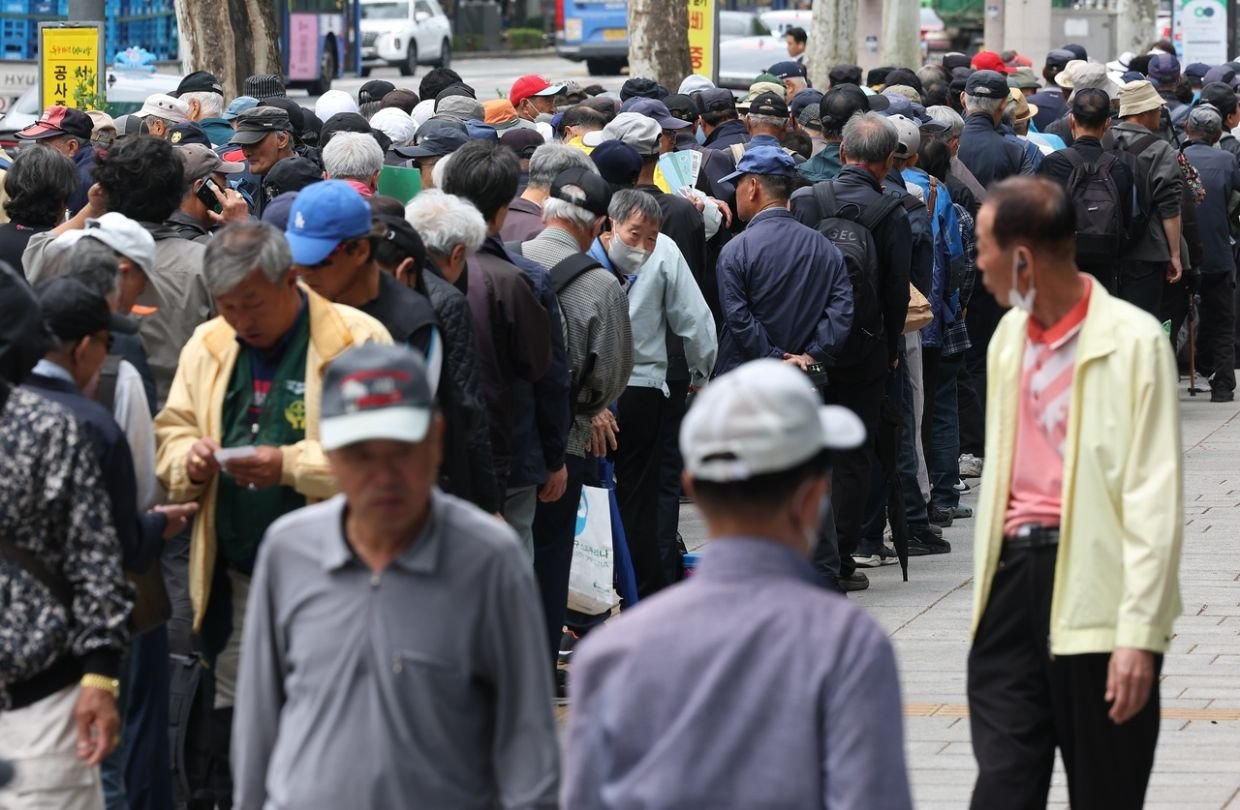
SEOUL: Seoul is considering free or subsidised bus rides for senior citizens aged 70 and older, expanding the decades-old system of free subway use for those aged 65 and above.
The proposal cleared a Seoul Metropolitan Council committee on Monday (June 15) and is scheduled for a vote at the council’s plenary session on Wednesday (June 17). The subsidy would cover city and neighborhood buses, but exclude express and intercity buses.
But the plan has drawn opposition from those concerned about the financial burden on a city where 21.2 per cent of the population are senior citizens.
Debate is growing over whether Seoul can afford another major transportation benefit as its elderly population grows.
Another potential issue is whether the policy could prompt calls for raising the age threshold for other senior benefits to address rising fiscal pressure.
Free bus rides come with growing price tag
The ordinance, introduced by Seoul Metropolitan Council Transportation Committee Chair Lee Byeong-yoon of the People Power Party, would provide the legal basis for the city to establish a senior bus-fare support programme.
Even if the measure passes the council later this month, free bus rides would not begin immediately.
The city would still need to determine who qualifies, how much support would be provided and how the programme would be funded.
The proposal aligns with a campaign pledge made by Seoul Mayor Oh Se-hoon during June’s local elections.
Supporters argue that the current transportation benefit system leaves some seniors at a disadvantage.
While subway rides are free for people aged 65 and older, bus rides are not, creating an additional burden for older residents who live farther from subway stations or rely primarily on buses for daily travel.
Other regions have already implemented similar systems. Daegu began introducing free bus rides for seniors in 2023 and plans to gradually lower the eligibility age from 75 to 70 by 2028.
Daejeon already offers free bus rides to residents aged 70 and older, while Incheon plans to launch a similar programme for those aged 75 and above this year.
The challenge, however, is cost. According to estimates by the Seoul Metropolitan Council Secretariat, a universal bus-fare subsidy for all residents aged 70 and older would cost approximately 104.7 billion won (US$68 million) in its first year, assuming implementation begins in 2027.
As Seoul’s population aged 70 and above is projected to grow from roughly 1.27 million this year to 1.63 million by 2031, annual costs could rise to 127.5 billion won. Total spending over five years is estimated at nearly 579 billion won.
Those figures are on top of existing transportation subsidies.
Seoul already operates a semipublic bus system under which the city compensates private bus operators for operating losses.
The city provided more than 450 billion won in support to bus companies last year.
Additional financial pressure may also emerge following recent court rulings on ordinary wages, which are expected to increase labour costs across the bus industry.
Critics question whether the city can sustain another large-scale transportation subsidy while continuing to argue that it cannot shoulder the cost of senior subway benefits.
Seoul Metro has long maintained that free subway rides for seniors are one of the main drivers of its financial difficulties and has repeatedly called on the central government to help cover the cost.
According to Seoul Metro, free rides for seniors, people with disabilities and national merit recipients generated transportation losses averaging 364.5 billion won annually over the past five years. The loss reached 448.8 billion won in 2025 alone.
Some policy experts warn that once a benefit is introduced, it becomes politically difficult to scale back.
“Cash-type welfare programmes are difficult to reverse once they begin, so policymakers need to proceed cautiously,” said Sohn Jong-pil, a senior researcher at the Fiscal Reform Institute.
“Simply expanding support without strengthening the public accountability of the semi-public bus system has limitations.”
Supporters counter that the headline cost estimates may overstate the actual burden.
The ordinance does not require Seoul to provide unlimited free rides to all seniors aged 70 and older. Instead, it allows the city to determine eligibility criteria and benefit levels.
That flexibility could enable policymakers to start with low-income seniors, cap the number of subsidised trips, restrict support to certain times of day or provide partial fare discounts.
A Seoul city official said the measure should be viewed as creating a legal framework rather than mandating immediate universal free rides.
“The ordinance establishes the institutional basis for the program,” the official said.
“Discussions remain on who should receive support and what form the programme should take.”
Could the plan change how seniors are defined?
Another reason the ordinance has attracted attention is its decision to set the eligibility age at 70 rather than 65.
South Korea’s official definition of an elderly person remains 65, but growing life expectancy and rapid population aging have fuelled calls to raise the threshold.
The debate has intensified as governments struggle with the cost of pensions, healthcare and transportation benefits.
Lee, the city council member who introduced the ordinance, said the 70-year threshold could serve as a reference point for future discussions about subway benefits.
“There is growing public debate about raising the age for free subway rides from 65 to 70,” Lee said.
“Setting the threshold at 70 provides one possible guideline for those discussions.” – The Korea Herald/ANN