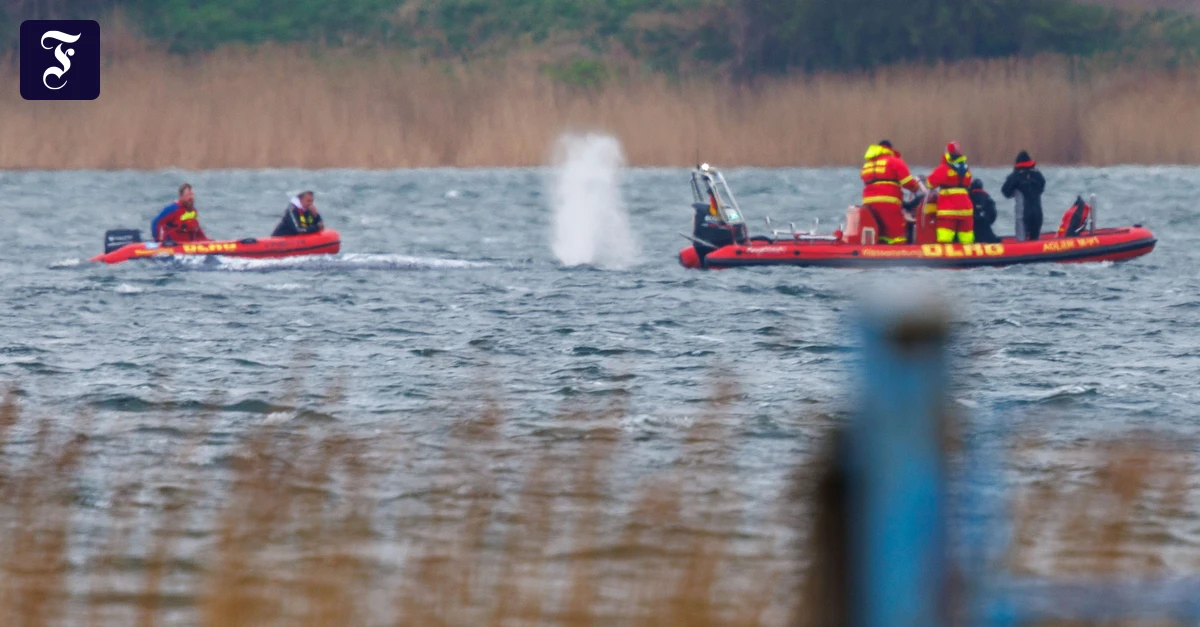
“The whale lies calmly,” said Mecklenburg-Western Pomerania’s Environment Minister Till Backhaus (SPD) told the German Press Agency after an inspection trip that night. The politician, together with experts from the state fisheries authority, approached the animal in a boat to a distance of around 500 meters. The breathing rates were initially between two and four minutes, but then became slower over time, explained Backhaus. This shows that the whale is stressed by the day’s events.
The humpback whale, stranded in a shallow bay on the Baltic Sea island of Poel, had moved towards the shipping channel in the evening, but then came to rest again at dusk. This was seen in media live streams. The helpers continue to hope that he will make it to deep water and then find his way out of the bay.
Environment Minister: That’s right, let the whale rest for now
After the animal initially swam free on Monday morning when the water level rose in the bay of the island of Poel north of Wismar, two hours later it was again stuck in waist-deep water in many places. In the evening the whale could be seen moving towards the deep channel again – then it stayed lying down again.
It was right to let the whale rest for now, said the Environment Minister, referring to previous attempts at mobilization. But time is of the essence: the water level is expected to fall during the night.
Environment Minister Backhaus does not expect the humpback whale to continue swimming at night. We have to wait and see what happens in the coming hours, he said. The water police should continue to stay close to the animal.
Meanwhile, the private rescue initiative’s veterinarian, Janine Bahr-van Gemmert, fell ill, as Backhaus confirmed. She was therefore taken to the hospital.
Boats are supposed to steer whales in the right direction
The plan of the diving entrepreneur Fred Babbel, commissioned by a private initiative, is to guide the humpback whale from the Kirchsee into the Wismar Bay and from there towards the open sea. Boats should therefore block his way to the east, towards Wismar.
The whale moved unnaturally after taking off in the morning, said whale researcher and marine biologist Fabian Ritter. The reason for this could have been the shallow water depth. “But it could also have been because he is in pain or an injury and also because he was lying down for 20 days. That does something to the muscles, it does something to the organism.”
Live streams showed the whale lying aground again near fairway buoys. According to available findings, it is not completely up, said Mecklenburg-Western Pomerania’s Environment Minister Till Backhaus (SPD) early at noon. “He could easily swerve to the left and then get into deep water and then lead him out of Kirchsee.”
Falling water levels could have dire consequences
“It’s a bottleneck he has to go through,” said entrepreneur Karin Walter-Mommert, who is co-financing the private rescue attempt. The water outside the fairway in Kirchsee is only waist deep in many places. Backhaus said it was believed the whale was resting and then heading out again.
However, time is of the essence: the water level in the Bay of Lübeck should fall again from Monday afternoon to Tuesday. According to marine biologist Boris Culik, this can have dire consequences for the whale, which weighs around twelve tons: “If it lies comfortably on its stomach on a sandbank with the blowhole sticking out of the top, everything is fine. But if there is 50 centimeters less water, then it develops an incredible weight, which then puts pressure on its internal organs. It has a very weak skeleton compared to us.” It’s high time to get him out of the place.
According to Culik, the whale could have repeatedly headed for shallow places: A weakened whale could also intentionally become stranded if this made it easier for it to breathe. “That he was in the Baltic Sea “You can imagine that it’s going to a sandbank to recover,” he said. The animal has been stranded four times in different places since March, sometimes for just a few hours, most recently off Poel for around three weeks.
“It is not possible to actively save this whale”
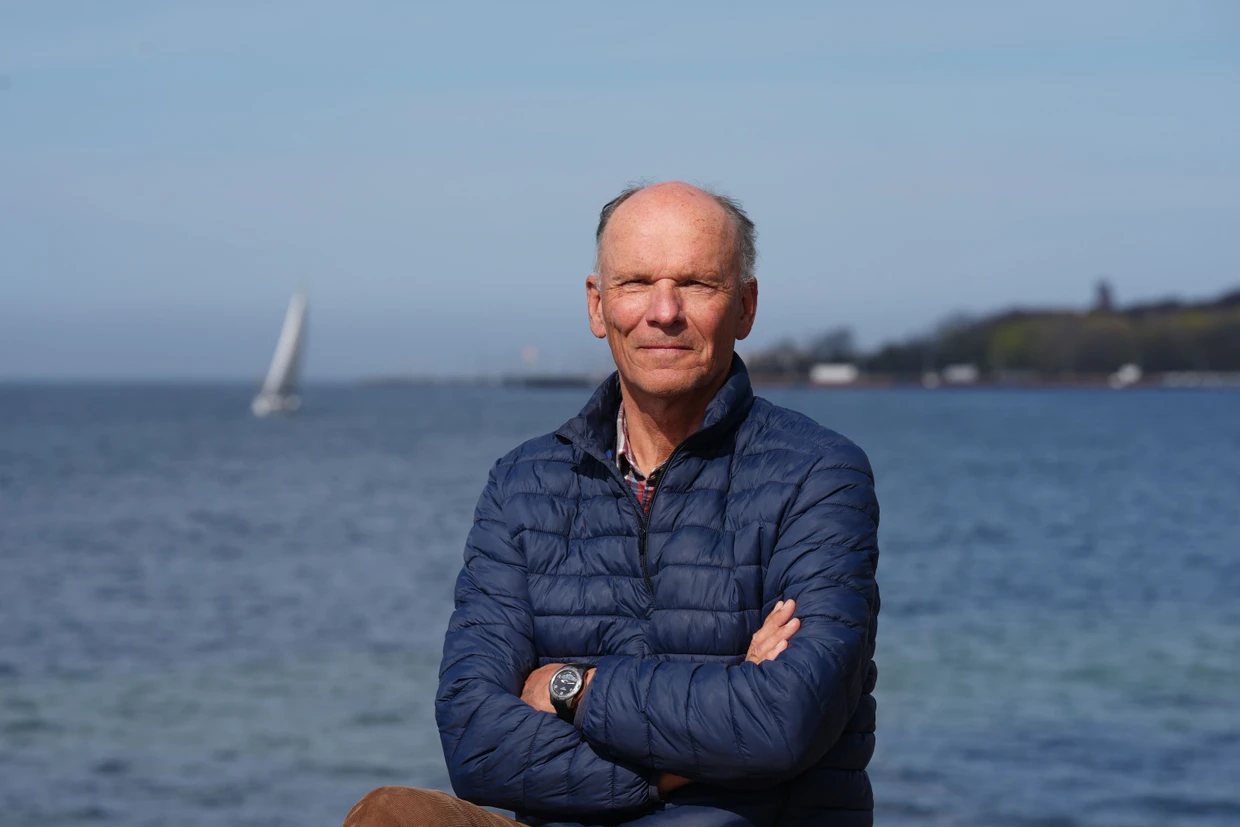
Whale researcher Ritter advocated that the animal should now really be left in peace. “This whale does whatever it wants. It cannot be controlled and we must now finally realize that it is not possible for us to actively save this whale,” said the marine biologist. “We should just do him the biggest favor right now by letting him be.” Either he regains his strength and the damage is not so severe that he can set off again without doing anything. “Or he’s just on the way to the end of his life. We just have to accept that now.”
Ritter also assumes that the whale repeatedly assumes the resting position in shallow water “because it wants to make life easier for itself”. “He lies in the water, that supports him, that means he doesn’t crush himself with his own weight. He doesn’t have to make sure he gets to the surface. He doesn’t have to move when he’s in pain. And he can breathe, all the time.”

Whale is still to be fitted with a radio tag
If the opportunity arises, the whale should be fitted with a transmitter, according to information from the Schwerin Ministry of the Environment. This would also allow the location to be identified if the whale later dives into deeper water.
According to a ministry spokesman, the fairway in Kirchsee is around two and a half to three meters deep. Otherwise the bay is between 90 and 110 centimeters deep. According to him, the fairway of the adjoining Wismar Bay is significantly deeper at more than nine meters. But even then the whale is not yet back in its natural habitat: the whale would have to go back to the North Sea and then further into the Atlantic.
Actual rescue plan not feasible
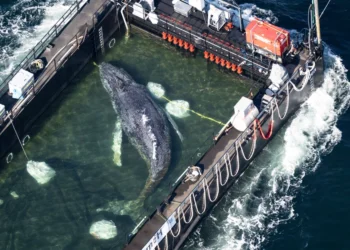
The whale’s morning departure thwarted the private initiative’s actual plans. It was planned that a tarpaulin attached between pontoons – floating platforms – would be placed under the whale. The aim was to rescue him from the shallow area and take him towards the North Sea. The pontoons should be pulled by a tug. According to authorities, the tarpaulin for the animal was already in the water.
If the whale – as has now happened – swims away due to rising water levels, according to the initiative, “Plan B” should be taken and the animal should be guided by boats.
Plan B doesn’t work either
Therefore, on Monday morning, boats tried to put the whale on course towards the open Baltic Sea, but it repeatedly changed its direction. There have been immediate suggestions from whale watchers as they swim back and forth that the animal may be so weakened that it is trying to stay close to shore. Another possible explanation would be that the whale is so disoriented that it cannot find its way back to the open sea on its own.
Because of the whale’s new position, the authorities have now adjusted the exclusion zone set up to protect the animal. According to a statement from the water police, the updated regulation has been in effect since Monday afternoon. According to earlier reports, the exclusion zone was set up to give the large animal peace.
This means that no unauthorized boats are allowed to operate or unauthorized people are otherwise allowed to be on the water within a radius of 500 meters. Drone overflights are also prohibited. Exceptions apply, for example, to people who work with the animal. As a reference position, the water police indicate a point at the exit from the Kirchsee into the Wismar Bay, next to the shipping channel there.
First sightings around seven weeks ago
The whale was first sighted at the beginning of March. On March 3rd, the humpback whale appeared in the harbor of Wismar and attracted onlookers to the edge of the quay. Towards the evening he swam back towards the Baltic Sea. In the following days it was seen off the Baltic Sea coast of Schleswig-Holstein and the coast of Mecklenburg-Western Pomerania. According to experts, the animal had repeatedly gotten caught in nets. Emergency services and marine conservationists from the Sea Shepherd organization had freed it of some of the material.
On March 23, the whale was stranded for the first time on a sandbank off Timmendorfer Strand in the Bay of Lübeck. Extensive rescue attempts began, and the animal eventually swam away on its own. A few days later it stranded on a sandbank in Wismar Bay. As the water level rose, the whale continued to swim during the night, shortly afterwards it lay down again in Wismar Bay and continued swimming again. Since March 31st he has been stuck again, this time in Kirchsee Bay. The current stranding during the morning drifting attempts is now the fifth in a row.