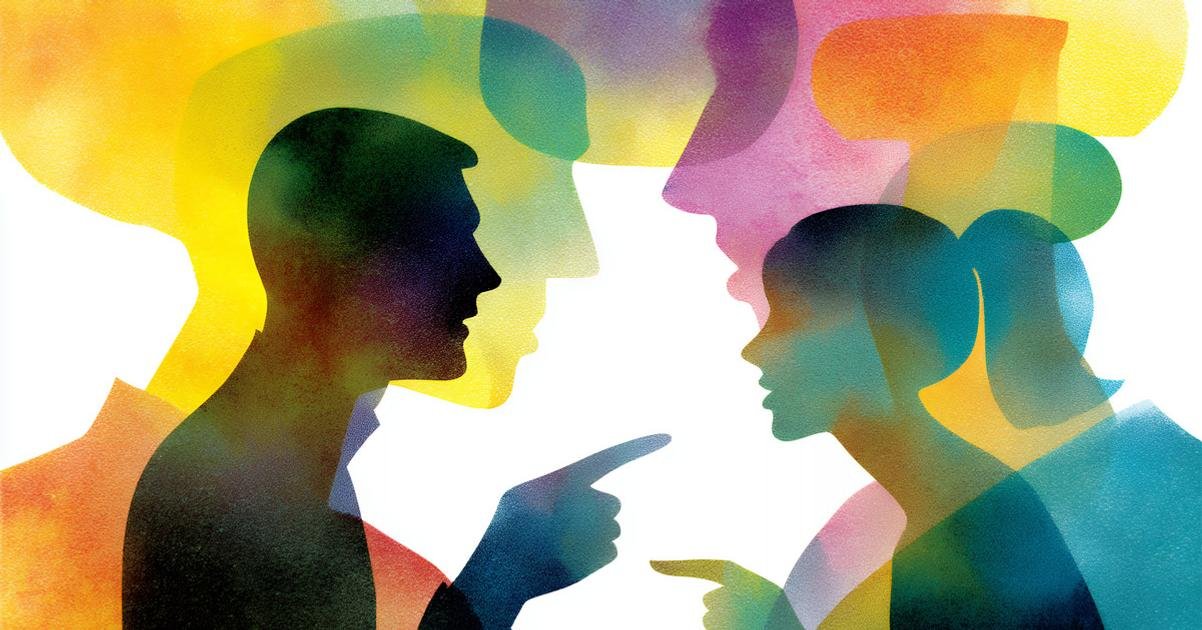
“You are a manipulator and a toxic person!” asked Michaela in her forties at her address in an argument with her ex-husband.
“He didn’t have any counterarguments. That’s how he labeled me when I tried to explain something to him and he didn’t agree,” she recalls.
34-year-old Katarína also encountered unflattering labeling of her family by her sister-in-law.
“According to her, my uncle is a narcissist, and that’s about half of our family. She herself coped with how her own parents treated her in the past, and instead of therapy and professional help, she started reading books on this topic. Since then, she sees narcissists everywhere,” says Katarína, who tried to talk to her relative about this topic, but they couldn’t agree.
“She even told her husband that his mother is a narcissist, so he cut off contact with his family and with the rest of us. She also tried to manipulate me against our family,” adds Katarína, who, like Michaela, did not want to publish her last name due to the sensitivity of the topic. The editors know their identity.
The increase in psychological content and especially language that talks about narcissists, gaslighting or toxic relationships has been very noticeable in recent years in ordinary conversations, in politics and also on social networks. Sometimes a video of a few seconds on tiktok is enough and a person “knows” that his boss is a “psychopath”.
The trend of so-called pop psychology undoubtedly has a positive dimension – it contributes to the destigmatization of mental health and allows people to better name their own experiences. At the same time, however, it carries the risks of simplification, misinterpretation and layman’s inaccuracies. Professional words and concepts become a thoughtless weapon or swear word.
When a diagnosis becomes an insult
Influencer Petra Dzvoníková (32) also experiences regular labeling with psychological terms, which her haters use more as an insult.
“Haters diagnose me and tell me that I’m a narcissist or that I have some sort of mental disorder. I get that on a regular basis, especially from people who are trying to bring me down,” she says.
She has been active in the online space for years and openly communicates about mental health herself. He notes that this type of “online diagnosis” has become more widespread especially in the last two years, but it is mainly an effort to denigrate it.
“It’s either just a sketchy diagnosis among the derogatory labels in the comment, or even longer pseudo-psychological profiles of my personality. Often it’s narcissism, or even invented ‘tiktok’ diagnoses like: Main Character Syndrome (main character syndrome). It’s quite funny that those people don’t even know that it’s not professional terminology.”
Dzvoníková adds that since she spoke about her ADHD diagnosis, the attacks have intensified.
“The real diagnosis is combined with the pseudo-diagnosis of other disorders. There is a lack of real, deeper interest in the topic. We rather box people in with terms that we do not understand ourselves. Labeling someone as ‘toxic’ or ‘narcissist’ is not something that could help the person in question, it is actually insulting to people who suffer from real disorders,” he thinks.
In the article you will read:
-
How the narcissist label makes us feel superior and why it’s actually a trap.
-
Why do some people play the victim role?
-
Which Slovak politicians throw diagnoses at each other and where did the PS make a mistake.
-
Why do we consider ordinary inconveniences to be trauma today and who are we harming them.
-
How to distinguish real toxicity from disagreement and when you need an expert.
When even banal discomfort is a trauma
Already in 2016, Australian professor of psychology Nick Haslam came with the term “concept creep”. The latter refers to the process by which the boundaries of concepts such as violence, trauma or abuse are constantly expanded until they include ordinary unpleasant experiences.