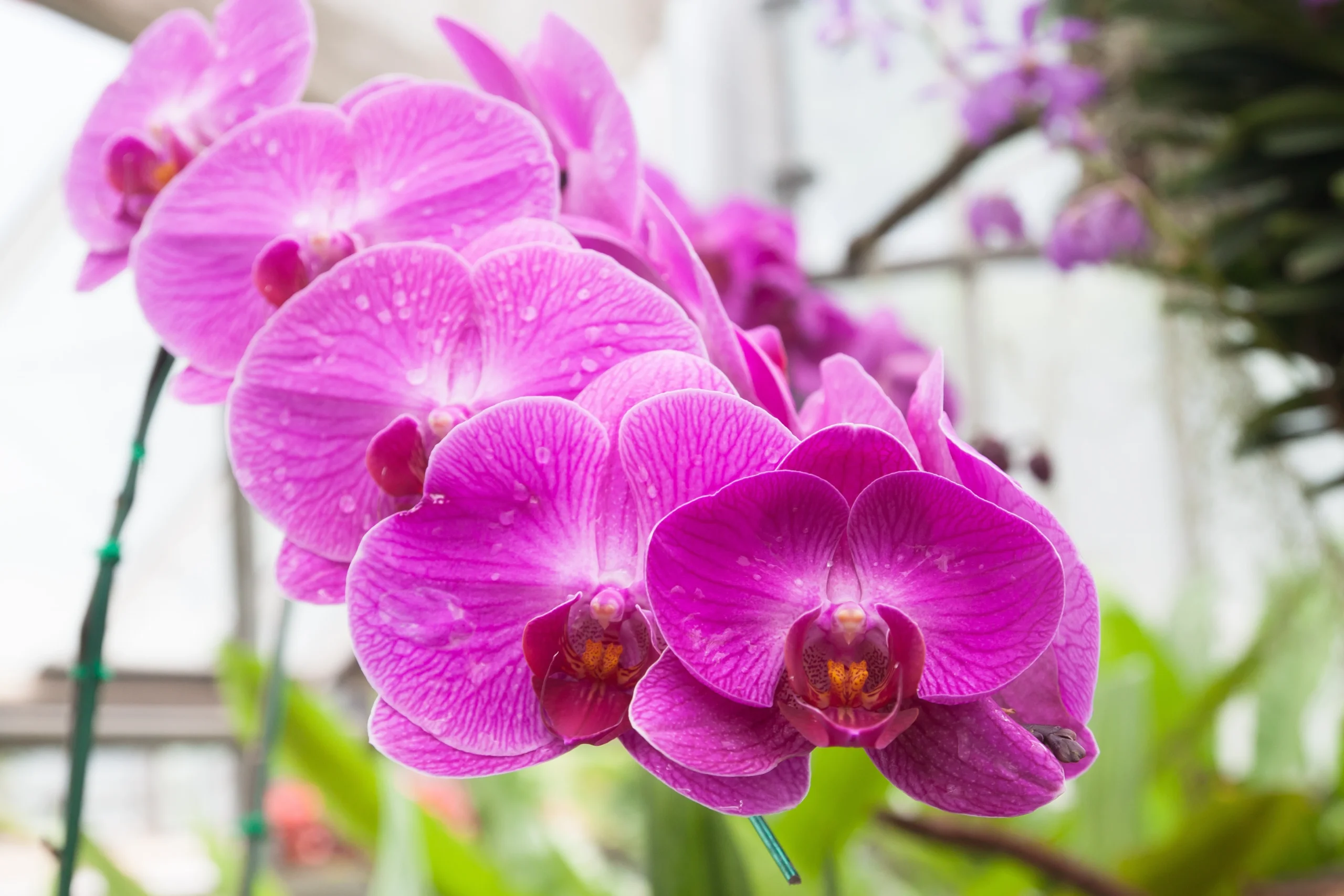
Orchids are considered one of the most popular indoor plants because they do not require overly demanding care. However, when they lack water or are not exposed to the right conditions, they can begin to show signs of decay. The first indicators that the plant does not have enough moisture are most often seen on the leaves. They become soft, shriveled and bend upwards. At the same time, the roots can lose their usual color, turn white and take on a wrinkled appearance.
When such symptoms appear, it is recommended to immerse the roots in water. Care should be taken to ensure that the leaves and flowers are not in contact with the liquid. After approximately 20 minutes, the plant should be removed from the water and allowed to drain the excess moisture. The sheets can then be gently wiped with a damp cloth to remove accumulated dust.
For proper development, a bright place is suitable for orchids, but without direct exposure to the sun’s rays, which can cause damage and burns on the leaves. Dry and damaged parts of the plant should be removed with sterilized scissors. This refers to old flower stems, dried roots and damaged leaves. The cut is made above the node, a part of the plant that represents a natural protection against the possible spread of infections.
The roots that grow outside the pot should not be removed because they have an important role in absorbing moisture from the air. With particularly exhausted plants, some also use black tea treatment. The tea bag is placed in filtered water and left for approximately five minutes, after which the orchid roots are immersed in the prepared solution.
During the day, the plant remains in this liquid, and in the evening it is taken out and left to dry overnight. The procedure can be repeated the next morning. The tannic acid present in black tea can act as a natural stimulus for root development. The treatment continues for several days, until the roots regain their green color and firmness, and the leaves look healthy.
When transplanting, it is recommended to use a special substrate for orchids, which mainly consists of tree bark. Such a substrate enables better air circulation around the roots and reduces the possibility of retaining excess moisture, which can lead to rotting of the plant.