Widespread fire in some facilities, emission of pollutants in the air, production of a significant amount of construction debris, damage to the urban green space and the destruction of part of the clean energy infrastructure are only a few of the consequences that were imposed on the capital during the days of crisis, according to experts.
Now and in the post-crisis phase, the issue of reconstruction and compensation for environmental damages has gained special importance. Cleaning up damaged areas, restoring green spaces, returning renewable energy infrastructure to operation and continuous monitoring of water and soil resources are among the measures that can help reduce the effects of these damages. In this context, Mohammad Saber Baghkhanipour, Director General of Environment and Sustainable Development of Tehran Municipality, spoke to Jam Jam about the dimensions of the damage caused to the capital’s environment and the planned plans to compensate them.
What is the initial estimate of the municipality of the damages caused to the environment of Tehran during the Ramadan war?
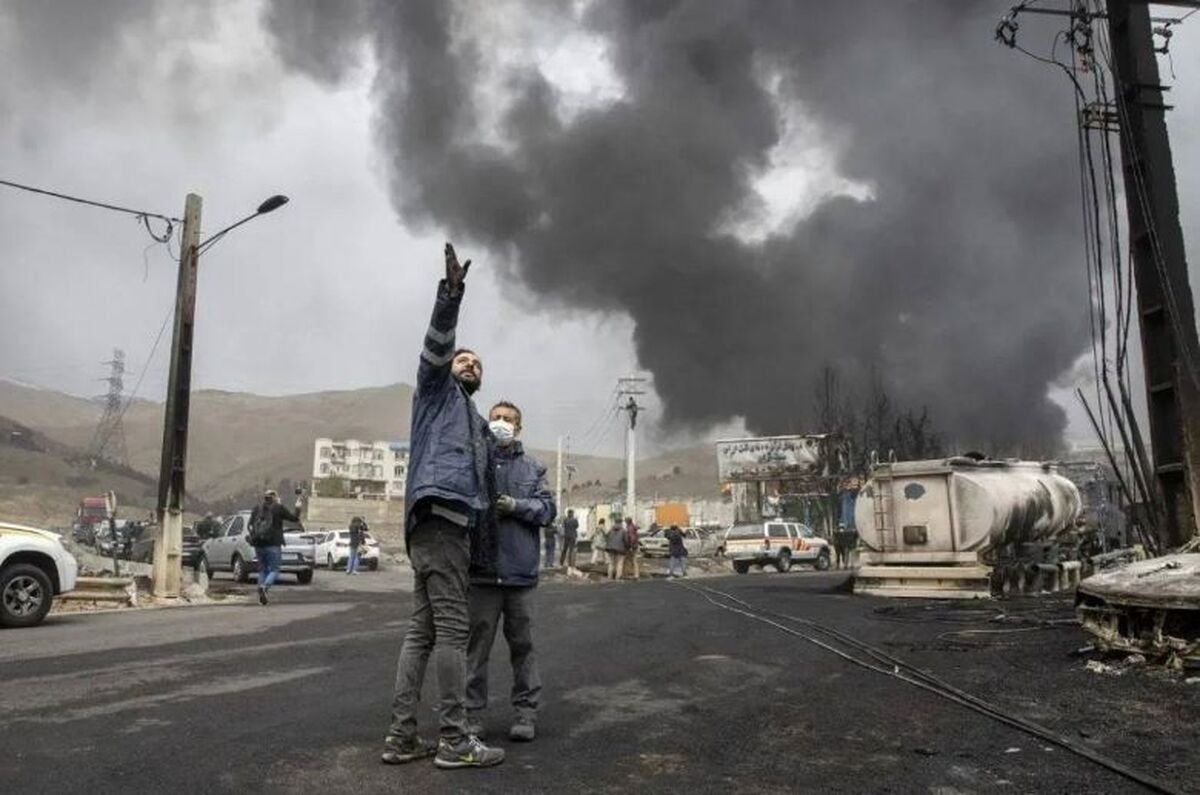
During the Ramadan war, considerable damages were caused to the environment of Tehran, some of which are still ongoing. One of the most important damages was the attack on the fuel storage tanks in Shahran, Ghochak and Shahrari (39 tanks with a total capacity of 682 million liters), which, in addition to causing widespread pollution, led to the release of five million tons of greenhouse gas into the atmosphere. Following this incident, a layer of smoke and pollution caused by the burning of hydrocarbon compounds affected a large part of the city of Tehran, which was one of the most significant crimes of the enemy against humanity and the environment, and it can be called ecocide. On the other hand, about 650 hits in the city caused damage to more than 51,000 residential units and left a large amount of construction debris. Preliminary estimates show that since the beginning of the war, around four million tons of construction waste have been produced in Tehran, and its collection, transportation and safe burial have imposed heavy costs on the city administration.
What damage was inflicted on Tehran in the field of green space?
Field surveys indicate the destruction of 1,663 trees in 22 districts of the capital. The economic value of these damages is estimated at 384 billion tomans based on ecological indicators. The destruction of these trees will have long-term effects on the air quality and environmental balance of the city, in addition to reducing the capacity to absorb carbon dioxide and other pollutants. Also, during these incidents, a part of Tehran municipality’s renewable energy infrastructure was also damaged. The damage caused to solar power plants in different areas of the city, in addition to reducing the production of clean electricity, has caused the loss of part of the capacity to reduce greenhouse gas emissions. Financial estimates show that about 12 billion and 700 million Tomans of damage has been caused to the renewable energy infrastructure of the municipality.
Which areas of Tehran have suffered the most environmental damage?
Environmental damage has been observed in different parts of Tehran, but areas 4, 5, 7, 12, 15, 19, 20, 21 and 22 have been affected more than other areas. Among these areas, the most damage to green space was recorded in areas 4, 5, 15, 20 and 21.
Also, solar power plants located in regions 7, 12, 19, 21 and 22 have also been damaged, which has affected the capacity of clean energy production in the capital in addition to financial damage.
Apart from the discussion of environmental damages, the third imposed war also resulted in casualties; According to the available information, 11 employees and hardworking colleagues of Tehran Municipality have been martyred during these incidents.
Did the explosions and fires caused by the war also lead to an increase in air pollutants.
One of the most important environmental consequences of the war was the increase in the emission of air pollutants. The attack on the oil tanks and the massive fire caused by it caused a large amount of black smoke and hydrocarbon compounds into the atmosphere of Tehran. Although due to atmospheric conditions and wind, a significant part of these pollutants was discharged from the city in a relatively short period of time, but estimates show that around five million tons of greenhouse gas entered the atmosphere as a result of this incident.
In addition, every point that was hit directly caused the release of pollutants in the air and soil pollution in the surrounding areas, the effects of which require specialized and long-term investigations.
Are the urban wildlife and birds of Tehran also affected by these incidents?
Yes, urban wildlife was also not spared from the consequences of war. Although the sound of explosions may not cause direct harm to humans, it is very traumatic for many animal species, especially birds, and can even cause them to perish.
In this regard, two pelicans died in Mellat Park wildlife conservation center. Also, the pollution caused by the fire of the oil tanks caused the death of a number of birds kept in the Darabad Natural Artifacts and Wildlife Museum, including Filosh, Mandarin and Brazilian parrot. This statistic is only related to wildlife centers, and certainly other species have been affected by these incidents in the city.
What arrangements have been made to prevent the entry of pollutants into the city’s water and soil sources?
In order to prevent the infiltration of pollutants caused by war into water and soil resources, it is necessary to implement a series of preventive, technical and management measures at the same time. In the first stage, identification and monitoring of contaminated areas and sampling of soil, surface water and underground water sources are done to determine the type and extent of contamination. It is also necessary to clean and secure the affected areas, collect ammunition remnants, heavy metals, fuels and other hazardous materials by specialized teams. The purpose of these measures is to prevent the penetration of pollutants into underground water tables and to reduce the long-term environmental effects of these incidents.
What is the plan of the General Department of Environment and Sustainable Development of Tehran Municipality to compensate for the damages caused to the green space?
In order to compensate for the damages caused to the urban green space, a comprehensive program will be designed with the aim of quickly revitalizing the vegetation and strengthening the green infrastructure in the three axes of evaluation, reconstruction and sustainable development. In the first step, the amount of damage caused to parks, trees, green belts and irrigation systems is accurately evaluated and priority areas are identified.
After that, cleaning operations, soil modification and planting bed preparation will begin. In the reconstruction stage, the planting of native and resistant species, the revitalization of vegetation and the redesign of green spaces are followed with the aim of increasing urban resilience against crises.
Also, the use of new irrigation methods, increasing the diversity of plant species and attracting the participation of citizens, non-governmental organizations and the private sector in the form of campaigns such as “Every Citizen, a Tree” are other axes of this program. The ultimate goal is to restore vitality to urban green spaces and create a more sustainable and resilient environment for future generations.
Are there special credits for environmental damage restoration?
In the field of renewable energy, after identifying and estimating the damages, the necessary measures will be taken to repair and return the damaged solar power plants to operation.
In the field of green space and other environmental infrastructure related to Tehran municipality, correction and reconstruction programs are also underway.
How is the cooperation of the municipality with the Environmental Protection Organization and other institutions in this field?
In the field of environmental damage management and compensation, Tehran Municipality has continuous cooperation with the Environmental Protection Organization and other executive bodies, including the Ministry of Energy and related specialized groups. All institutions are providing services to citizens within the framework of their legal duties and responsibilities, and wherever there is a need for synergy and joint cooperation, the city administration is fully prepared to participate and support national and cross-sectoral measures. The performance and actions taken by the city management complex during recent incidents and crises show the high capacity of cooperation between different institutions to reduce damages, accelerate the process of reconstruction and provide services to citizens.