Pakistan yesterday moved ahead with preparations for a new round of talks between the US and Iran two days before a tenuous ceasefire is set to expire, even as renewed conflict around the Strait of Hormuz raised questions about whether the meeting would take place.
Over the weekend, the US attacked and seized an Iranian-flagged cargo vessel that it said had tried to evade its blockade of Iranian ports.
Iran’s joint military command vowed to respond, and Iranian Minister of Foreign Affairs Abbas Aragchi told his Pakistani counterpart that US threats to Iranian ships and ports were “clear signs” of Washington’s disingenuousness ahead of the planned talks, Iran state media reported.
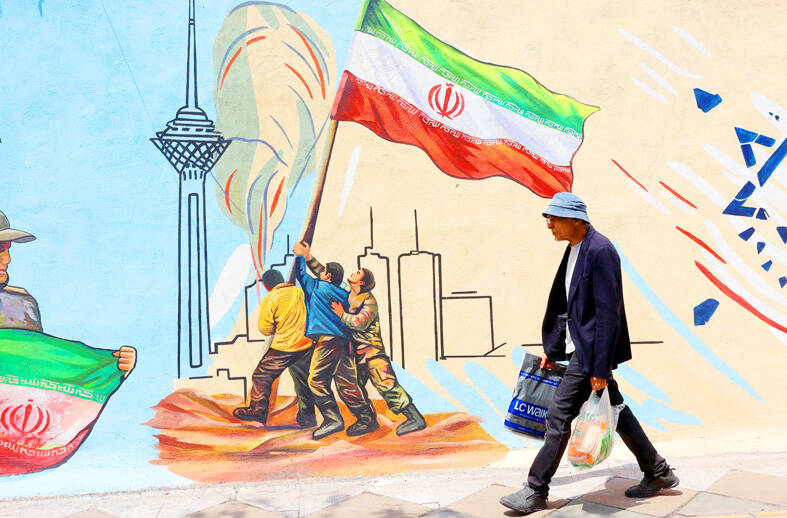
Photo: EPA
With tensions flaring and the ceasefire due to expire, Pakistan has intensified diplomatic contacts with Washington and Tehran over the past 24 hours with the goal of resuming the talks today as planned, two Pakistani officials involved in the preparations said.
Two other Pakistani officials said Iran has expressed a willingness to send a delegation to Islamabad. They all spoke on condition of anonymity because they were not authorized to speak to the press.
US President Donald Trump has said US negotiators would head to the Pakistani capital yesterday, but it was not immediately clear whether those plans would now change.
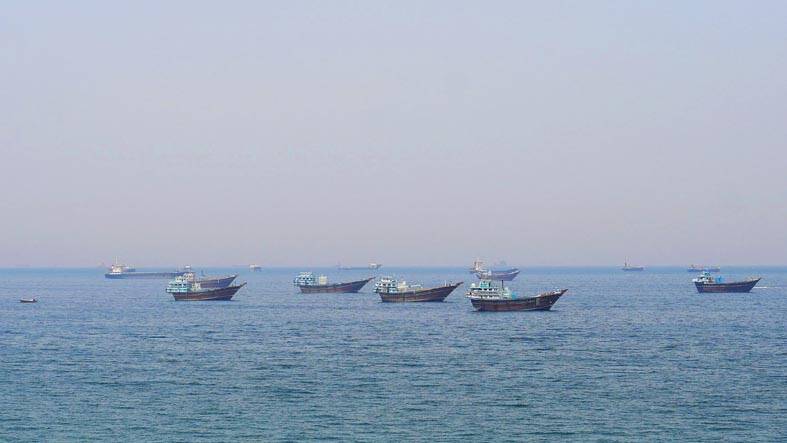
Photo: Reuters
Iranian foreign ministry spokesman Esmail Baghaei yesterday told reporters in Tehran that there no plans yet to attend the talks with the US, but at the same time, he did not rule it out.
“We have no plans for the next round of negotiations and no decision has been made in this regard,” Baghaei said.
Iran on Saturday said it had received new proposals from the US, but suggested a wide gap remained between the sides. It was unclear whether either side had shifted stances on issues that derailed the last round of negotiations, including Iran’s nuclear enrichment program, its regional proxies and the Strait of Hormuz.
Iran throttled traffic through the Strait of Hormuz, which connects the Persian Gulf to the open seas, shortly after the US and Israel attacked Iran on Feb. 28 to start the war. The US has also instituted a blockade of Iranian ports.
Since the war started, at least 3,375 people have been killed in Iran, according to a new toll released yesterday in official Iranian media by Abbas Masjedi, head of Iran’s Legal Medicine Organization.
He did not break down casualties among civilians and security forces, instead just saying that 2,875 were male and 496 were female. Masjedi said 383 of the dead were children 18 years old and younger.
More than 2,290 people have also been killed in Lebanon, 23 in Israel and more than a dozen in Gulf Arab states. Fifteen Israeli soldiers in Lebanon and 13 US service members throughout the region have been killed.