This is familiar from visits by heads of state and government of important regional middle powers – say Brazil or Germany – to the White House: the president and his guest sit in the Oval Office, shake hands – and give the press representatives the opportunity to ask a few questions. The journalists from the visitor’s country duly ask for information about the state of bilateral relations.
Then it’s the turn of our US colleagues. They don’t care who is sitting next to the president – and turn out to be his claqueurs or ask him questions about the current dispute with Congress, the upcoming Supreme Court ruling or the recent school massacre.
288 million Catholics live in Africa
Pope Leo There are currently around 288 million Catholics living in Africa. In no other continent does the world church gain as many souls year after year as in Africa. The number of priests and religious sisters is also growing disproportionately. There are around 72 million Catholics in the USA, four times fewer than in Africa. Their numbers are stagnating at best. In seminaries and women’s orders there is concern for young people – as in all western countries.
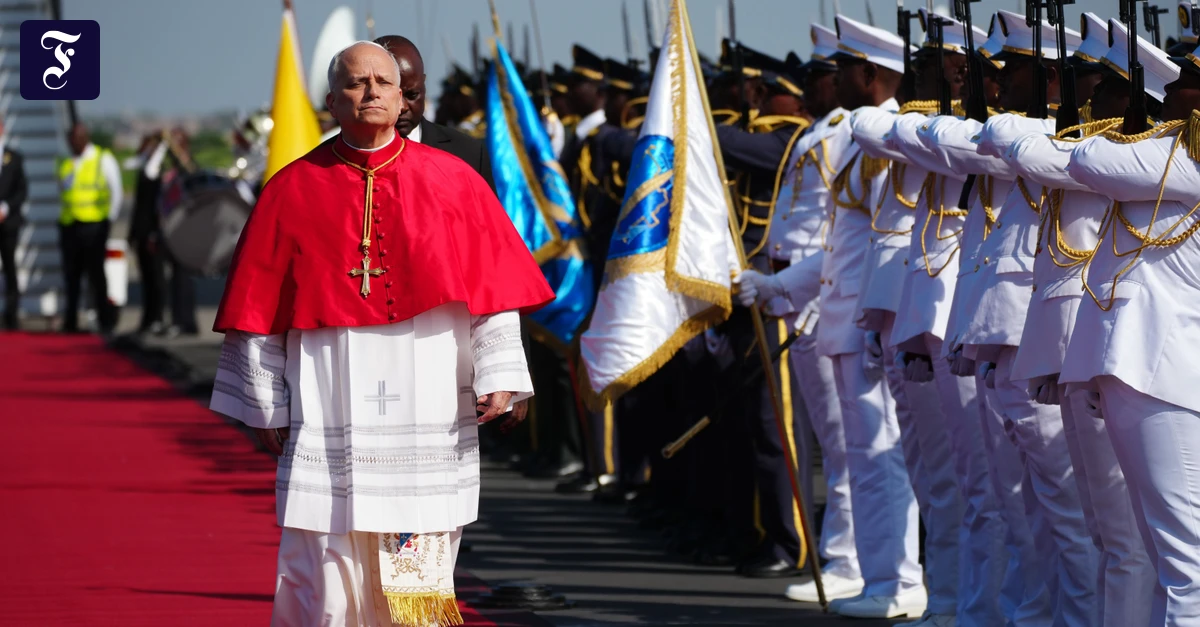
After stops in Algeria and Cameroon, the Pope is now in Angola. This Tuesday he travels to Equatorial Guinea, from there he goes back to Rome on Thursday. To say that coverage of this momentous trip for the Pope, the universal Church and the four African countries was overshadowed by the Trump-Leo dispute would be an understatement. It began on Monday last week, on the flight from Rome to Algiers, when the Pope felt compelled to respond to the US President’s recent injuries.
Leo told the accompanying journalists that he was “not afraid of the Trump administration” and would continue to proclaim the Gospel message of peace. And just like that, the “quiet American”, who in the first months of his term in office had steered the ship of the church with a balancing hand and defused the dispute between progressive and conservative Catholics in the USA, became the “anti-Trump”.
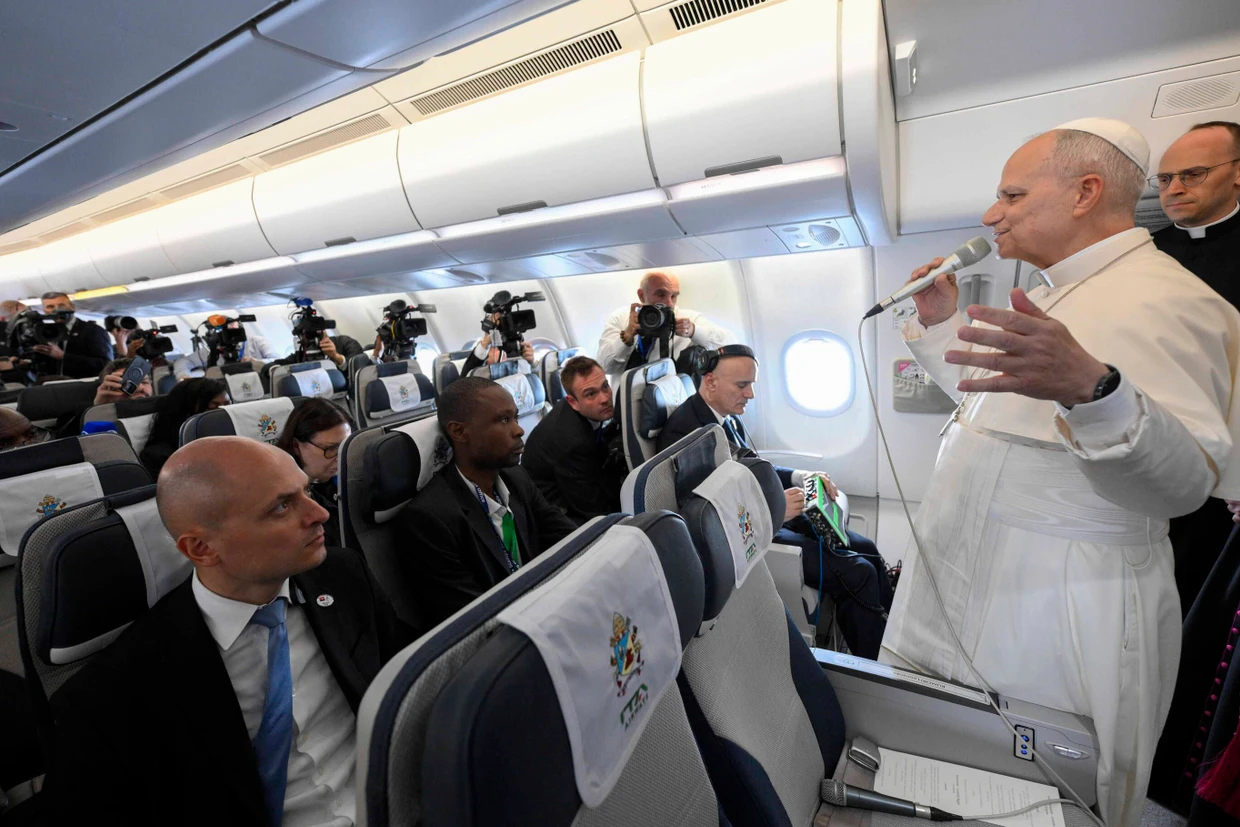
The Pope then tried to counteract the media short-circuit. On the plane again, this time from Yaoundé in Cameroon to Luanda in Angola, he told reporters that his last speeches and sermons had not been interpreted “correctly in all aspects” in the media. In particular, his complaint at a peace meeting in Bamenda in northwest Cameroon that the world was being “destroyed by a handful of tyrants” was not a contradiction against Trump: the speech had been prepared “two weeks ago,” long “before the president said anything about me.” It would be wrong to interpret Bamenda’s speech “as if I wanted to contradict the president,” said the Pope. “That wasn’t my intention at all.”
“Tyrants” become “rulers”
The Pope gave the speech in English. It was also written in his native language. Leo must have checked and edited them before presenting them. The original passage in question reads: “The world is being ravaged by a handful of tyrants, yet it is held together by a multitude of supportive brothers and sisters!” In the Vatican’s official German translation, this becomes a garbled, gender-appropriate monster: “The world is destroyed by a few rulers and maintained by myriads of brothers and sisters who show solidarity!”
Wouldn’t the masculine “ruler” have been a better fit for “tyrants” if you don’t want to use the literal translation “tyrants” because world history doesn’t know so many female tyrants? Or did a politically correct AI translate the text in the Vatican? The official translations into the Romance languages, in which the Holy See’s press office distributes the Pope’s speeches and sermons, are not much better. In French, Italian, Portuguese and Spanish, the English “tyrants” then become “dominateurs”, “dominatori” and “dominadores”. Although there are the correct equivalents “tyrans”, “tiranni” and “tiranos” in the four languages and this expression is also used in each case.
It is understandable that the German-language version of the Vatican media portal Vatican News uses the official translation of the Holy See’s press office with the “ruling few” instead of correctly writing “a handful of tyrants”: Vatican News belongs to the Holy See and sells its “official” version. But does the Catholic News Agency (KNA) have to go along with the linguistic softening process in its reporting on Leo’s trip to Africa instead of writing “a handful of tyrants” based on common sense and a feeling for language like “secular” agencies?
The majority of the KNA is owned by the Association of German Dioceses, but Catholic publishers and Caritas are also involved. The KNA is not the announcement organ of the German Bishops’ Conference. The German edition of the American Catholic News Agency (CNA) translated the ominous sentence as follows: “The world is ravaged by a handful of tyrants, but it is held together by a multitude of supportive brothers and sisters!” If the word “tyrant” was not intended to refer to Trump, as the Pope now asserts, then there is no reason to deny it in the subsequent translations of the English original.