Of Francesco Citterich
In the deafening silence of global politics – while international conferences multiply and declarations of principle accumulate without translating into concrete solutions – there exists another geography of the world: that of human displacement. It is a map that does not occupy the news slots or appear on the pages of newspapers with the same urgency as the most visible armed crises, but which grows, expands and destroys lives with an almost invisible consistency. According to the Norwegian Refugee Council, the world’s most overlooked displacement crises are not randomly scattered across the planet: they follow a precise, cruel and repetitive trajectory, led by Sudan, followed by the Democratic Republic of Congo and Colombia. A dramatic hierarchy of global indifference.
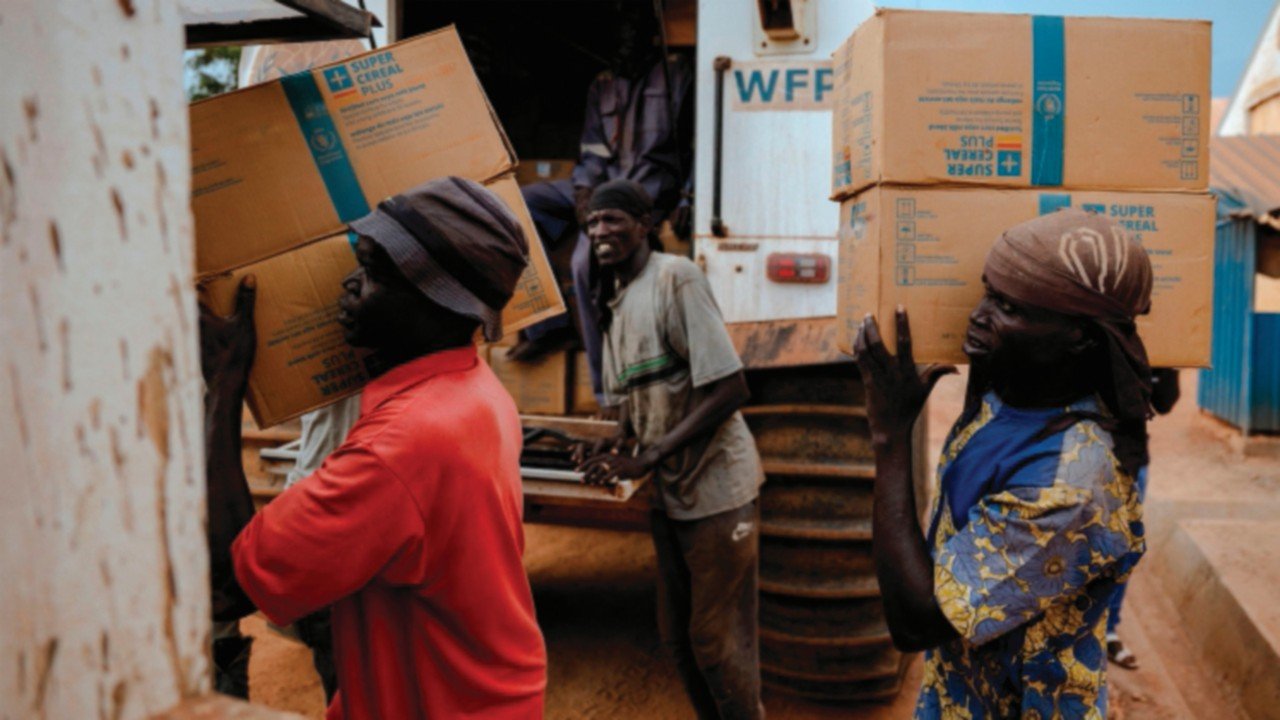
Sudan – more than 9 million internally displaced people and 4 million refugees in neighboring countries, whose condition is worsened by a brutal conflict and almost 19.5 million people suffering from hunger – occupies the first place in this unenviable ranking, like an open wound that does not intend to heal. Here displacement is not an event, but a permanent condition, a collective destiny that is renewed from month to month. Families flee not just once, but several times, as if the earth itself refused to allow a stable place to stop. Cities are emptied and filled again, in a cycle with no destination, while millions of people are suspended between what they have lost and what they will no longer be able to find again.
Soon after, the Democratic Republic of Congo — on the list for the tenth consecutive year, one of the most chronic emergencies due to the ongoing violence in the east — stands out as a mosaic of overlapping crises that make it impossible to distinguish a single source of the disaster. Here displacement is fueled by endless fragmentation: armed conflicts, latent instability, widespread violence, collapse of infrastructure. There is not just one front line, but multiple fronts that are multiplying. People flee through forests, villages, porous borders, often without knowing whether the place they are heading to will be safer than the one they just left.
Then there is Colombia, third in this ranking which does not reward, but denounces, where over six decades of internal conflict continue to generate new waves of displacement despite the peace agreements. A country that carries on its shoulders a long history of fragile agreements and violence that change without ever completely disappearing. Here displacement takes a different form, quieter but no less devastating. Entire communities are forced to leave their lands – often rural, often isolated -, where the State arrives late or sometimes not at all. Escape is not always sudden; sometimes it’s a slow attrition, a constant pressure that erodes the possibility of staying.
The Norwegian Refugee Council built this ranking not on the basis of media intensity or momentary emotional impact, but on four key parameters that reveal the architecture of global abandonment: lack of funding, low media attention, weak political will and the scale of displacement. The lack of funds transforms crises into chronic emergencies without an adequate response, where aid always arrives later than needed. The lack of media attention condemns entire populations to exist only on the margins of the screen, as if their suffering were less “newsworthy” than others. Weak political will completes the picture: without pressure, without strategic interest, without diplomatic urgency, crises settle. Finally, the scale of the displacement reminds us that we are not talking about abstract numbers, but about millions of broken lives, families rebuilt and then dispersed again, identities shattered and recomposed in conditions of permanent precariousness. In this system, the drama is not only in the violence that generates the escape, but in the infinite duration of the escape itself. Displacement is no longer a passage between one home and another: it becomes an existential state. People are not simply displaced; they are suspended in a condition in which the return is uncertain, the present is unstable and the future full of unknowns.
And while Sudan, the Democratic Republic of the Congo and Colombia occupy the top spots of this painful list, the rest of the world watches intermittently, as if the suffering could be calibrated by geographical distance or political expediency. But crises do not follow the logic of attention. They continue, even when no one is looking. In this dynamic the real tragedy takes place: not only the loss of home, security or stability, but the progressive cancellation from the world’s attention. An exclusion that makes no noise, but leaves behind a lasting void. Yet, precisely in that void, people continue to move, to resist, to look for a possible place. Even when the world seems to have stopped caring about them.