South Korea’s Defense Ministry on Wednesday announced a plan to disband the Defense Counterintelligence Command, a military intelligence agency accused of playing a central role in former President Yoon Suk Yeol’s Dec. 3, 2024 martial law bid, ending its 49 years of operation.
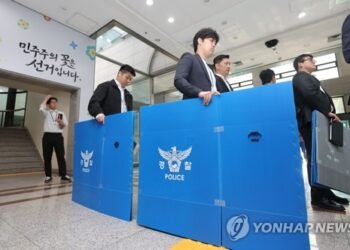
The counterintelligence command dispatched troops to the National Assembly and the National Election Commission and operated teams tasked with detaining politicians during the night of the 2024 martial law declaration.
The announcement came five months after a civilian-military-government reform committee established by the ministry in January proposed dismantling the command and redistributing its functions, as part of the Lee Jae Myung administration’s broader effort to prevent a recurrence of military involvement in domestic politics.
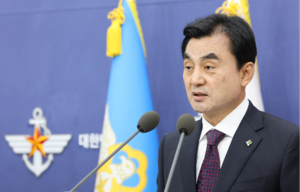
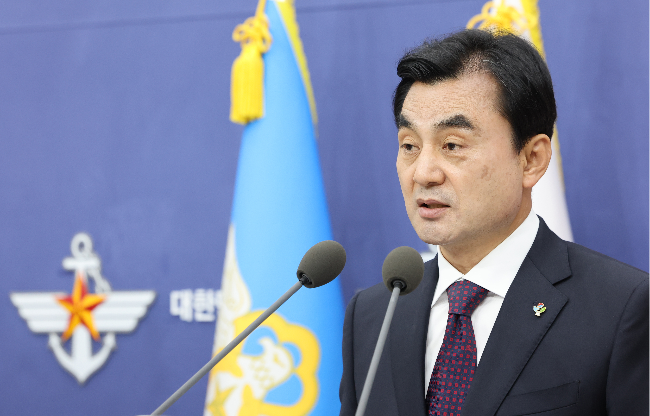
Speaking to reporters at the ministry headquarters in Yongsan-gu, Seoul, Defense Minister Ahn Gyu-back said the restructuring was necessary because the organization and its predecessors had repeatedly been used as tools of political power.
“Although our military has repeatedly pledged reflection and reform, the Dec. 3 insurrection revealed that past abuses had not been fully eradicated,” Ahn said. “We will break with the agency’s troubled past and restore public trust.”
The Defense Counterintelligence Command traces its roots to the Defense Security Command, which was established in 1977 through the merger of the Army, Navy and Air Force security units to improve operational efficiency.
The organization became one of the military’s most powerful institutions under Chun Doo-hwan, who used his position as security commander to seize control following the assassination of President Park Chung-hee in 1979.
Ahn said the agency had undergone multiple reorganizations and name changes, but previous reform efforts had fallen short because they relied on temporary personnel reshuffles rather than fundamental structural reform.
Under the proposal, the Defense Counterintelligence Command will be dissolved and its responsibilities split among several organizations.
Counterintelligence operations, defense industry security and cybersecurity missions will be transferred to a newly established Defense Counterintelligence Headquarters.
Military security functions, including security inspections and investigations into security incidents, will be assigned to a separate Defense Security Support Group.
The command’s investigative authority in national security cases, including its role in joint investigations during martial law, will be transferred to the Defense Ministry’s Criminal Investigation Command.
The ministry also plans to abolish activities such as political trend monitoring, intelligence gathering on personnel, and other information-gathering activities unrelated to military counterintelligence missions. Ahn described such practices as tools that “enabled the agency to evolve into an institution of political power” rather than a professional security organization.
According to ministry officials, the overall workforce will be reduced to around 1,500 personnel, roughly half the current 3,000-member force. About 200 personnel will serve in the new security support group, while most of the remainder will return to their original military branches.
The ministry said it aims to complete the necessary legal and administrative procedures by July and launch the new organizations in late July or early August.
It also announced measures to strengthen oversight of the new counterintelligence body, including expanded internal inspections, a dedicated supervisory office within the ministry, an advisory panel of civilian experts and regular reporting to the National Assembly.
The ministry added that it would remain open to recruiting civilian professionals to enhance the new organization’s neutrality and expertise.
The plan has drawn criticism from some within the military.
One military officer, speaking on condition of anonymity, argued that placing multiple oversight bodies under the direct authority of the defense minister could itself create a new concentration of power.
“The concern is that the ministry is replacing one powerful institution with another by centralizing supervisory authority under the minister,” the officer said.
A separate ministry official rejected the criticism, saying the proposed compliance body would operate independently and review potential legal violations without interference from the minister.
The ministry is also reviewing the rank structure of the new organization’s leadership.
While the Defense Counterintelligence Command has traditionally been headed by a three-star general, officials said the chief of the new organization could be either a three-star officer or a senior civilian official.
Officials added that regional counterintelligence units would be retained due to operational requirements, though their number would be significantly reduced.
flylikekite@heraldcorp.com