he recent national Academic Competency Test (TKA) should not be treated as another mundane set of education statistics. Its results inform us not only how children perform today in Indonesian language and mathematics, but also what kind of human capital Indonesia will bring into 2045, when the country aspires to become a sovereign and advanced nation (Bappenas, 2023).
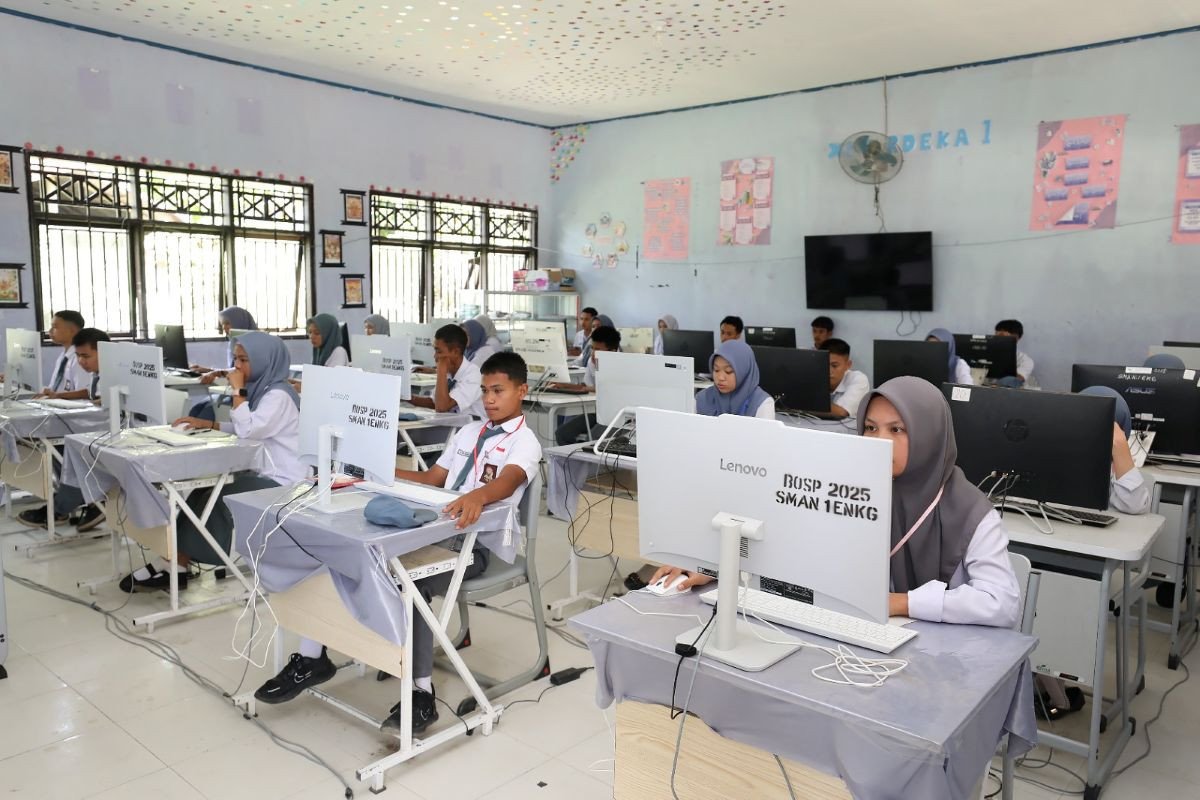
Over 8.7 million students took part in TKA 2026, with the main schedule recording a remarkable completion rate of 98.12 percent. This yields two distinct signals. The first is a major administrative achievement: Indonesia has demonstrated that it can successfully conduct a national academic assessment at scale. The second signal, however, is much more sobering.
The national mean score for the Indonesian language was 60.14 at the primary level and 60.83 at the lower secondary level. Mathematics yielded far lower figures: 43.41 at the primary level and 40.34 at the lower secondary level. While the language scores placed most students in the “adequate” rather than “good” quality categories, mathematics revealed a deeper crisis. There was a small silver lining, nearly one in ten students attained good or excellent levels in lower secondary mathematics, but the broader reality is stark (Pusat Asesmen Pendidikan, 2026).
This data indicates that Indonesia faces a two-dimensional foundational problem: poor numeracy and weak literacy. Numeracy is the ability to think and reason with numbers, patterns, quantities, risks and data. Literacy is the ability to understand, interpret, evaluate and use information in text. Both are basic survival skills. People lacking numeracy put themselves at risk of being defrauded by debt traps, miscalculating medication doses, misreading warnings about climate risks, or being misled by manipulated statistics. Without literacy, citizens are far more susceptible to hoaxes, predatory contracts, false health claims and weakened civic participation.
A child who cannot read carefully will struggle to comprehend a public notice, an employment contract, or an online scam. A student who does not understand numbers will face difficulties matching loan schemes, managing household bills, or interpreting election surveys. These are not isolated academic classroom skills; they are life skills.
The children currently in Grade 6 and Grade 9 will be in their late 20s and early 30s by 2045. They are Indonesia’s future workers, parents, voters, entrepreneurs, teachers, technicians, civil servants, and community leaders. If their literacy and numeracy remain weak, the country’s anticipated demographic bonus may easily devolve into a demographic burden.

Every Thursday
International comparisons provide a sharper context. In PISA 2022, only 18 percent of Indonesian 15-year-olds reached at least Level 2 proficiency in mathematics, compared with the OECD average of 69 percent. In reading, only 25 percent reached Level 2 or above, against an OECD average of 74 percent (OECD, 2023a).