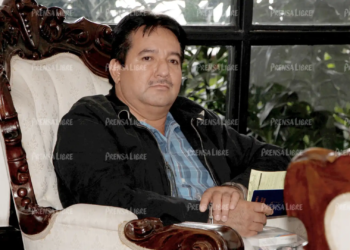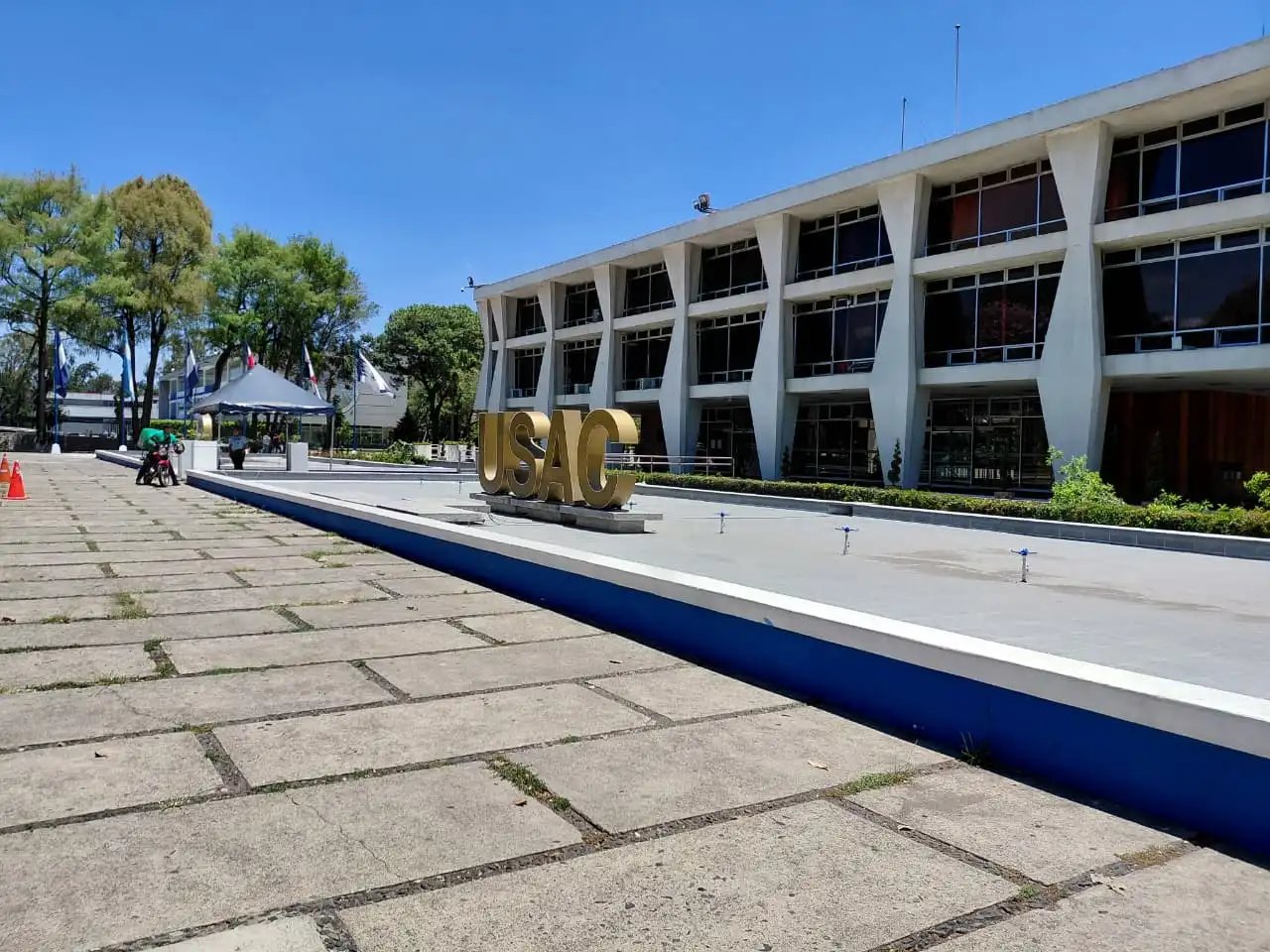
The plenary session of magistrates of the Constitutional Court (CC) stopped the scope of two amparos, one provisional and the other definitive, that had suspended the re-election of Walter Mazariegos as rector of the University of San Carlos de Guatemala (Usac).
This was confirmed by a constitutional source who preferred not to be cited, explaining that the two draft resolutions that had been agreed upon last week were brought back to the plenary session to be signed.
The previous week, the plenary session, despite having agreements by a majority of three to two, did not sign the resolutions because two magistrates had requested time to include observations on the draft sentences.
Until now, the opposition group Usac, Dignity and Resistance (Usac-DIRE), as well as the highest authorities of the university, have not been notified of the recent constitutional decision.
But the source details that a series of procedures had to be amended, including a protection ruling that had left Mazariegos’ re-election suspended for a new term against the USAC.
The dispute over the election of rector began in the primary elections within the university, where the group related to the current rector lost in the votes.
The Higher University Council (CSU) headed by Mazariegos, and which is questioned for lack of legitimacy due to the permanence of councilors in office with expired positions, did not accredit the opposition for the final vote.
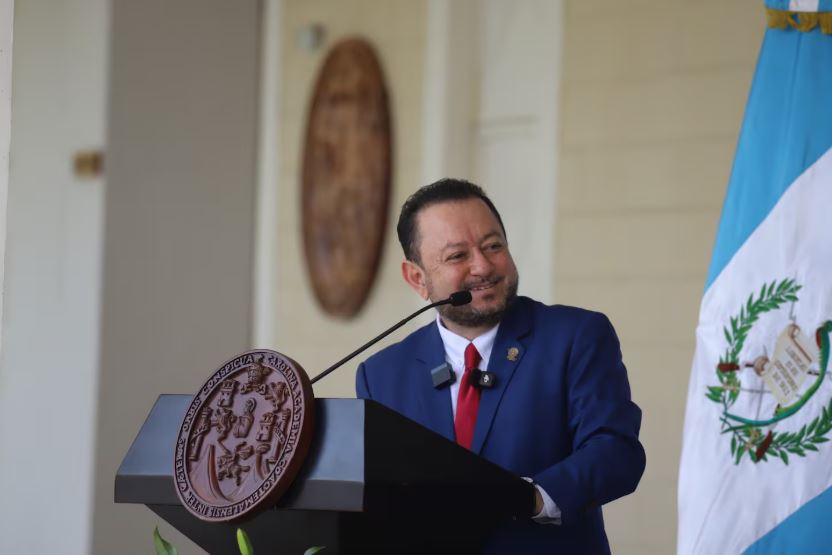
For the rector election, which was held on April 8 in Antigua Guatemala, the Usac authorities excluded opposition voters, under legal and administrative arguments questioned by Usac-DIRE.
The final vote, with the exclusion of the opposition, left Mazariegos as the winner for a new period at the head of the Usac for 2026-2030, but sources seriously question the rector’s first four years.
Institutional crisis
The image and direction that Usac has taken under the direction of Mazariegos is leading the only public university in the country to a crisis, says Efraín Medina, former rector of Usac in the period 1998-2002.
“It is a sad image for me as a former rector, it is painful. Usac is going through one of the worst stages in its history under the administration of Walter Mazariegos,” said Medina.
But the institutional deterioration is not exclusively the responsibility of Mazariegos, said the former rector, who also identified the directors who remain with expired positions as responsible.
“There is an illegitimate Higher University Council making decisions of national importance such as the postulants and magistrates of the CC. It is sad that these illegitimate bodies criminalize members of the University of San Carlos, from students, teachers and workers,” he said.
This strategy goes back to the way in which the CSU gradually changed the rules of its elections. “They are modifying electoral regulations, concentrating powers in the illegitimate Superior University Council. I cannot understand how it is possible that they do not allow the opposition slates to participate,” said Medina.
He added that the vital actors to resolve this crisis are the bodies of justice, including courts, Appeals chambers, but mainly the CC as it is the guarantor body of the Constitution.
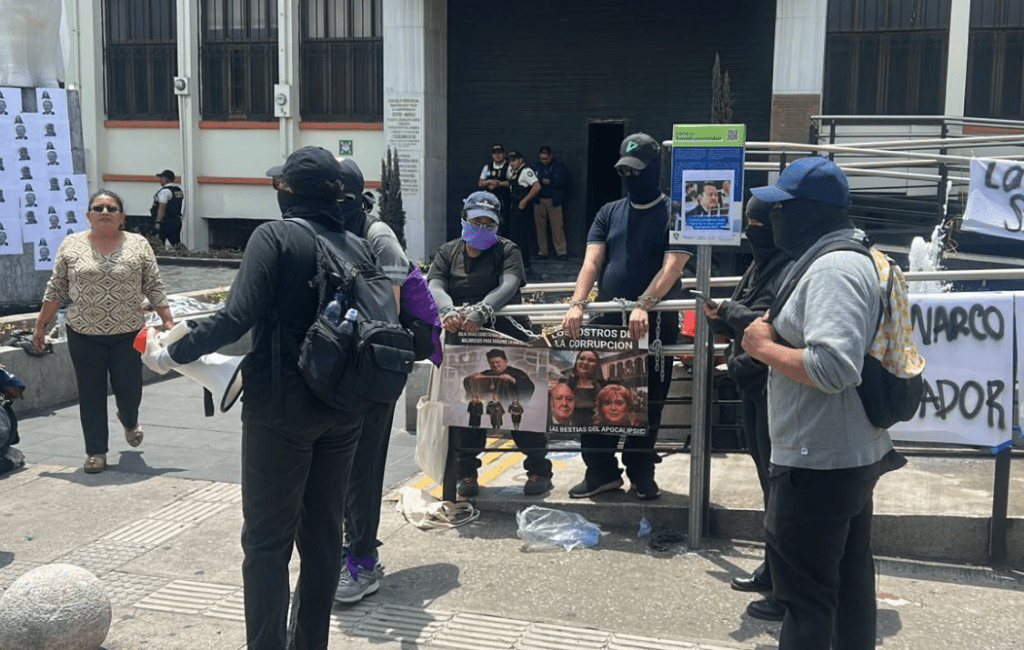
Lawyer Edwin Orozco, from Usac-DIRE, also explained that the modifications to the regulations generated confusion that, according to him, led to the legal actions against Mazariegos being rejected.
“The theft of the rector election is not something that has been prepared for two months, they did it premeditatedly. Proof was that on April 30, 2025, the CSU eliminated the means of challenging the election regulations, eliminating the opposition in electoral matters,” Orozco said.
But this modification, in the opinion of the lawyer, means that the only valid means of challenge are amparos. “To argue that the challenges have not been exhausted would be a wrong argument, because that has been maintained by some judges in Chambers and Courts,” he highlighted.
No information
Usac-DIRE highlighted that in the last four years they have also seen how access to information has been limited, rejecting requests for information from students and teachers.
The same dynamic of not wanting to share details about the graduates of recent years has been maintained in the media, where the answer is that to obtain this figure the same query must be made to each academic unit, something that former rector Medina sees as complex.
“It is an arbitrary situation, the information is general and that is public information, the USAC has global records of teachers, academic issues and financial issues,” he explained.
The Alliance for Reforms also questioned what it describes as acts of criminalization, a dynamic that was made possible by the Public Ministry (MP), explained Pablo Muñoz, from that organization.
“There is also internal criminalization, sealed by sectors such as María Consuelo Porras, the Toma Usac Case, here there are more than 80 people involved in the file according to the data that has reached us,” he said.
For Muñoz, the attack on students and teachers marks a dark period at Usac during the last four years, although he highlights how little by little there are opposition groups that are trying to recover the role of the university and the democratic spirit.
“There is inertia in the faculties, but there are good teachers, there are academic units with more independence, they have tried to be a resistance on political issues within the USAC,” he concluded.