Loading Text-to-Speech…
Her victory Paris Saint Germain in his final Champions League last Saturday brought the curtain down on the European football season. At first glance, the 2025-26 season looks like many of the previous ones. The battle between Arsenal and the Manchester City for the Premier League title has become a recurring pattern in recent years, while the fact that the rest of Europe’s major leagues ended in
Barcelona, Bayern, Inter once again showed the dominance of the established.
At the same time, the fact that Premier League teams have won all 21 of their knockout ties – including double legs and finals – against non-English clubs in the Europa League and Conference League over the past two seasons is an indication of the growing financial superiority of English football’s middle class over its European rivals.
More than ever, football may seem to be defined by economic power. But if one looks beyond the titles and especially at the smaller leagues, one discovers that the year that ended hid a lot of surprises that created a more fluid and healthy landscape.
Nowhere was this more evident than in this year’s Champions League, where Bodø Glimt beat City, Atletico and Inter in quick succession to reach the last 16.
Only Sporting managed to stop them although it took overtime and extra time to make up for the three-goal deficit from the first leg and book that ticket to the quarter-finals. And yet, Bodø, who also reached the semi-finals of the Europa League last season and who, despite the guaranteed income, follow an exclusively domestic transfer policy, are no longer Norwegian champions. The title was won by Viking FC, ending a 34-year wait.
The general phenomenon
Baton changes are a more general phenomenon across the continent. OR Karabagh was another of the pleasant surprises of this year’s Champions League, reaching the play-offs and achieving the club’s best European run since Azerbaijan. And yet, although he had won 11 championships since 2014, this year he fell behind Sabah FK. In fact, the latter was one of the six teams that won the championship in their country for the first time in their history, representing more than 10% of its members UEFA.
OR Maxline Vitebsk of Belarus, Kauno Zalgiris of Lithuania and Mialby from the fishing village of 1,500 inhabitants in Sweden made history by finishing on top for the first time. In Switzerland, Thun was promoted to the first division last year and won the championship this year, celebrating the first major title in its 128-year history. Equally impressive was the achievement of Atert Bischen, who in Luxembourg had never competed in the top division before from this season and managed to be crowned champion.
These stories matter not only as individual achievements but also as part of a larger trend. For many years there were concerns that the consecutive successes of Malme, Bate Borisov, Young Boys and FK Zalgiris would provide them with European revenue that would consolidate their dominance and create imbalances in the domestic leagues.
OR UEFA partially alleviated these concerns through the creation of the Conference League, but also the expansion of the Champions League and Europa League, ensuring participation in the League Phase for 108 clubs. At the same time, UEFA’s solidarity revenue is distributed to domestic clubs according to the success of each country’s top teams. This particular fund has now reached approx 260 million eurosan amount corresponding to 7% of the annual revenue of the European federation from its events.
The effect of this policy is particularly evident in Poland, which has perhaps the most competitive and unpredictable league in Europe. At the beginning of April, all 18 teams in the division could mathematically either win the title or be relegated. From 2019 to 2024, the country produced three champions who celebrated the title for the first time in their history: the Piast Gliwice, Rakuf Częstochowa and Jagiellonia Bialystok. In Albania there have been six different champions since 2016, while in Armenia five different teams have won the title in six seasons.
Rarer are… empires
This competitiveness is not universal, but domestic “empires” are becoming increasingly rare. At Bulgariah Ludogorets missed out on a 15th consecutive championship – a feat that would have been a world record in professional men’s football – and finished third, with Levski Sofia celebrating their first title since 17 years.
In Hungary, Ferencvaros’ seven-championship run was halted by Gyori ETO, while Red Bull Salzburg, who had won 14 Austrian championships between 2007 and 2023, now completed three seasons without a title as LASK ended a 61-year wait.
In Denmark, Aarhus won its first championship since 1986, while Copenhagen – which in recent years has also competed in the Champions League – did not even manage to finish in the top six. In Romania, Universitatea Craiova celebrated their first title in 36 years, while in Cyprus, APOEL won seven consecutive championships from 2013 to 2019, but since then five different clubs (Omonoia, Apollon Limassol, Aris Limassol, Paphos) have come out on top. Even more impressive is the case of Serif Tiraspol, who have won 21 Moldovan league titles since 2001 and beat Real in the 2021-22 Champions League, but have now gone three straight years without a title.
No team in Europe currently has double-digit consecutive league titles and only Red Star, Slovan Bratislava and Lincoln Red Ibbs (Gibraltar) have won more than five consecutive titles in recent years.
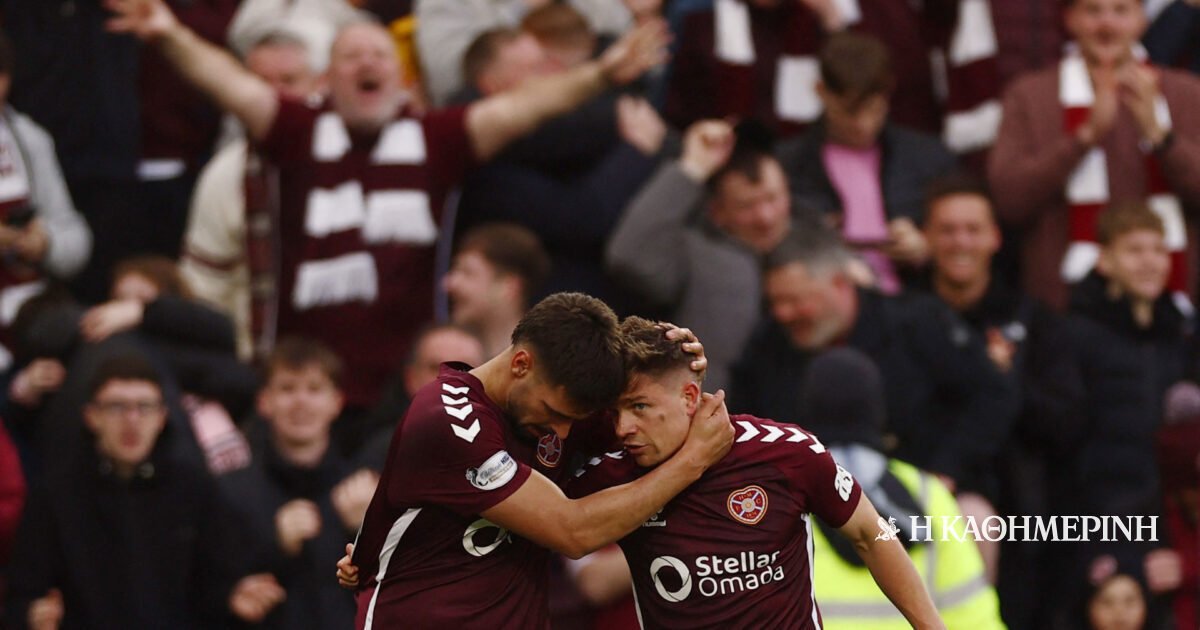
Nowhere, of course, are concerns about imbalance greater than in Scotland, where the Celtic has won 14 of the last 15 championships, with either it or the Rangers winning the title for four consecutive decades. Nevertheless, the fact that Hearts have topped the table for more than 200 days shows that Glasgow’s dominance can no longer be taken for granted.
In fact, Tony Bloom, who, in addition to Hearts in Scotland, owns Brighton in England, St. Gilois in Belgium and Melbourne Victory in Australia, said that he wants the Edinburgh team (in which he invested 10 million pounds last summer) to break the Glasgow duopoly within the next five years.
At the same time, his investment in Union Saint-Jiloise last year led the Brussels club to their first Belgian title since 1935, while this year they finished second. One place further back was Sid Truiden, who for the first time secured her exit to the European competitions. In the Netherlands, Nijmegen finished third and will compete in the Champions League for the first time.
The miracle of Como
Similar stories are everywhere in Europe. Como, who competed in Serie D in 2019, will take part in the next Champions League leaving out AC Milan and Juventus, while Bournemouth “came out” in European competition for the first time. Hoffenheim managed to finish in the top five of the Bundesliga for the first time in eight years, while in France, Lance, whose only previous league title came in 1998, finished just six points clear of Paris Saint-Germain (having been at the top for a considerable period) and won their first ever French Cup.
These clubs certainly have financial resources, but their successes are mainly based on operating smarter and more efficiently than their competitors, creating structures that allow success to be maintained even when important figures leave.
European football is not a utopia. The fact that the Premier League operates in a completely different economic universe creates problems for the competitiveness of UEFA competitions. However, the presence of Freiburg and Rayo Vallecano in the European finals (where they reached for the first time in their history) shows that now everyone has a right to the European dream, at least in Europa and especially in the Conference League, something Olympiacos also proved two years ago.
A strong elite group of clubs at the top of the sport is not about to lose its place. Despite all this, in recent years we have more and more unexpected championships and stories of amazing success. And the 2025-26 season proved that, in football, even those who were last, can at some point be at the top…