Despite great geopolitical uncertainty, high kerosene prices and the cancellation of some airline lines, Slovenian destinations are satisfied with the tourist visits so far and are counting on a successful tourist season, representatives of this industry announced to the public before the summer. The Slovenian Tourist Organization (STO) thus predicts a three to five percent increase in the number of overnight stays this year.
Director of the WTO Maja Pak Olaj she said that in the first five months of this year, we had six percent more tourist arrivals and seven percent more overnight stays. Foreign visitors contributed more to the growth, mostly from neighboring countries. “The challenge of Slovenian tourism is seasonality. We want greater dispersion of tourist flows throughout the year,” said Pak Olajeva. She warned that Slovenian tourism is at a turning point. “Growth is moderate, but some destinations are already experiencing congestion,” she said. According to her, it is therefore necessary to take measures to direct tourist flows. The director also explained that with the national information center for tourism, STO is moving from data collection to destination management. It should soon be possible to predict tourist visits with this data.
Higher costs
Director of the Tourism and Hospitality Chamber of Slovenia Fedja Run away said that the industry expects growth in the future based on the visits and bookings so far. The chamber was concerned about what would happen to air guests given geostrategic uncertainty and kerosene prices, but for now it appears that most of those guests, such as the Americans, have held on. “Certain Asian groups have dropped out, but it looks like they will be replaced by European guests,” said Pobegajlo.
He pointed out, however, that costs have risen considerably and that it is not possible to transfer everything in total into sales prices, which then affects profitability. He reminded that attention must be paid to the structure of accommodation also in order to achieve an increase in added value and that in some destinations the letting of short-term accommodation has become excessively widespread. The previous government is for them in some municipalities introduced regulation, but the new coalition is with an intervention law its implementation was frozen.
A year-round destination
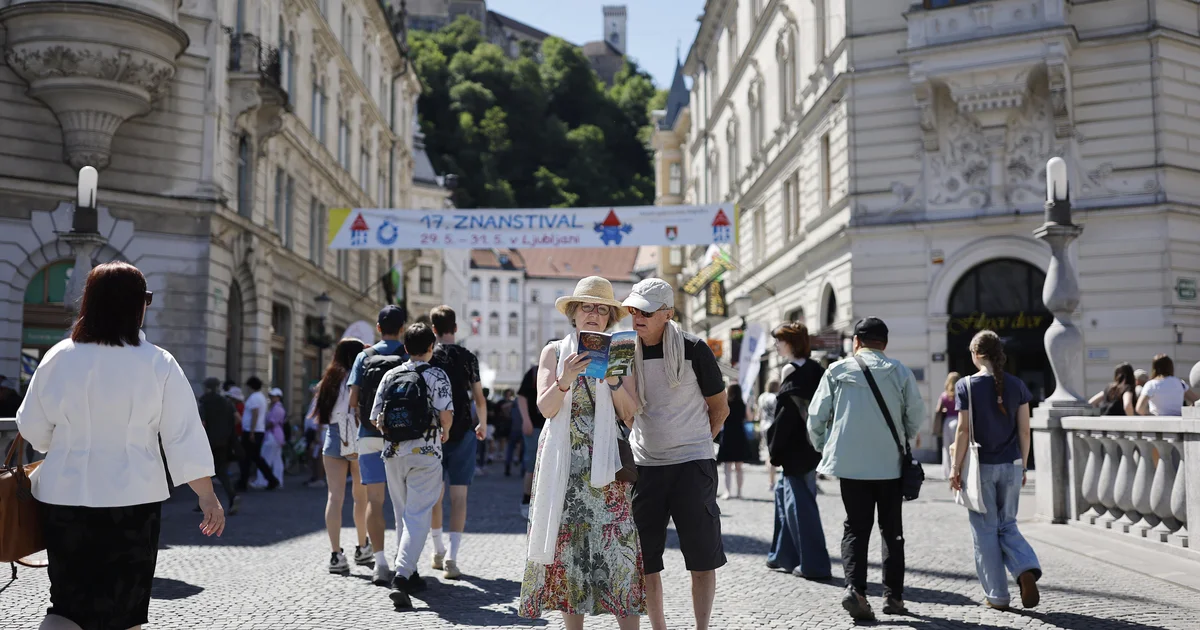
Over 444,000 guests visited Ljubljana in the first five months of this year. “Ljubljana is already a year-round destination, and we have the most visitors in the summer. This year, the biggest challenge will be to find a free room, as the current occupancy is already 92%,” she said. Branka Gradisar from Tourism Ljubljana and added that due to high occupancy in the season, it is necessary to have a controlled offer of private accommodation. In Ljubljana, they are cautiously optimistic and expect an increase in visits. “However, it is true that we are seeing more and more last-minute bookings,” Gradišarjeva said. In Ljubljana, they are also noticing more and more guests who are not looking for classic attractions, but for customized programs and experiences.
Maribor has been experiencing a real tourist boom in recent years. “Destination Maribor has very well distributed visits throughout the season,” said the director of the Maribor Tourism Institute Jure Struc and said they expect eight percent growth. At the same time, growth in the number of overnight stays and arrivals is leveling off. Struc also explained that they are successfully appealing to nearby markets – Austria, Hungary and Croatia, as visits from these countries increased the most last year.
In the Alps this year, due to the good winter season, there was a 14% increase in visits, said the director of Tourism Bohinj and the coordinator of the Julian Alps Community Clement Langus. He added that the season has stretched out, and other destinations are also growing, not just the classic ones, such as Bled, Bohinj and Kranjska Gora.