
Datuk Dr Prof Jayum Jawan
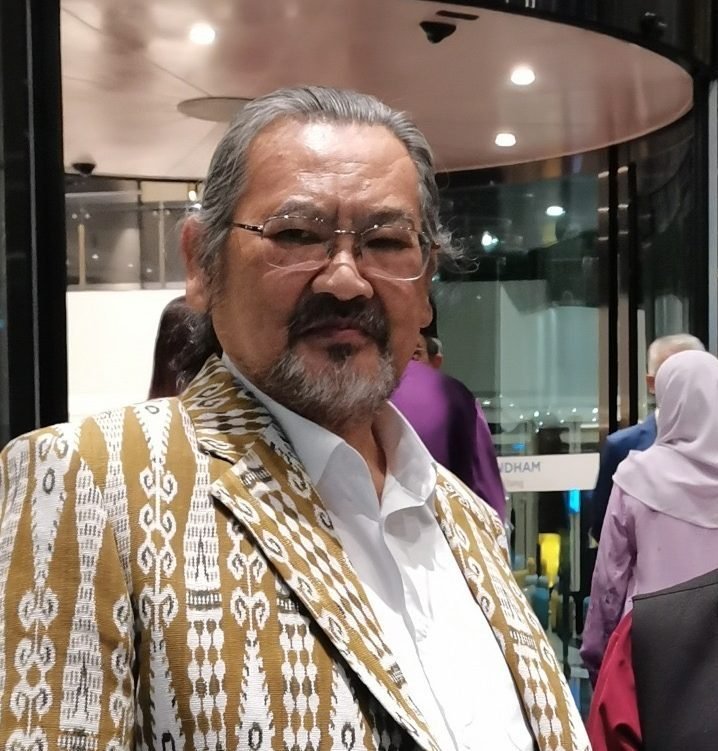
KUCHING (June 8): The perception of Dayak marginalisation over the past five decades could be a determining factor in the outcome of the next Sarawak state election, said Datuk Dr Prof Jayum Jawan.
According to the political analyst, an interesting area to watch in the next state election would be Dayak constituencies, which have been divided and perceived as marginalised since the 1970s.
“The main political parties claiming to represent Dayaks are PBB-Pesaka and PRS, with a sizable number in the Chinese-led PDP.
“Will the winds of change that swept Sabah and the storm brewing in Johor and Negeri Sembilan jolt Dayaks to seek a different pattern in the next elections?
“Dayak social media has been abuzz with several potential scenarios. But can the sentiment of neglect and marginalisation ignite the spirit and present an alternative to what have been circling in the minds of these new, urbanised, and better-educated Dayaks?” he questioned when contacted by The Borneo Post.
Jayum, who is an Academy of Sciences Malaysia fellow, said his online survey on leadership conducted before Gawai Dayak revealed that 86 per cent, or 185 of the 209 Dayak netizen respondents, said Dayak marginalisation would be an important factor on how they would vote.
He claimed that reliable information indicated that the State Legislative Assembly is expected to be dissolved in October to allow for the 13th state election.
“All indications are that the ruling coalition has done all it can to position appeals to the people by giving a lot of goodies in the past months, such as assistance, free education for selected courses, and in some state-owned colleges.
“It will campaign on the basis of what they have put into planning but have not delivered yet on many high-profile projects such as the new hydrogen urban transport system, new larger airport, new deep-sea port, and various infrastructure projects.
“But any government can do that. But when the assembly is dissolved, there is no government, and that is why elections are held, to elect one. But naivety still reigns supreme among many rural and Dayak voters,” he said.
According to Jayum, the next state election could be expected to be a new milestone, as Sarawakians will go to the polls amidst a new political landscape enveloping national politics.
He opined there is fluidity in political support, with voting patterns becoming unclear and not easily predictable as before.
“At the national level, there appears to be a ‘free-for-all’ as political alliances will shift and some break apart.
“Unlike before, when the contest was between former ruling parties such as BN-Umno and its opponents DAP and PAS, this time around, the election could well see a three-cornered fight between PH-PKR, BN-Umno, and PN-Bersatu as the main contenders,” he said.
He stated that the pattern is already developing for state elections in Johor and Negeri Sembilan.
“The wind will blow into the Borneo state and Sarawak will have to deal with this. This should liven up contests in Sarawak, especially among Dayaks, and less so among the Malay-Melanau and, to some extent, the Chinese.
“The Malay-Melanau parochial outlook means that PBB’s Bumiputera will sweep all Malay-Melanau majority seats as it has before.
“There will be some contests among the Chinese, not that Chinese think SUPP under (Datuk Amar Dr) Sim (Kui Hian) is not doing well, but it has always been the Chinese outlook that another party outside government is needed to say things Chinese parties in government could not,” he added.