BAKU, Azerbaijan, June 4. President of
Uzbekistan, Shavkat Mirziyoyev, is scheduled to undertake a working
visit to Russia on June 4–5, during which discussions will address
the global situation, national initiatives, future cooperation, and
a series of bilateral events in St. Petersburg.
During the visit, President Mirziyoyev is set to participate in
and deliver a speech at the plenary session of the 29th St.
Petersburg International Economic Forum, which will convene under
the theme “Pragmatic Dialogue – the Path to a Stable Future.”
Bilateral relations between Uzbekistan and Russia are currently
experiencing a period of significant expansion. In recent years,
the two nations have markedly broadened their cooperation across
multiple domains, including trade, investment, energy, technology,
public administration, and regional development.
Economic collaboration remains the cornerstone of the
Uzbekistan–Russia partnership. Russia remains one of Uzbekistan’s
most important economic partners and a key market for Uzbek
exports. The volume of bilateral trade exceeded $10 billion in 2024
and continued to grow steadily in 2025–2026. In January–February
2026, trade turnover between the two countries increased by nearly
32% compared to the same period in 2025, reaching $2.1 billion.
Moreover, Russia remains Uzbekistan’s second-largest trading
partner, accounting for over 18% of the country’s total foreign
trade turnover. Simultaneously, it is the largest destination for
Uzbek exports. Exports to Russia reached nearly $680 million in the
first four months of 2026, reflecting strong demand for Uzbek
agricultural products, textiles, food products, chemicals,
construction materials, and manufactured goods.
These figures underscore not only the strategic importance of
the Russian market for Uzbek producers but also the growing
competitiveness of Uzbekistan’s export-oriented industries.
Trade growth has been accompanied by a significant expansion of
investment cooperation. Uzbekistan attracted $43.1 billion in
implemented investments in 2025, including $38.2 billion in foreign
direct investment. Russia accounted for approximately $4.8 billion
of this total.
The scale of Russian business involvement is reflected in the
presence of more than 3,300 enterprises with Russian participation
operating in Uzbekistan, which contribute not only financial
resources but also technological expertise and management
experience. Russian investment plays an important role in
strengthening Uzbekistan’s structural transformation and economic
diversification.
The cooperation between Russia and Uzbekistan applies to the
energy sector as well. One of the most recent is the partnership
between Uzbekneftegaz and the Russian company Burintech. The sides
recently agreed to develop a joint roadmap aimed at strengthening
cooperation in deep drilling technologies and introducing advanced
equipment for oil and gas operations.
Energy cooperation has become one of the most strategically
significant dimensions of the partnership. Uzbekistan’s rapidly
growing economy requires substantial increases in energy generation
capacity.
In this context, cooperation with Russia in the nuclear sector
has emerged as a flagship area of bilateral engagement.
The implementation of the 330-megawatt small modular reactor
project in the Jizzakh region, developed in cooperation with
Rosatom, represents a milestone in the country’s energy
strategy.
Beyond economics, the Uzbekistan–Russia partnership is
increasingly expanding into institutional and governance-related
areas. Cooperation between the finance ministries of the two
countries has created valuable opportunities for Uzbekistan to
exchange expertise and adopt best practices in key fields such as
tax policy, internal auditing, budget management, and fiscal
decentralization.
Another defining feature of contemporary Uzbekistan–Russia
relations is the growing importance of interregional cooperation.
This trend is clearly reflected in the adoption of a new
Uzbekistan–Russia interregional cooperation roadmap for the period
from 2025 through 2030, aimed at systematically expanding direct
links between regions, strengthening business-to-business
interaction, and supporting joint investment and industrial
initiatives.
Interregional partnership also contributes to the
diversification of economic ties by expanding opportunities for
SMEs and creating new channels for investment and technological
exchange. As a result, regional diplomacy is becoming an
increasingly important mechanism for strengthening bilateral
relations.
Another prominent trend is that Russia continues to be one of
the most popular destinations for Uzbek travelers.
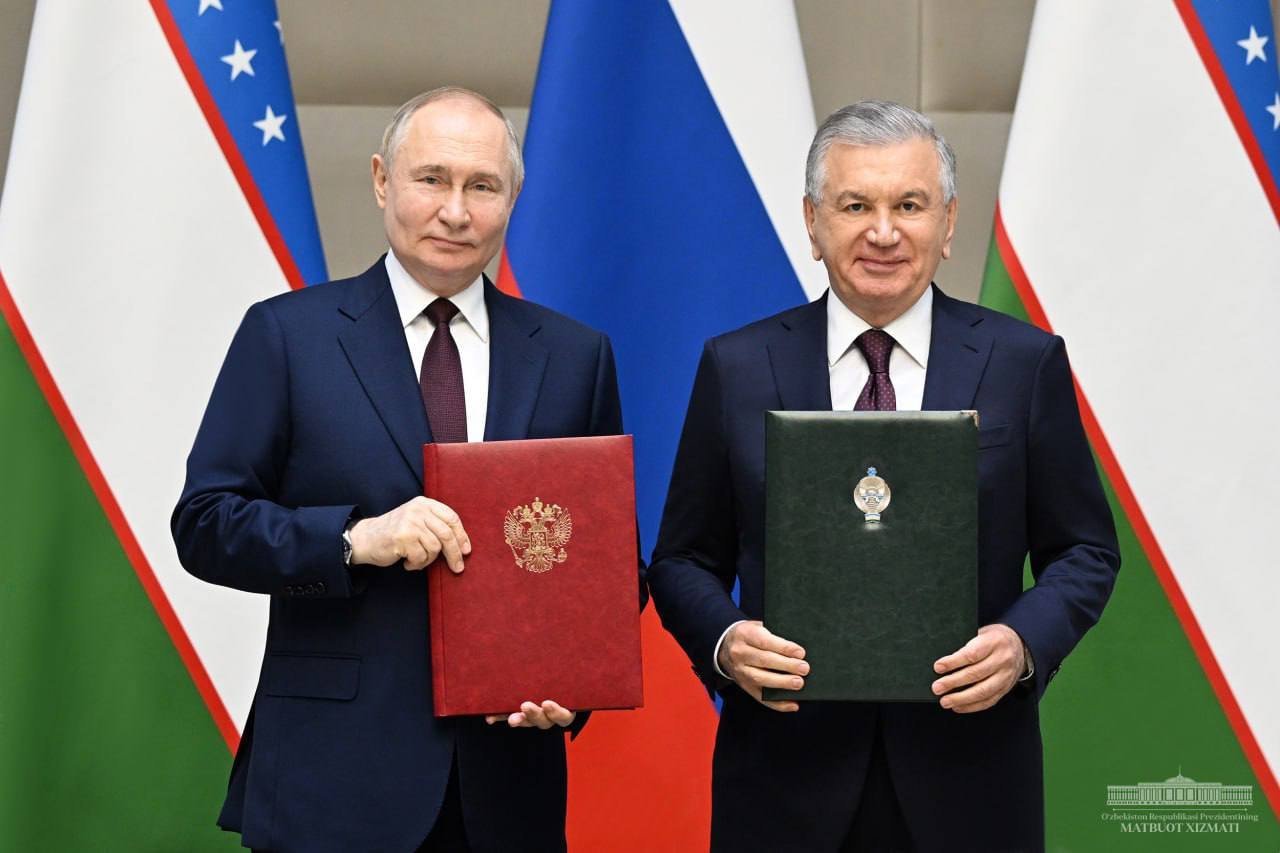
Regular contacts between Presidents Shavkat Mirziyoyev and
Vladimir Putin, as well as intensive engagement between government
institutions, ensure that bilateral cooperation remains dynamic and
results-oriented. Recent discussions between the two leaders
highlighted not only the growth of trade and investment but also
cooperation in infrastructure, industry, transport, digital
technologies, education, innovation, and regional development.
Taken together, these developments suggest that
Uzbekistan–Russia relations are entering a new phase characterized
by deeper economic integration, broader institutional cooperation,
and stronger long-term strategic coordination. While trade remains
an important foundation, the relationship is increasingly defined
by large-scale investment projects, technological collaboration,
infrastructure development, and regional partnerships.
President Mirziyoyev’s visit to Russia, therefore, represents
more than a routine diplomatic engagement. It indicates the growing
partnership that is becoming diversified and future-oriented. If
current initiatives are successfully implemented, Uzbekistan and
Russia will be well-positioned to further strengthen their economic
connectivity, expand industrial cooperation, and contribute to
sustainable development across the wider Eurasian region.