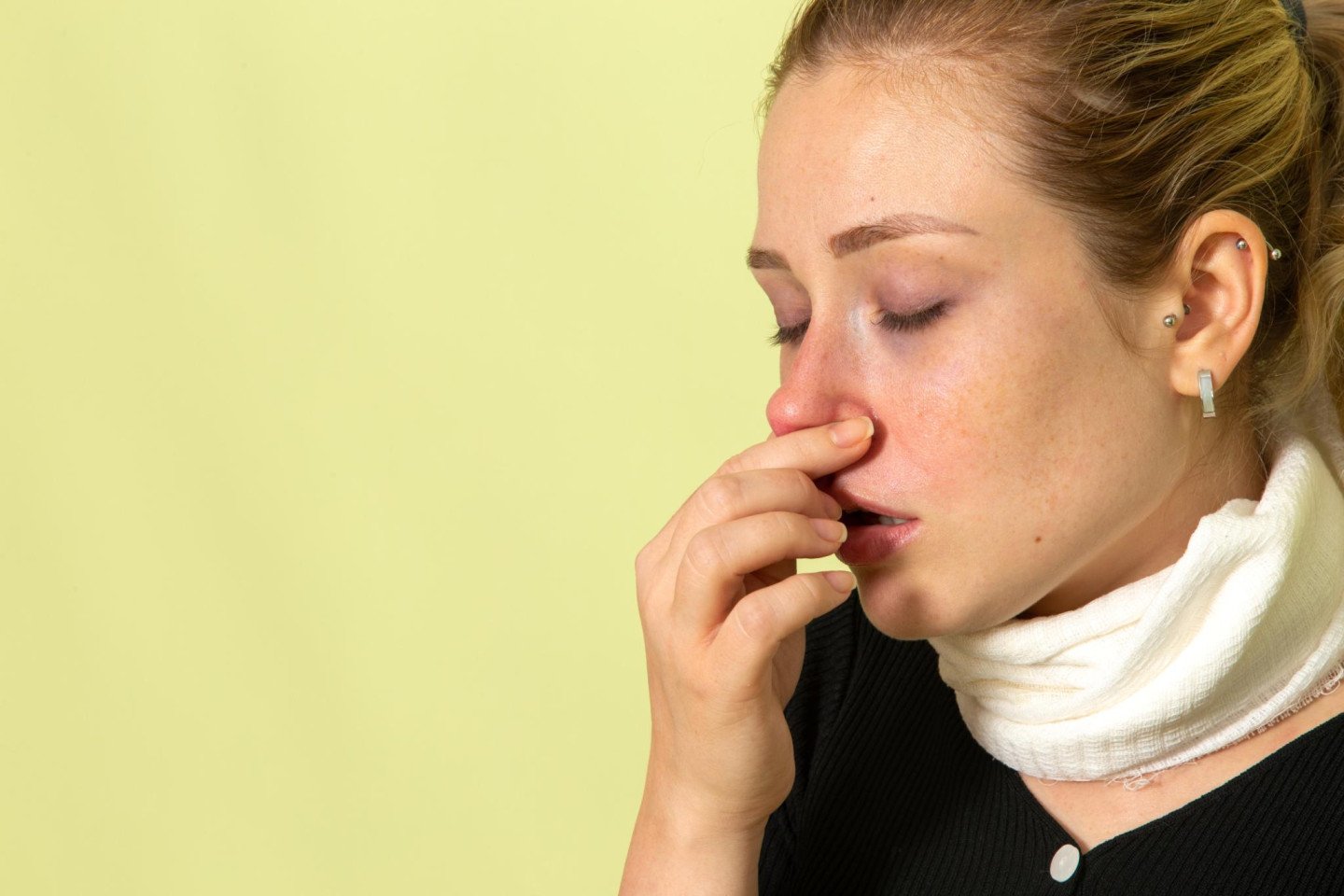
According to experts, this symptom may be just part of a larger problem. Picking scabs is prohibited, especially if it is done for a long time. Their removal can lead to complications, such as perforation of the nasal septum.
Nasal mucosa and upper respiratory tract lesions are common and are associated with other manifestations of this disease, such as kidney, lung, and skin lesions, the “Champion” portal reports.
“However, 25% of patients observe a separate inflammation. This form is characterized by dry nose and scabs, ulcerative necrotic changes in mucous membranes, nasal polyps and destruction of bone and cartilage structures,” experts say.
Perforation in the nose (a hole is formed) occurs in 33% of cases. Further progression leads to significant destruction of the cartilage skeleton and saddle-shaped deformity of the nose.
The myth that it is “completely impossible” to touch the scabs on the nose is not true – it can be done physically. However, doctors and specialists categorically forbid doing this due to very serious health risks.
Here are the main reasons why it is dangerous to touch or tear the scabs in the nose:
1. The “triangle of death” in the face
- The nose is located in an area of the face called the “triangle of death”.
- The blood vessels of this area are directly connected to the brain.
- Infection from the nose can easily reach the meninges.
- This can lead to a life-threatening condition – cavernous sinus thrombosis.
2. Risk of infections
- Fingers and nails are full of bacteria (eg Staphylococcus aureus).
- Tearing off the scab opens the wound.
- Bacteria enter the bloodstream and cause local or systemic infection.
3. Damage to the nasal septum
- Constant tearing of scabs injures the nasal mucosa.
- This can cause chronic inflammation and ulcers.
- In more severe cases, a perforation (hole) in the nasal septum may occur.
4. Vicious cycle and bleeding
- A scab is a natural protective layer that heals a wound.
- When you tear it off, the wound begins to bleed again.
- The body forms a new, even larger scab, prolonging healing.
How to do the right thing?
If your nose is dry or crusty, do not use your fingers or objects. Use seawater sprays to moisturize or special nasal ointments (eg with dexpanthenol) that soften the skin and help it heal.
In the medical literature and clinical studies, this problem – desquamation, or chronic mechanical trauma to the nasal mucosa – is widely documented and associated with serious complications.
The “triangle of death” and intracranial complications
In medical anatomy, the area of the face from the corners of the lips to the base of the nose is called the dangerous triangle of the face (danger triangle of the face).
- Scientific basis: The veins in this area (facial vein and eye vein) do not have valves, which means that blood can flow in both directions. Infection from an open wound in the nose (caused by sloughing off the scab) can travel backwards directly into the cranial cavity.
- Medical Implications: This can lead to cavernous sinus thrombosis (cavernous sinus thrombosis) – dangerous hemorrhages and infections at the base of the brain, as well as meningitis or brain abscess. Symptoms and risks are reported in the Apollo Hospitals medical encyclopedia.
- These intracranial (brain) complications, which start from ordinary inflammations of the nose or sinuses, are very dangerous, the medical journal “Doctus” also writes in its analysis.
Nasal septum perforation (hole)
Constant desquamation is one of the main mechanical causes of nasal septum damage.
- Clinical course: Injury to the mucosa damages the blood supply to the cartilage. Since the cartilage is nourished only by the mucous membrane, a long-term lack of blood circulation causes tissue necrosis, or death.
- Medical Implications: A perforation of the nasal septum is formed – a hole between the two nostrils. This causes chronic drying of the mucous membrane, increased crusting and even a specific whistling sound when breathing.
Staphylococcus aureus colonization
The front part of the nose is the main home for bacteria Staphylococcus aureus (Staphylococcus aureus).
- Research shows: When the scab is torn off, this bacterium instantly infects the microtrauma. Clinical studies published on the US National Institutes of Health’s “PubMed/PMC” platform confirm a direct link between trauma to the nasal mucosa and severe soft tissue infections (such as facial cellulitis or nasal vestibular furunculosis).
Rhinotillexomania
In medicine, abnormal and uncontrollable nose picking and crusting has been given an official psychiatric or medical term – rhinotillexomania. It is classified as a behavioral disorder associated with obsessive-compulsive manifestations and requires complex treatment if the patient is unable to independently stop this habit.
If you experience persistent crusting, the best course of action is to consult an otolaryngologist (ENT).