Tuesday, June 9, 2026
    The GeoStrategic Consensus
    No Result
    View All Result
    • Login
    • HOME
    • AMERICAS
      • Argentina
      • Brazil
      • Canada
      • Chile
      • Colombia
      • Costa Rica
      • Cuba
      • Dominican Republic
      • Ecuador
      • El Salvador
      • Greenland
      • Guatemala
      • Honduras
      • Mexico
      • Nicaragua
      • Panama
      • Paraguay
      • Peru
      • United States
      • Uruguay
      • Venezuela
    • ASIA-PACIFIC
      • Australia
      • Brunei Darussalam
      • Cambodia
      • China
      • Federated States of Micronesia
      • Fiji
      • Indonesia
      • Japan
      • Kiribati
      • Laos
      • Malaysia
      • Marshall Islands
      • Mongolia
      • Myanmar
      • Nauru
      • New Zealand
      • North Korea
      • Palau
      • Papua New Guinea
      • Philippines
      • Samoa
      • Singapore
      • Solomon Islands
      • South Korea
      • Taiwan
      • Thailand
      • Timor-Leste
      • Tonga
      • Tuvalu
      • Vanuatu
      • Vietnam
    • CARICOM
      • CARICOM – Non-English
        • Haiti
        • Suriname
      • CARICOM Associates
        • Anguilla
        • Bermuda
        • British-Virgin-Islands
        • Cayman-Islands
        • Curacao
        • Turks-and-Caicos
      • CARICOM English
        • Antigua and Barbuda
        • Barbados
        • Belize
        • Dominica
        • Grenada
        • Guyana
        • Jamaica
        • Montserrat
        • Saint Kitts and Nevis
        • Saint Lucia
        • Saint Vincent and the Grenadines
        • The Bahamas
        • Trinidad and Tobago
    • EURASIA
      • Armenia
      • Azerbaijan
      • Balarus
      • Georgia
      • Kazakhstan
      • Kyrgyzstan
      • Moldova
      • Russia
      • Tajikistan
      • Turkmenistan
      • Ukraine
      • Uzbekistan
    • EUROPE
      • Albania
      • Andorra
      • Austria
      • Bosnia and Herzegovina
      • Bulgaria
      • Croatia
      • Cyprus
      • Czech Republic
      • Denmark
      • Estonia
      • Finland
      • France
      • Germany
      • Greece
      • Holy See
      • Hungary
      • Iceland
      • Ireland
      • Italy
      • Kosovo
      • Latvia
      • Liechtenstein
      • Lithuania
      • Luxembourg
      • Malta
      • Monaco
      • Montenegro
      • Netherlands
      • North Macedonia
      • Norway
      • Poland
      • Portugal
      • Romania
      • San Marino
      • Serbia
      • Slovakia
      • Slovenia
      • Spain
      • Sweden
      • Switzerland
      • United Kingdom
    • MIDDLE EAST AND NORTH AFRICA
      • Algeria
      • Bahrain
      • Egypt
      • Iran
      • Iraq
      • Israel
      • Jordan
      • Kuwait
      • Lebanon
      • Lybia
      • Morocco
      • Oman
      • Palestinian Territories
      • Qatar
      • Saudi Arabia
      • Syria
      • Tunisia
      • Turkey
      • United Arab Emirates
      • Western Sahara
      • Yemen
    • SOUTH ASIA
      • Afghanistan
      • Bangladesh
      • Bhutan
      • India
      • Maldives
      • Nepal
      • Pakistan
      • Sri Lanka
    • SUB-SAHARAN AFRICA
      • Angola
      • Benin
      • Botswana
      • Burkina Faso
      • Burundi
      • Cabo Verde
      • Cameroon
      • Central African Republic
      • Chad
      • Comoros
      • Cote d’Ivoire
      • Democratic Republic of the Congo
      • Djibouti
      • Equatorial Guinea
      • Eritrea
      • Eswatini
      • Ethiopia
      • Gabon
      • Gambia
      • Ghana
      • Guinea
      • Guinea Bissau
      • Kenya
      • Lesotho
      • Liberia
      • Madagascar
      • Malawi
      • Mali
      • Mauritania
      • Mauritius
      • Mozambique
      • Namibia
      • Niger
      • Nigeria
      • Republic of the Congo
      • Rwanda
      • Sao Tome and Principe
      • Senegal
      • Seychelles
      • Sierra Leone
      • Somalia
      • South Africa
      • South Sudan
      • Sudan
      • Tanzania
      • Togo
      • Uganda
      • Zambia
      • Zimbabwe
    • HOME
    • AMERICAS
      • Argentina
      • Brazil
      • Canada
      • Chile
      • Colombia
      • Costa Rica
      • Cuba
      • Dominican Republic
      • Ecuador
      • El Salvador
      • Greenland
      • Guatemala
      • Honduras
      • Mexico
      • Nicaragua
      • Panama
      • Paraguay
      • Peru
      • United States
      • Uruguay
      • Venezuela
    • ASIA-PACIFIC
      • Australia
      • Brunei Darussalam
      • Cambodia
      • China
      • Federated States of Micronesia
      • Fiji
      • Indonesia
      • Japan
      • Kiribati
      • Laos
      • Malaysia
      • Marshall Islands
      • Mongolia
      • Myanmar
      • Nauru
      • New Zealand
      • North Korea
      • Palau
      • Papua New Guinea
      • Philippines
      • Samoa
      • Singapore
      • Solomon Islands
      • South Korea
      • Taiwan
      • Thailand
      • Timor-Leste
      • Tonga
      • Tuvalu
      • Vanuatu
      • Vietnam
    • CARICOM
      • CARICOM – Non-English
        • Haiti
        • Suriname
      • CARICOM Associates
        • Anguilla
        • Bermuda
        • British-Virgin-Islands
        • Cayman-Islands
        • Curacao
        • Turks-and-Caicos
      • CARICOM English
        • Antigua and Barbuda
        • Barbados
        • Belize
        • Dominica
        • Grenada
        • Guyana
        • Jamaica
        • Montserrat
        • Saint Kitts and Nevis
        • Saint Lucia
        • Saint Vincent and the Grenadines
        • The Bahamas
        • Trinidad and Tobago
    • EURASIA
      • Armenia
      • Azerbaijan
      • Balarus
      • Georgia
      • Kazakhstan
      • Kyrgyzstan
      • Moldova
      • Russia
      • Tajikistan
      • Turkmenistan
      • Ukraine
      • Uzbekistan
    • EUROPE
      • Albania
      • Andorra
      • Austria
      • Bosnia and Herzegovina
      • Bulgaria
      • Croatia
      • Cyprus
      • Czech Republic
      • Denmark
      • Estonia
      • Finland
      • France
      • Germany
      • Greece
      • Holy See
      • Hungary
      • Iceland
      • Ireland
      • Italy
      • Kosovo
      • Latvia
      • Liechtenstein
      • Lithuania
      • Luxembourg
      • Malta
      • Monaco
      • Montenegro
      • Netherlands
      • North Macedonia
      • Norway
      • Poland
      • Portugal
      • Romania
      • San Marino
      • Serbia
      • Slovakia
      • Slovenia
      • Spain
      • Sweden
      • Switzerland
      • United Kingdom
    • MIDDLE EAST AND NORTH AFRICA
      • Algeria
      • Bahrain
      • Egypt
      • Iran
      • Iraq
      • Israel
      • Jordan
      • Kuwait
      • Lebanon
      • Lybia
      • Morocco
      • Oman
      • Palestinian Territories
      • Qatar
      • Saudi Arabia
      • Syria
      • Tunisia
      • Turkey
      • United Arab Emirates
      • Western Sahara
      • Yemen
    • SOUTH ASIA
      • Afghanistan
      • Bangladesh
      • Bhutan
      • India
      • Maldives
      • Nepal
      • Pakistan
      • Sri Lanka
    • SUB-SAHARAN AFRICA
      • Angola
      • Benin
      • Botswana
      • Burkina Faso
      • Burundi
      • Cabo Verde
      • Cameroon
      • Central African Republic
      • Chad
      • Comoros
      • Cote d’Ivoire
      • Democratic Republic of the Congo
      • Djibouti
      • Equatorial Guinea
      • Eritrea
      • Eswatini
      • Ethiopia
      • Gabon
      • Gambia
      • Ghana
      • Guinea
      • Guinea Bissau
      • Kenya
      • Lesotho
      • Liberia
      • Madagascar
      • Malawi
      • Mali
      • Mauritania
      • Mauritius
      • Mozambique
      • Namibia
      • Niger
      • Nigeria
      • Republic of the Congo
      • Rwanda
      • Sao Tome and Principe
      • Senegal
      • Seychelles
      • Sierra Leone
      • Somalia
      • South Africa
      • South Sudan
      • Sudan
      • Tanzania
      • Togo
      • Uganda
      • Zambia
      • Zimbabwe
    No Result
    View All Result
    Agentially
    No Result
    View All Result
    Home EUROPE Holy See

    Pope Leo’s Magnifica humanitas and the “rejected stones” of our time

    The Analyst by The Analyst
    June 9, 2026
    in Holy See
    Pope Leo’s Magnifica humanitas and the “rejected stones” of our time


    Humanitarian development aid expert and diplomat, Dr. Daniel Solymári, reflects on Pope Leo XIV’s Magnifica humanitas as a powerful social and synodal appeal to see the world from the perspective of the poor, refugees, war victims. He also highlights how the text calls to place justice, fraternity, and peace at the heart of public life.

    READ ALSO

    The apostolic journey of Pope Leo XIV to Spain – Madrid – The departure – Telegrams to heads of state during the outward flight

    Solidarity and indifference – L’Osservatore Romano

    By Thaddeus Jones

    Continuing our series of articles and interviews on Pope Leo XIV’s first encyclical “Magnifica humanitas – On safeguarding the human person in the time of artificial intelligence“, Vatican News interviewed Dr. Daniel Solymári, one of Hungary’s top development aid experts and humanitarian diplomats, who has provided assistance to refugees and displaced persons in the Middle East, Asia and Africa. 

    He has also worked with migrants arriving in Europe, assisting with integration and resettlement, during his service as a director of field programs and diplomat of the Sovereign Order of Malta, and later ambassador of the Hungarian Ministry of Foreign Affairs’ Hungary Helps Program. In his work as an academic researcher, he has also published numerous books on Pope Francis’ outreach to migrants and refugees.

    In the interview, Dr. Solymári looks at Magnifica humanitas as a social encyclical and how it serves as a powerful social and synodal appeal to see the world from the perspective of the poor and excluded, the “rejected stones” of our time.

    How do you read the Pope’s latest encyclical in light of the Church’s Social Doctrine that calls on us to always remember the “rejected stones” – the poor, migrants, refugees, the excluded?

    One of the extraordinary features of Magnifica humanitas lies in the fact that it contemplates the age in which we live with remarkable concreteness, in all its painful reality, rather than reflecting upon it from some abstract, theoretical distance. In works of broad scope and ambition, there is always the risk of drifting far from reality and formulating truths that are often difficult to reconcile with lived human experience. Magnifica humanitas – whose very title is profoundly moving as it recalls “humanity, created by God in all its grandeur” – addresses concrete and real problems within the actual conditions of our time and applies the principles of the Church’s social teaching to contemporary realities. In this way, the encyclical does not merely project an ideal world onto our horizon; it also discloses a new essence of solidarity. In its language and intellectual horizon, it draws extensively on Pope Francis. It is no coincidence that, throughout the encyclical, Pope Francis is referred to and quoted numerous times. The expression “rejected stones” is an example of this: it recalls and builds upon the concepts of the “throwaway culture” and “excluded people,” so often mentioned by his predecessor. Yet it also fills these terms with new meaning, in which both “rejected” and “stones” carry their own distinct significance.

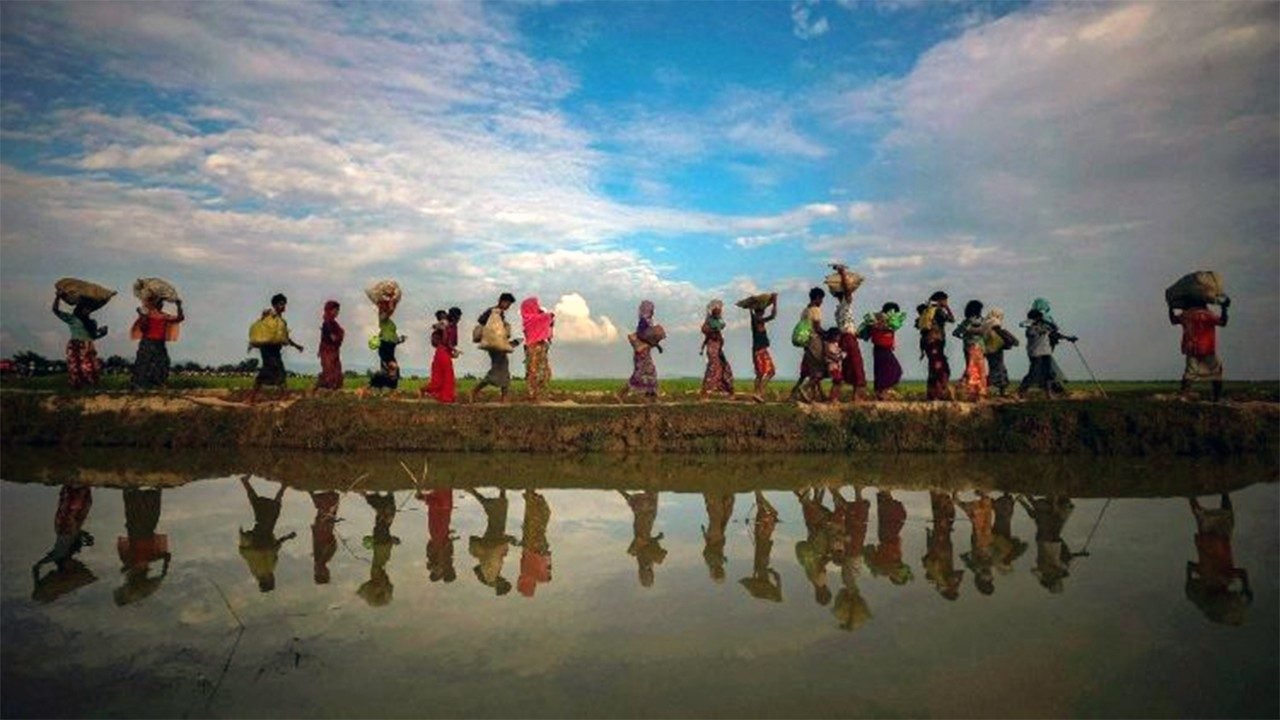
    Indeed, one of the recurring and foundational concerns of the encyclical is the question of justice and of a just social order. It emphasizes the profoundly important insight that injustices do not arise solely from the misguided decisions of individual decision-makers, but also from the so-called structural crises of particular societies. These are mechanisms that sustain grave and enduring inequalities. Such realities include, for example, the urban slums of sub-Saharan Africa that have existed since the First World War, where dwellers typically pay rent, even though in many cases these settlements are owned by politicians or other decision-makers; certain refugee camps of the Middle East that have persisted since the 1950s; or the unresolved situation of refugees in Southeast Asia who live in a shadow world, outside the protection of regular social and legal frameworks – all “rejected stones”. The examples could be multiplied at length. The Pope offered an extraordinarily precise image when he referred to these structural problems, and to the millions of human beings thereby consigned to lasting suffering, as rejected communities.

    How would you describe the importance of the Church’s humanitarian outreach from your own experiences around the world assisting migrants and refugees in Syria, Gaza, and sub-Saharan Africa?

    The work carried out by the Latin and Eastern Churches, as well as by ecclesial, faith-based organizations, in the Middle East, Africa, and more broadly across the Global South, must not be reduced merely to humanitarian assistance. It is a frequent and mistaken interpretation to regard the Christian Churches as no more than charitable organizations. Their significance lies primarily in the fact that, by virtue of their particular role and mode of presence, they stand closest to the people. This physical proximity also entails a spiritual proximity. In Africa, in South America and in the Middle East, the existential reality of a significant portion of the population is shaped by personal faith, which permeates the whole of life. People interpret their own lives in a primary way through ecclesial communities, parishes, and priests. For this reason, the significance of the Churches is inestimable and irreplaceable. At this point, I would note that precisely for this reason, any vision of society that seeks to push faith-based communities and Churches into the background, and to construct a misconceived version of political and social spaces without Churches, while regarding this as “pluralism”, is entirely alien to the reality of lived experience. Equally mistaken, ahistorical, and unjust is the political perspective, and indeed the political objective, that regards the Christian Churches merely as minorities and seeks to provide them only with a distorted form of minority rights. For while a community may have become a minority in demographic terms, by virtue of its significance it remains inseparable, for instance, from the history of the Middle East. It is therefore understandable for such communities that minority status in the political sense is unacceptable and degrading.

    It also follows from this that, in many parts of the world, the Christian Churches, alongside their pastoral ministry, place particular emphasis on charitable and humanitarian assistance. In several regions of the world, this activity is entirely irreplaceable. One need only think of Catholic priests and bishops in Nigeria or Congo, the indispensable initiatives of the Melkite Church in Syria, the Franciscans working in the slums of Pakistan, the refugee programmes of the Jesuits in Thailand, and countless other communities. Magnifica humanitas offers a precise and deeply embodied diagnosis of the social wounds of the Global South and of the human peripheries. Among these wounds, faithful to the spiritual legacy of Pope Francis, the question of refugees continues to occupy a prominent place.

    And in today’s context, where AI is rapidly changing how we work, live together, and runs the risk of creating more excluded people?

    The conceptual core of the encyclical is indeed the consequences brought about by artificial intelligence. Yet Magnifica humanitas speaks of far more than this: it is a social encyclical, with a complex and wide-ranging field of responsibility. In my view, its significance lies above all in the fact that it examines the world from an exceptionally rare perspective: it analyses reality not from the standpoint of success, power, and force, but from the standpoint of those who suffer, of the least among us. This radically evangelical vision, one also deeply recognized by Pope Francis, reminds us that we must always stand on the side of the poor and, in every circumstance, remain truly human. One of the encyclical’s most important elements lies in its explicit recognition that we live within a culture of power, of hard power, in which international politics makes use of military force and war as instruments.

    The dominance of hard power, however, is a social symptom: it signals that we derive the order of our world, imposed and enforced in the name of political objectives, from the capacity to instil fear and to destroy, rather than from the strength of fraternity, trust, and shared responsibility, as Pope Francis emphasized in Fratelli Tutti. Within this culture of power, soft power is regarded as a sign of weakness, rather than as a higher form of civilized authority. For me, the warning of the encyclical lies in the recognition that lasting peaceful coexistence is born not from breaking the other, but from winning the other’s free and reasoned assent. It is therefore particularly tragic that the international politics of our time once again treats military force as a legitimate language, as though an order imposed by weapons were the same as peace grounded in justice. The acceptance of hard power in this form is, in the final analysis, not only a political failure but also a moral regression: an admission that humanity has advanced in technical terms, while its political imagination remains captive to imperial reflexes.

    Apart from the Church’s work on the ground in local contexts, how would you characterize the importance of the diplomatic outreach of the Church, the Holy See raising its voice on behalf of the excluded, in imploring dialogue and negotiation, in promoting peace?

    The irreplaceable diplomatic service of the Holy See arises above all from its distinctive nature: it is indispensable precisely because it represents a different form of power and authority. The diplomats of the Holy See possess a particular voice, one that proceeds not primarily from geopolitical interest, military strength, or economic calculation, but from the dignity of the human person. I would add that this is true, or ought to be true, of all actors engaged in humanitarian and religious diplomacy. This voice is of exceptional importance because, as the encyclical also states, it consistently reminds us that peace is not merely the absence of war, but the operative reality of justice, dialogue, and reconciliation. In this process, diplomats of the Holy See, as well as humanitarian and religious diplomats more broadly, have an immense opportunity to do good. Thus, since the Church has no power-based geopolitical objective, nor any consular task in the classical sense, it can work through its own distinctive means and remind the international community that the refugee, the poor, the persecuted, and the child born in war are not secondary consequences of politics. As Magnifica humanitas formulates it, also citing Saint John Paul II, the litmus test of a just society is how we treat refugees and those forced to leave their homes. In this complex process, those who work in religious diplomacy bear an extraordinary responsibility.

    How do you see the Encyclical in helping further public discussion, dialogue, and collaboration in these areas – also in view of the epic changes underway in the “AI era”?

    Magnifica humanitas is not only a social encyclical, but also a synodal one, calling everyone not to turn away from the cry of the poor and not to remain indifferent observers of the world’s social injustices. Here, Pope Leo XIV also warns that the digital age is an age of universalization, in which the differences between cultures and peoples, as well as the very space for dialogue, become blurred. This is a serious risk, against which he proposes the synodal ideal, even if it is not yet entirely clear how this can be translated into the everyday reality of communities such as those in the Middle East or Africa. For just as secular structures cannot provide a single answer applicable to every cultural situation, neither can the social teaching of the Church offer one universal solution to the countless faces and forms of poverty. With appropriate support, this must be carefully discerned and refined by local communities themselves and shaped into forms that are valid and effective within their own concrete realities. This is a process that can only take place through dialogue, cooperation, and the generous and merciful acceptance of differences.

    Source link

    Related Posts

    The apostolic journey of Pope Leo XIV to Spain – Madrid – The departure – Telegrams to heads of state during the outward flight
    Holy See

    The apostolic journey of Pope Leo XIV to Spain – Madrid – The departure – Telegrams to heads of state during the outward flight

    June 9, 2026
    Solidarity and indifference – L’Osservatore Romano
    Holy See

    Solidarity and indifference – L’Osservatore Romano

    June 9, 2026
    Madrid: Awaiting Pope Leo’s arrival and a revitalization of the faith
    Holy See

    Madrid: Awaiting Pope Leo’s arrival and a revitalization of the faith

    June 9, 2026
    «Pax et Bonum 2026»: the brotherhood of Saint Francis as a response to conflicts
    Holy See

    «Pax et Bonum 2026»: the brotherhood of Saint Francis as a response to conflicts

    June 9, 2026
    Cardinal Bo: The Pope made us feel that Myanmar is not forgotten
    Holy See

    Cardinal Bo: The Pope made us feel that Myanmar is not forgotten

    June 9, 2026
    Where you learn because you are happy
    Holy See

    Where you learn because you are happy

    June 9, 2026
    Next Post
    The apostolic journey of Pope Leo XIV to Spain – Madrid – The departure – Telegrams to heads of state during the outward flight

    The apostolic journey of Pope Leo XIV to Spain - Madrid - The departure - Telegrams to heads of state during the outward flight

    POPULAR NEWS

    Algeria World Cup 2026 team guide | Algeria football team

    Algeria World Cup 2026 team guide | Algeria football team

    June 8, 2026
    Israelis push Netanyahu to resist U.S. pressure and keep fighting in Lebanon

    Israelis push Netanyahu to resist U.S. pressure and keep fighting in Lebanon

    June 8, 2026
    Team Bahamas to play at home | Sports

    Team Bahamas to play at home | Sports

    June 8, 2026
    Poilievre says those who vote for Alberta separation ‘are not our enemies’

    Poilievre says those who vote for Alberta separation ‘are not our enemies’

    June 8, 2026
    Fatal wingsuit accident in Vättis

    Fatal wingsuit accident in Vättis

    June 8, 2026

    EDITOR'S PICK

    Another Wave of False Bomb Threats. Schools Targeted This Time

    Another Wave of False Bomb Threats. Schools Targeted This Time

    June 9, 2026
    She sympathized with an “enemy state”… A Kuwaiti woman was imprisoned for 3 years because of an Instagram post – Saudi News

    She sympathized with an “enemy state”… A Kuwaiti woman was imprisoned for 3 years because of an Instagram post – Saudi News

    June 8, 2026
    45 cats in the Messie household – the veterinary office intervened eight months too late

    45 cats in the Messie household – the veterinary office intervened eight months too late

    June 9, 2026
    Meet the ‘hit doctor’: Inside an informal network of drug users trying to stay alive

    Meet the ‘hit doctor’: Inside an informal network of drug users trying to stay alive

    June 8, 2026

    Recent Posts

    • Firefighters ready for summer, but citizens still cause most fires
    • Boeing 787 crashed at the airport in Frankfurt, there are injured / kind…
    • Jutarnji list – ‘Ice Kingdom’ tempts tourists with a new adventure: The search for gold begins on June 18!
    • Ante Tomić writes: ‘our SS men’ Ante Tomić: Sometimes they say ‘Tomić, you stink!’, and I don’t answer them. I’m not angry, I want them to finally fuck someone…

      © 2026 Agentially - Navigating shifting sovereignties and global risk .

      Welcome Back!

      Login to your account below

      Forgotten Password?

      Retrieve your password

      Please enter your username or email address to reset your password.

      Log In
      No Result
      View All Result

        © 2026 Agentially - Navigating shifting sovereignties and global risk .

        This website uses cookies. By continuing to use this website you are giving consent to cookies being used. Visit our Privacy and Cookie Policy.