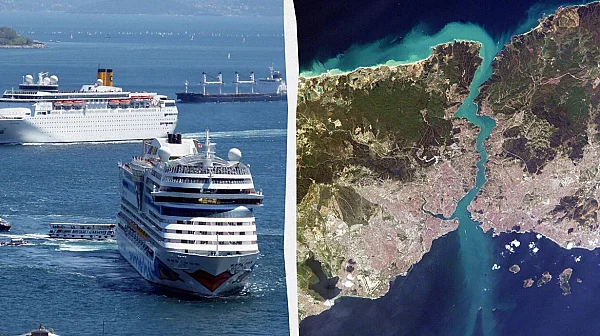
The project in question is “Canal Istanbul”, which is planned to pass through the European part of the largest city in Turkey. According to the authorities, the new waterway will partially ease congestion on the Bosphorus, one of the world’s most important maritime transport arteries, through which trade ships from Russia, Ukraine, Romania, Bulgaria, Georgia and Turkey itself pass.
As the publication notes, the Turkish government sees the canal as a strategic investment. Ankara is confident that the new route will help ease congestion in the narrow natural strait that runs near densely populated areas of Istanbul. Authorities also believe it will reduce the risk of accidents involving large ships and ships carrying dangerous goods.
The project encompasses more than the channel itself. According to Blic, port infrastructure, a logistics center and recreational areas are planned around it.
According to published specifications, the canal will be 45 kilometers long and 20.75 meters deep. Official documents estimate its value at 75 billion Turkish liras, or over one billion US dollars. The project is planned to be implemented as a public-private partnership.
However, the final price remains a matter of debate. As the publication points out, as early as 2025, the project was estimated at nearly $2 billion, while some international studies had previously pegged the price at between $10 and $20 billion, depending on the scale of the work involved and the funding model.
The project gained particular importance after the outbreak of the Russian-Ukrainian war. The authors note that the Black Sea region has become even more important for the export of agricultural products, energy transport and international trade. Against this background, any changes in the system of sea routes attract the attention of shipping companies, insurers and investors.
At the same time, the project remains one of the most controversial projects in Turkey. The opposition, environmental groups and some local authorities believe the risks may outweigh the potential benefits.
Experts warn of potential negative impacts on ecosystems in northern Istanbul, where several large-scale infrastructure projects have already been implemented. The publication states that these projects affect forests and disrupt important natural corridors essential for biodiversity conservation.
Of particular concern is the potential impact on the water balance between the Black Sea and the Sea of Marmara. Experts point out that the Black Sea has a lower salinity due to the inflow of water from large Eastern European rivers, while the Bosphorus maintains a complex circulation system between the two seas.
Experts note that the discovery of the new channel could change natural processes. Specifically, there are concerns that “the opening of a parallel channel could change currents, water oxygenation and water composition.”